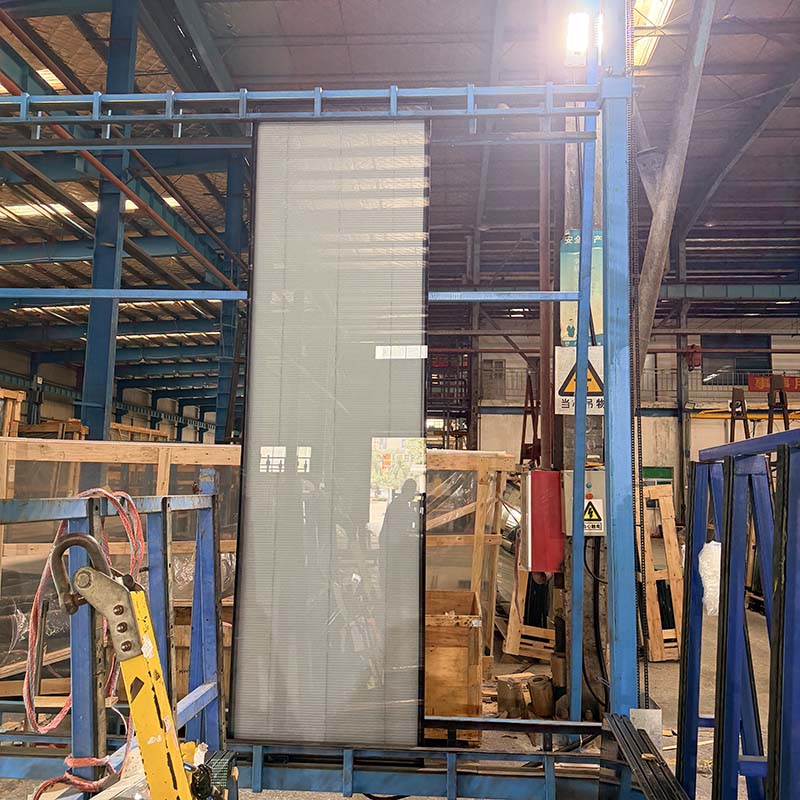
When security becomes a priority, ordinary architectural glass may no longer provide enough protection. Bullet-resistant glass is engineered for high-risk environments where buildings require both transparency and resistance against ballistic threats. From banks and embassies to jewelry flagship stores and luxury private villas, specialized security glass acts as the first line of defense against external attacks while maintaining modern architectural aesthetics.
HAIKONG SGT (Guangdong Haikong Special Glass Technology Co., Ltd.) has more than 32 years of experience in glass deep processing and has completed over 500 global projects. By combining advanced laminated glass technology, professional testing capabilities, and customized manufacturing processes, SGT provides reliable security glass solutions for demanding architectural and industrial applications.
What Is Bullet Resistant Glass?
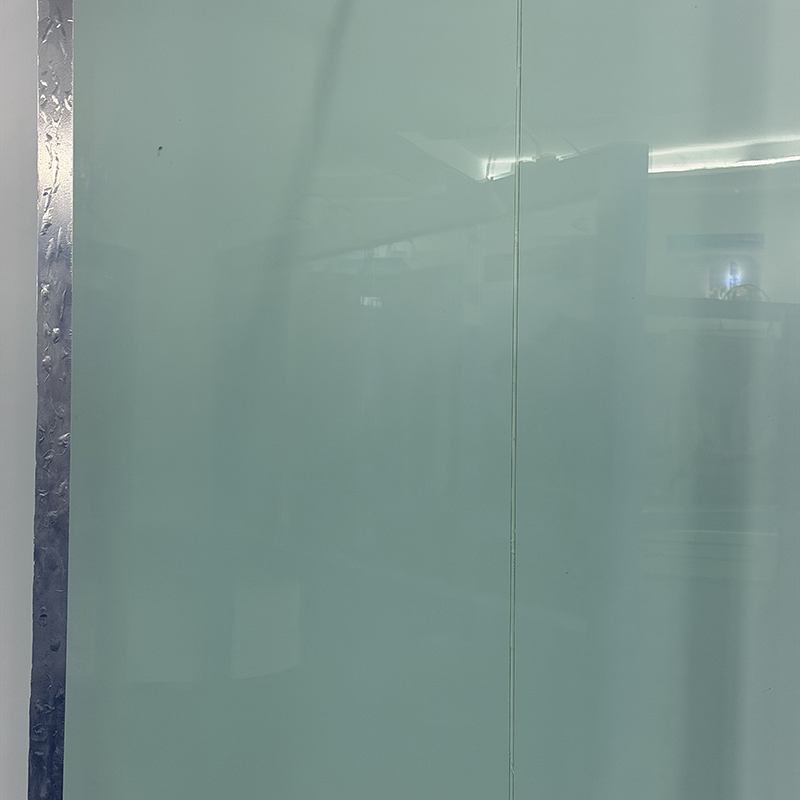
Bullet resistant glass is a high-performance laminated security glazing system designed to resist projectile impact from firearms and other high-energy threats.
Unlike traditional glass, it uses multiple layers of glass, SGP/PVB/PU interlayers, and polycarbonate (PC) sheets bonded together under high temperature and pressure. The structure is designed to absorb impact energy, prevent penetration, and reduce dangerous glass fragmentation.
Typical bullet resistant glass structures include:
- Multiple layers of tempered or float glass
- High-strength SGP or PVB interlayers
- Polycarbonate energy absorption layers
- Optional integration with Low-E, insulating, or ceramic fritted glass
The final configuration depends on the required protection level, building application, and international testing standard.
Energy Dissipation Principle of Multi-Layer Laminated Armor
The core advantage of bullet resistant glass is not simply thickness, but its ability to manage and dissipate impact energy through a carefully engineered multi-layer structure.
When a bullet strikes the glass, the protection process happens in several stages:
1. The Outer Glass Layer Breaks and Reduces Projectile Energy
The first glass layer absorbs the initial impact force. During penetration, the hard glass surface helps deform and slow down the projectile, reducing its kinetic energy before it reaches deeper layers.
2. SGP/PVB/PU Interlayers Capture Fragments
The high-strength interlayer works as an energy absorption layer.
Instead of allowing broken glass fragments to scatter, SGP or PVB materials hold the damaged glass together and distribute impact forces across a larger area.
This prevents dangerous spall and back spall, reducing the risk of secondary injuries to people behind the glazing.
3. Polycarbonate Layers Absorb Remaining Energy
Polycarbonate (PC) sheets provide excellent flexibility and impact resistance. They deform under pressure and absorb the remaining energy that passes through the glass layers.
This combination of rigid glass and flexible polymer creates a balanced armor system that provides protection without sacrificing visibility.
Bullet Resistant Glass Materials and Structure
Different applications require different material combinations. HAIKONG SGT develops customized structures based on threat assessment and project requirements.
Laminated Glass
Laminated glass provides:
- Fragment retention
- Improved impact resistance
- High optical clarity
- Better safety performance
SGP Interlayer
SGP (SentryGlas® Plus) offers higher stiffness and structural performance compared with traditional PVB.
It is commonly selected for projects requiring:
- Larger glass sizes
- Higher safety requirements
- Improved post-breakage performance
PU Interlayer
PU (Polyurethane) interlayer provides excellent flexibility, impact resistance, and energy absorption performance compared with traditional interlayer materials.
It is commonly selected for projects requiring:
- High impact resistance
- Effective energy absorption
- Improved safety performance
- Lightweight security glazing solutions
Polycarbonate (PC)
Polycarbonate provides:
- High impact absorption
- Lightweight protection
- Reduced penetration risk
By combining these materials, bullet resistant glass can achieve different protection levels while maintaining architectural design requirements.
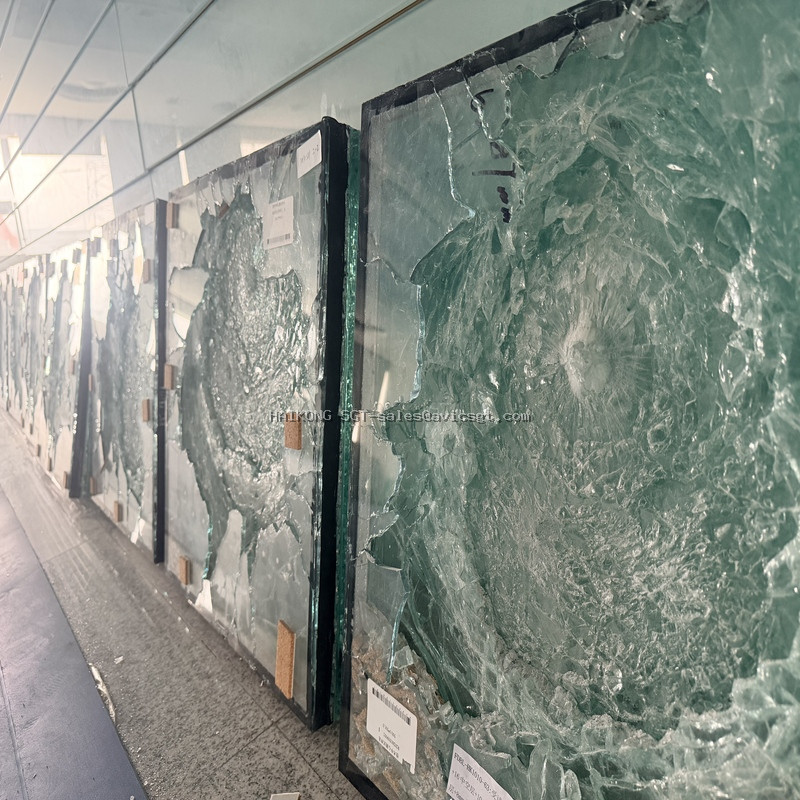
International Bullet Resistant Glass Standards Explained
Security glass must be tested according to recognized standards to ensure predictable performance.
The two major ballistic standards used worldwide are UL 752 and EN 1063, while EN 356 evaluates resistance against physical attacks.
UL 752 Ballistic Resistance Standard
UL 752 is widely used in North America for evaluating bullet resistant glazing systems.
It classifies protection levels according to ammunition type and impact requirements.
| UL 752 Level | Typical Threat | Approximate Thickness | Application |
|---|---|---|---|
| Level 1 | 9mm handgun | Around 20mm | Retail security areas |
| Level 2 | .357 Magnum | Around 25-30mm | Commercial facilities |
| Level 3 | .44 Magnum | Around 32-40mm | Banks and security counters |
| Level 5-8 | Rifle-level threats | 60mm+ | Government and high-security facilities |
Higher UL levels require thicker structures, stronger interlayers, and tested framing systems.
EN 1063 and EN 356 European Standards
EN 1063 classifies ballistic resistance levels from BR1 to BR7.
The classification covers protection against different weapons, including:
- Handguns
- Rifles
- Shotgun threats
Common categories include:
- BR1-BR3: handgun protection
- BR4-BR5: higher energy handgun and rifle protection
- BR6-BR7: high-security rifle protection
EN 1063 also includes spall classification:
- NS (No Spall): No dangerous fragments released behind the glass
- S (Spall): Fragmentation may occur
For physical attack resistance, EN 356 evaluates:
- P1A-P5A: Impact resistance against vandalism and forced entry
- Higher levels provide improved protection against repeated attacks
Bullet Resistant Glass Thickness and Product Specifications
Protection requirements directly influence glass thickness and structure.
HAIKONG SGT provides customized bullet resistant glass with:
| Parameter | Specification |
|---|---|
| Product | Bullet Resistant Glass / Security Laminated Glass |
| Thickness | 52-125mm customized |
| Maximum Size | Up to 3300 × 18000mm |
| Structure | Multi-layer glass + SGP/PVB + PC composite |
| Performance | Bullet resistant, impact resistant, smash resistant, explosion protection |
| Appearance | Clear, bronze, grey options |
The final specification is selected according to threat level, installation environment, and certification requirements.
Manufacturing Process of Bullet Resistant Glass
Reliable ballistic glass requires precise manufacturing control.
The production process includes:
- Security requirement analysis
Engineers evaluate protection levels, application scenarios, and required standards. - Material selection and glass processing
Glass layers, SGP/PVB films, and polycarbonate sheets are selected according to performance requirements. - Multi-layer lamination
Materials are assembled into a composite structure under controlled conditions. - Autoclave bonding process
High temperature and pressure create a durable laminated system. - Quality inspection and performance testing
Optical, thermal, and color performance are tested before delivery.
SGT operates professional testing equipment including Fourier Transform Infrared Spectrometer, Lambda 1050+ spectrophotometer, 60° angle optical tester, and CM700D portable color difference meter to ensure product consistency. HAIKONG SGT has successfully passed BR4 and BR6 ballistic resistance tests, demonstrating reliable protection performance for high-security applications.
High-Risk Applications of Bullet Resistant Glass
From financial institutions to private security projects, bullet resistant glass provides protection where safety cannot compromise design.
Common applications include:
- Banks and financial institutions: teller windows, security partitions, entrance systems
- Embassies and government buildings: protected areas and security zones
- Jewelry flagship stores: display protection and anti-theft systems
- Luxury private villas: secure entrances and architectural glazing
- Schools and public facilities: controlled-access areas
- Transportation hubs: ticket counters and security checkpoints
With experience supporting global projects across North America, Europe, and Asia, HAIKONG SGT delivers customized architectural security glass solutions for complex requirements.
FAQ
1. Is bullet resistant glass completely bulletproof?
No glass can resist every possible threat. Bullet resistant glass is tested according to specific standards such as UL 752 and EN 1063 to provide protection against defined ammunition types.
2. Why does bullet resistant glass use multiple layers?
Multiple layers allow the system to distribute and absorb impact energy. Glass reduces projectile speed, while SGP/PVB and polycarbonate layers capture fragments and prevent dangerous spall.
Conclusion
As security requirements increase in modern architecture, bullet-resistant glass has become an essential solution for protecting people and property without sacrificing transparency. Through multi-layer laminated structures, SGP/PVB interlayers, and polycarbonate energy absorption technology, security glass provides controlled resistance against ballistic threats and forced attacks.
With more than 32 years of glass deep processing experience, HAIKONG SGT delivers customized bullet resistant glass solutions for banks, embassies, commercial buildings, and luxury residential projects. Supported by professional testing equipment and international standards, SGT helps architects and developers create safer, stronger, and more reliable buildings.
Contact HAIKONG SGT today to discuss your bullet resistant glass requirements and receive a customized security glazing proposal for your project.