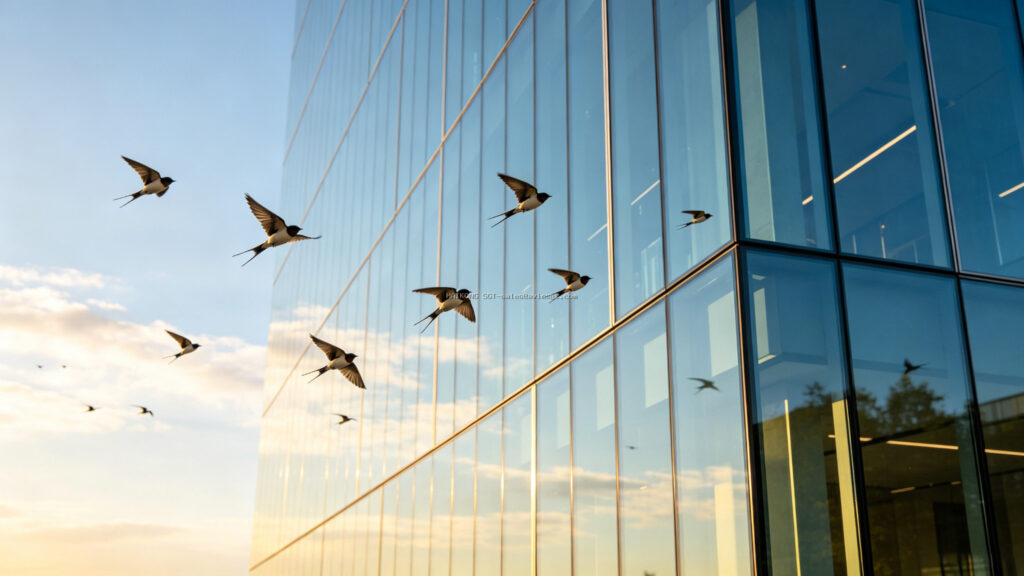
Modern buildings face a growing challenge: large transparent and reflective facades can create risks for birds while increasing energy consumption. As green building standards evolve, architects and developers need glazing solutions that support biodiversity protection without sacrificing daylight, aesthetics, or thermal performance.
Low-e coated glass has become an important energy-efficient glazing solution because it helps control solar heat gain, reduce heat transfer, and improve building energy performance. However, Low-E coating itself is designed for thermal and solar control performance only and does not provide bird collision protection.
Effective bird-friendly glazing requires additional technologies, such as UV-reflective patterns, ceramic frit markings, acid-etched designs, or other visual indicators, which help birds recognize glass surfaces and reduce collision risks.
Across North America, Europe, and many sustainable construction markets, regulations are increasingly encouraging or requiring bird-safe glazing systems. For example, New York City Local Law 15 introduced bird-friendly building requirements for many new construction projects. The challenge is finding glass solutions that reduce bird collisions while maintaining the clean appearance expected from premium curtain walls.
Traditional printed patterns can interrupt architectural views, while highly transparent glass may appear invisible to birds. HAIKONG SGT addresses this design challenge by combining advanced glass processing technology, architectural glass expertise, and performance testing capabilities developed through more than 30 years of glass deep processing experience.
Bird-Friendly Glazing Technologies for Modern Facades
UV-Reflective Coating: Invisible Protection for Human Eyes
One advanced approach uses ultraviolet reflective technology. Birds can perceive ultraviolet light, while humans cannot. By applying UV-reflective patterns on glass surfaces, buildings can create visual signals that help birds recognize glass barriers.
Key benefits include:
- Maintains high indoor transparency and natural daylight
- Provides bird-visible warning patterns from outdoor perspectives
- Fits premium office buildings, museums, and landmark architectural projects
- Preserves minimalist facade aesthetics
For projects requiring both ecological responsibility and energy efficiency, UV-reflective bird-friendly technology can be combined with Low-E architectural glass. In this system, UV patterns provide bird collision protection, while Low-E coatings are responsible for solar control, insulation, and energy-saving performance.
These technologies serve different purposes but can work together within the same glazing system.
Ceramic Frit Patterns: A Proven Surface Marking Method
Ceramic frit glass uses ceramic patterns applied to the glass surface. The commonly referenced “2 x 4 rule” requires vertical spacing no greater than 2 inches and horizontal spacing no greater than 4 inches to reduce mirror-like reflections and improve bird visibility.
Advantages include:
- Durable ceramic markings suitable for long-term outdoor exposure
- Customizable patterns for architectural concepts
- Compatibility with many curtain wall applications
However, designers must carefully consider visual impact because dense patterns may affect transparency and facade appearance.
Acid-Etched and Laser-Engraved Micro Patterns
Another option uses acid-etched or laser-engraved markings to create subtle surface textures. These methods provide additional design flexibility while maintaining a refined glass appearance.
They are suitable for:
- Luxury residential glazing
- Cultural buildings
- Commercial facade projects requiring customized visual effects
Combining Bird Safety with Low-E Energy Performance
A common misunderstanding in architectural glazing design is that Low-E glass itself can prevent bird collisions. In reality, Low-E coatings are developed primarily for energy performance, including reducing solar heat gain, improving insulation, and controlling emissivity.
Low-E technology provides:
- Reduced solar heat gain coefficient (SHGC)
- Improved thermal insulation
- Lower building energy consumption
- Better indoor temperature control
However, bird-friendly performance requires separate solutions, including:
- UV-reflective patterns visible to birds
- Ceramic frit markings
- Acid-etched or laser-engraved surface designs
By combining these bird-friendly technologies with Low-E coated glass, architects can achieve both ecological protection and energy-efficient facade performance.
Modern sustainable glazing systems need to balance:
- Bird collision protection through UV reflection or surface patterns
- Low solar heat gain coefficient (SHGC)
- High visible light transmission
- Acoustic performance
- Long-term durability
HAIKONG SGT develops architectural glass solutions that consider these performance requirements together. Its laboratory equipment includes Fourier Transform Infrared Spectrometer, Lambda 1050+ spectrophotometer, 60° angle optical tester, and CM700D portable color difference meter for optical, thermal, and color evaluation.
How Multi-Functional Glass Systems Are Designed
The integration process usually follows these steps:
1. Analyze project requirements
- Evaluate building location, climate conditions, facade orientation, and green building targets.
2. Select bird-friendly technology
- Choose UV-reflective coating, ceramic frit patterns, or micro-texture solutions according to bird protection requirements and architectural design goals.
3. Combine with Low-E coating technology
- Apply high-performance Low-E coatings to improve insulation, reduce solar heat gain, and optimize energy performance.
- Low-E layers provide thermal control only and must work together with additional bird-friendly treatments to achieve collision prevention.
4. Test optical and thermal performance
- Verify visible light transmission, reflectance, SHGC, and color consistency.
5. Optimize for installation conditions
- Ensure compatibility with curtain wall systems, laminated structures, or insulated glass units.
Low-E and Bird-Friendly Glass Performance Comparison
| Glass Solution | Bird Protection Technology | Energy Efficiency |
|---|---|---|
| Clear glass | Limited | Low |
| Ceramic frit glass | Good through visible patterns | Medium |
| UV-reflective glazing | Excellent through UV patterns | Depends on Low-E integration |
| Low-E glass + UV/frit bird-friendly treatment | Excellent | High |
Why Choose Guangdong Haikong Special Glass Technology Co., Ltd. (HAIKONG SGT)
As an experienced architectural glass supplier, HAIKONG SGT provides customized glass solutions for global construction projects. The company has completed more than 500 global projects and supplies high-performance coated glass for applications ranging from commercial towers to luxury hotels.
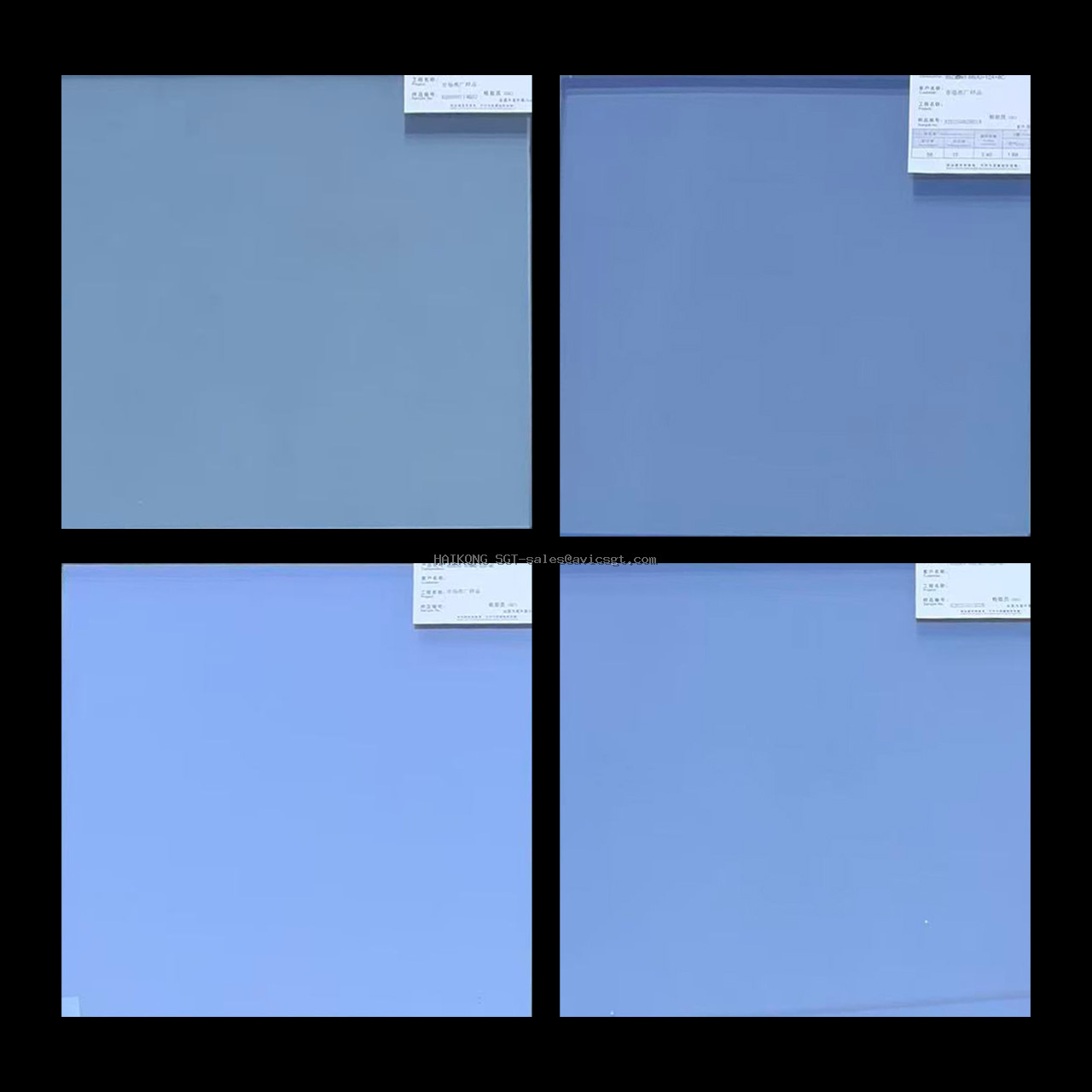
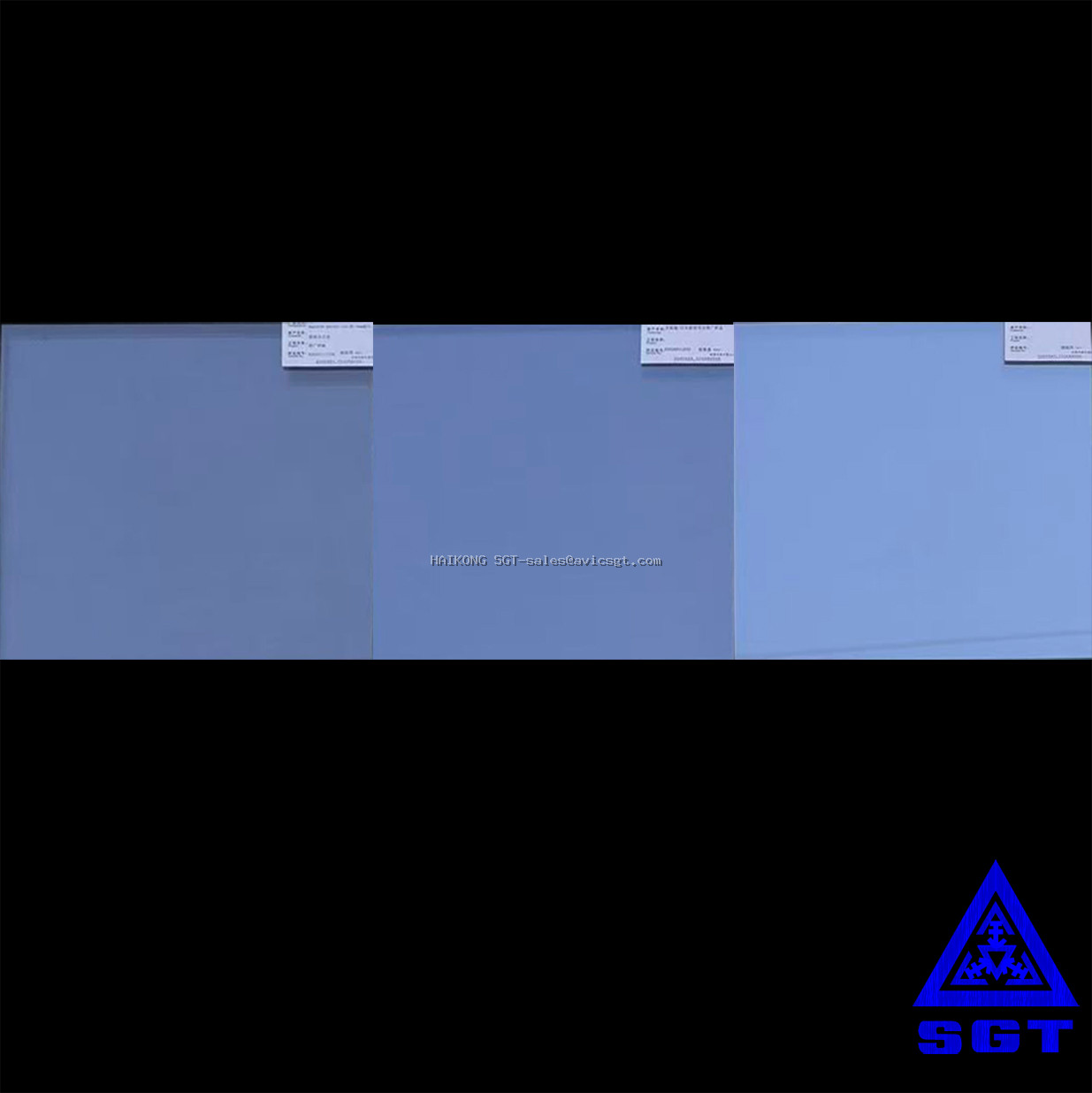
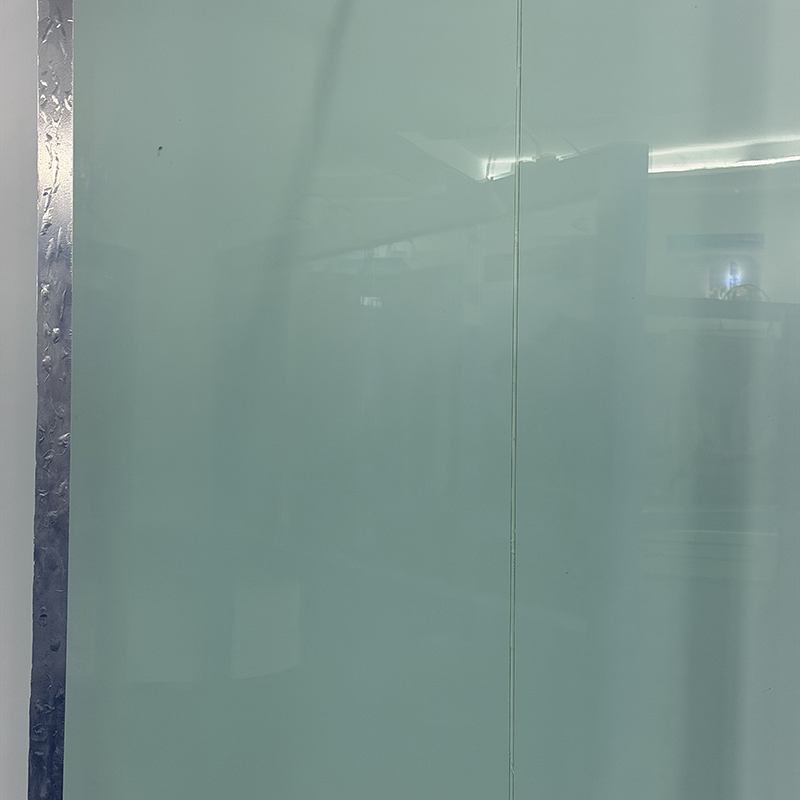
Its Silver-grey Double Low-E Glass uses offline vacuum magnetron sputtering PVD technology with a 9–13 layer composite film system, including two nano pure silver functional layers. The product provides low emissivity, solar control performance, and a neutral silver-grey appearance for high-end curtain walls.
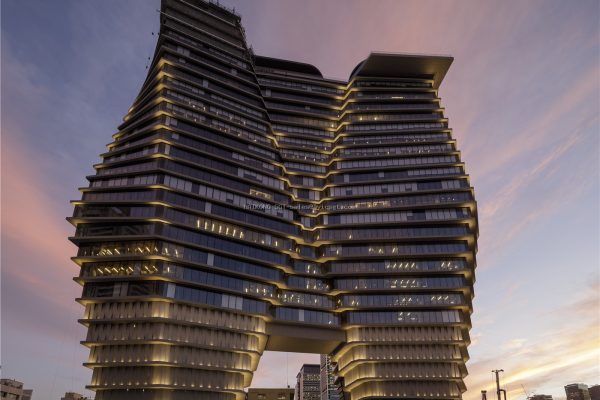
Recent projects using SGT coated glass include Dubai Park Tower Hotel, Australia 108 Project, Xiamen AVIC Zijin Plaza, Qianhai Holding Building, and Hengqin International Business Service Base.
FAQ
1. Does Low-E glass itself prevent bird collisions?
No. Low-E glass is primarily designed for energy efficiency by reducing heat transfer, controlling solar radiation, and improving insulation performance. It does not create visual warning signals for birds.
Effective bird-friendly glazing requires additional solutions, such as UV-reflective coatings, ceramic frit patterns, or other surface markings designed specifically to reduce bird strikes.
2. Can bird-friendly glazing be combined with Low-E coatings?
Yes. Modern glazing systems can integrate bird protection technologies with Low-E coatings to achieve different performance goals.
UV-reflective patterns or ceramic frit designs provide bird collision protection, while Low-E coatings improve thermal insulation and solar control performance.
3. Is bird-friendly glass suitable for curtain wall projects?
Yes. It is widely considered for office towers, exhibition centers, airports, museums, and other large-scale facade applications where transparency, environmental compliance, and energy efficiency are important.
Conclusion
Future building facades must balance environmental responsibility, architectural beauty, and energy performance.
By combining low-e coated glass with dedicated bird-friendly technologies, developers can create safer buildings for wildlife while achieving efficient solar control and comfortable indoor environments.
Low-E coatings deliver energy-saving performance, while UV-reflective patterns, ceramic frit markings, and other visual indicators provide bird collision protection. Together, these technologies create a balanced glazing solution for sustainable architectural facades.
HAIKONG SGT continues to support architects and project owners with tested architectural glass solutions designed for modern sustainable construction.
Contact Haikong SGT to discuss customized bird-friendly glazing and Low-E coated glass solutions for your next facade project.