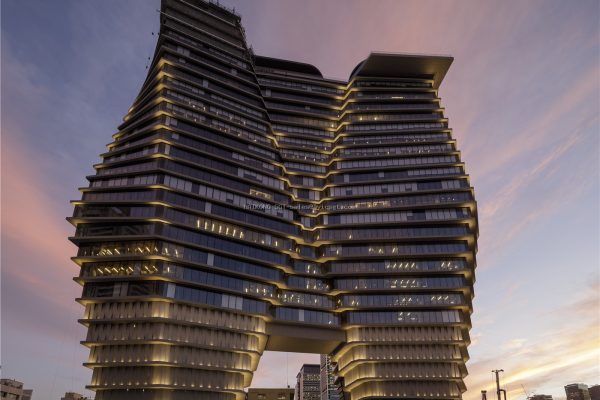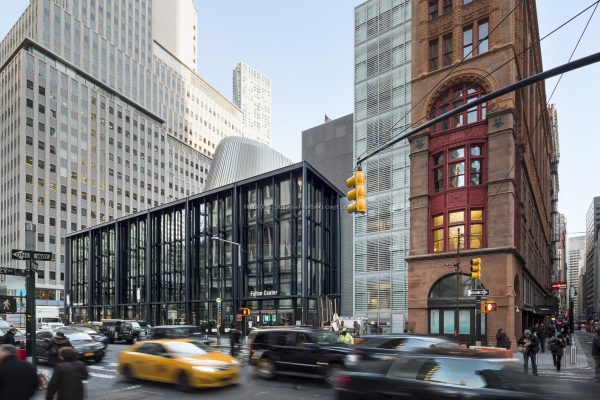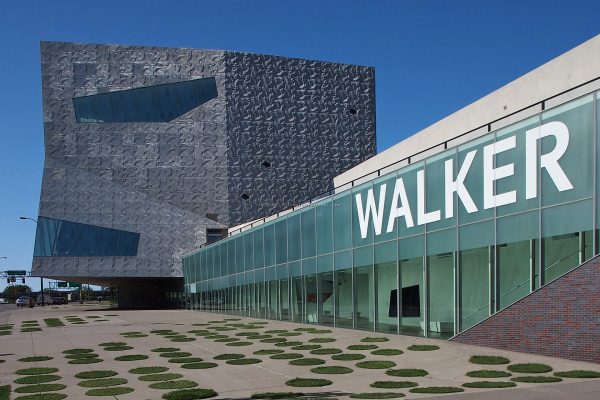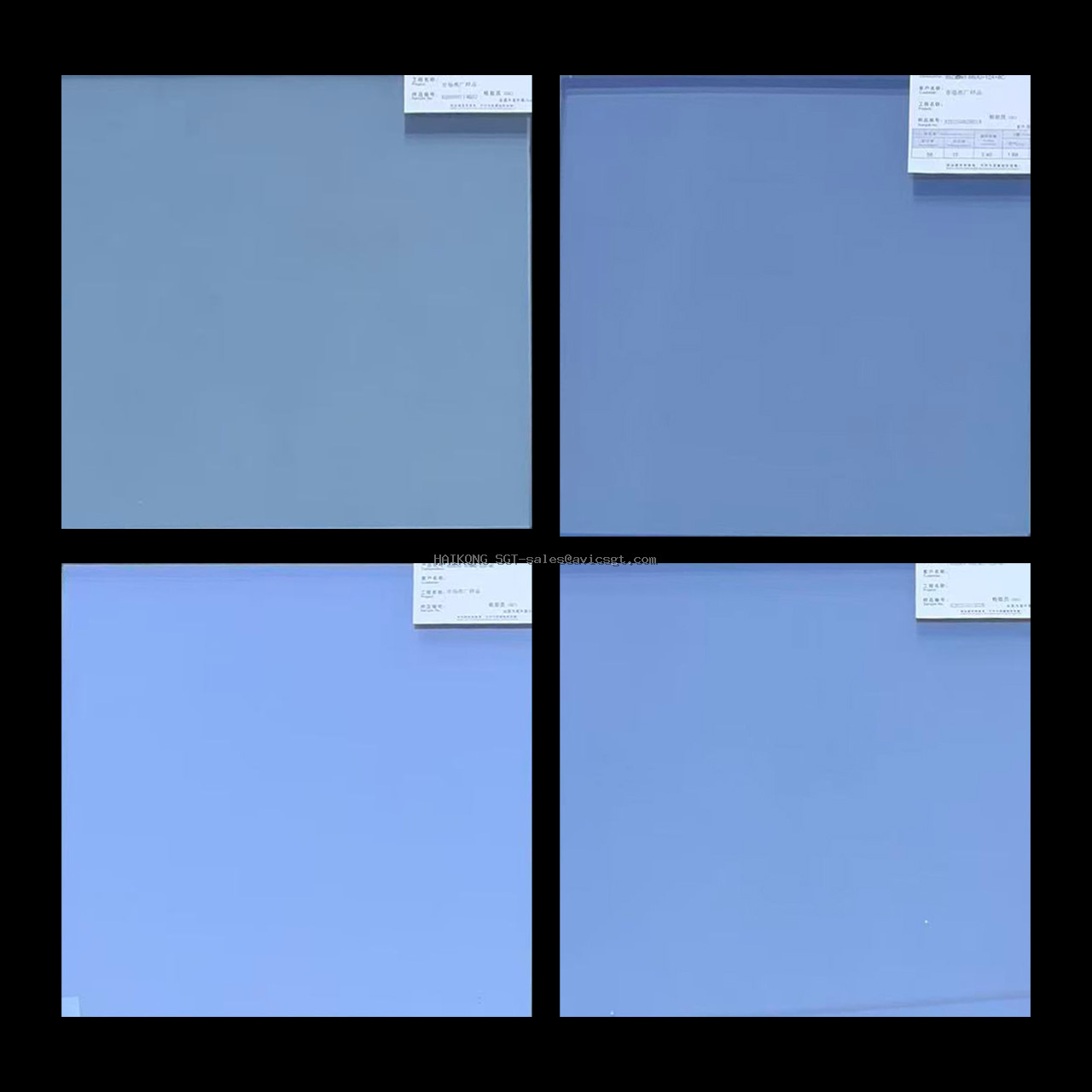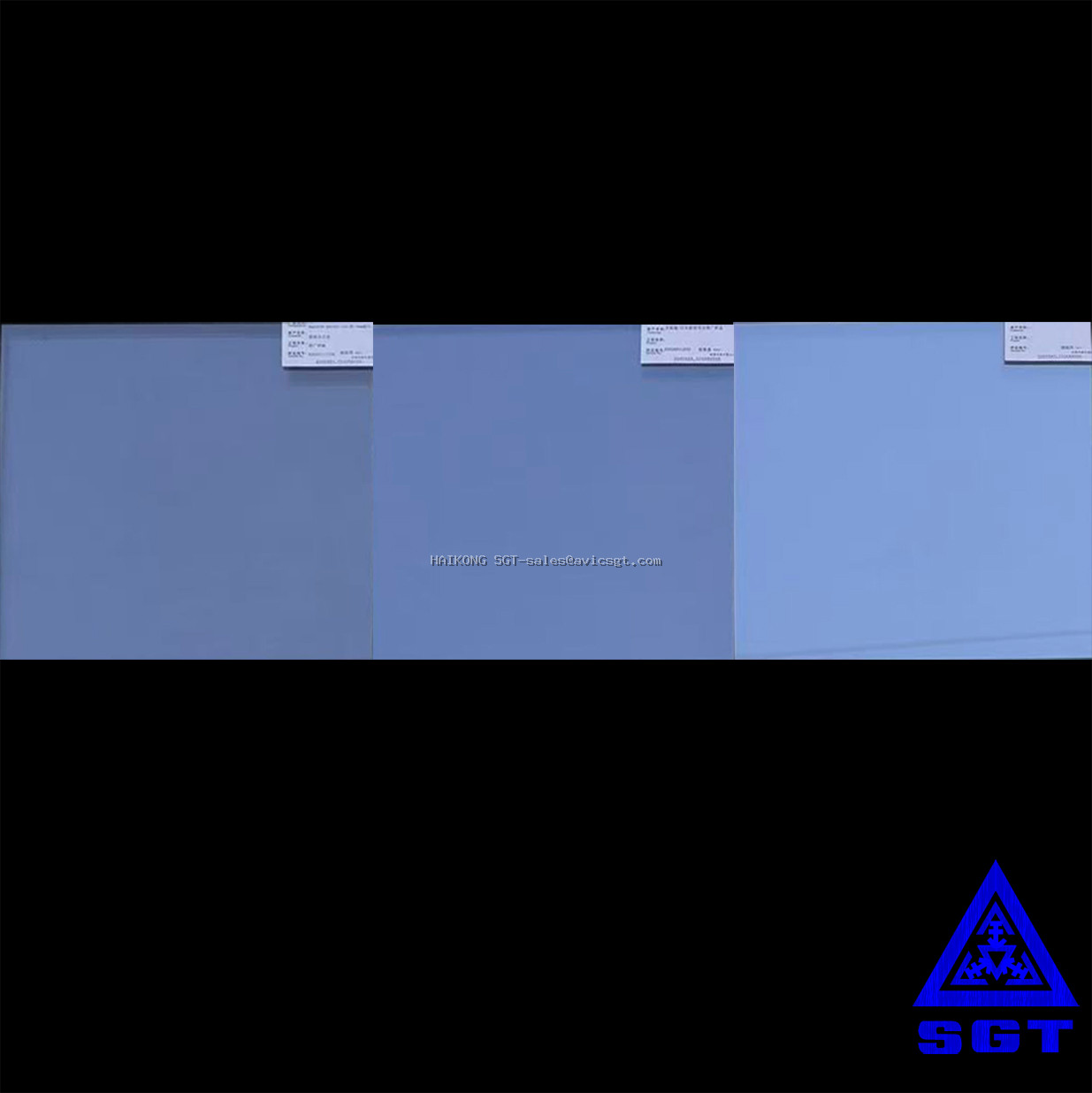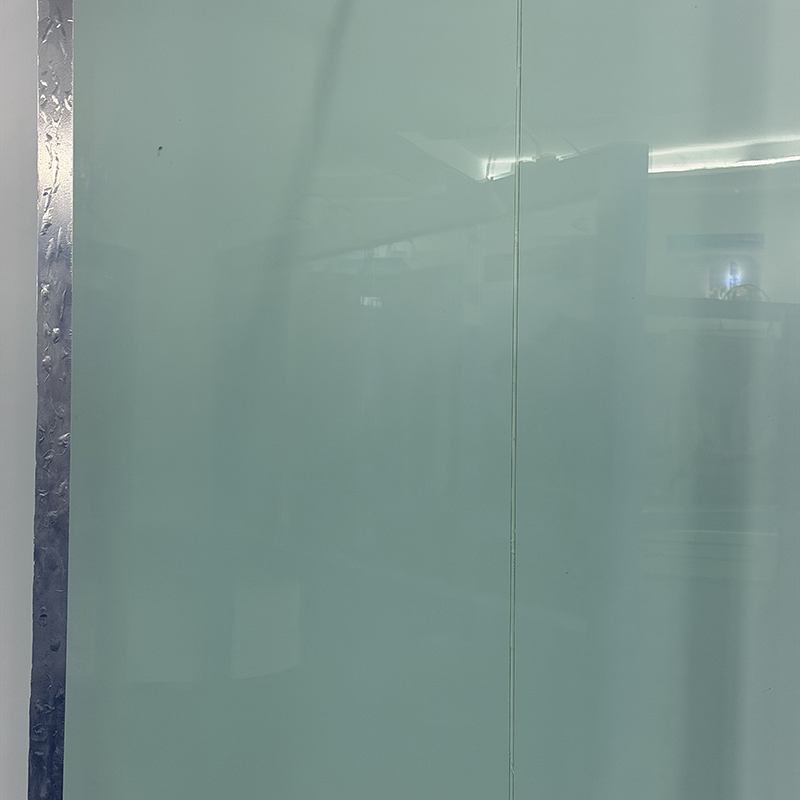
When you specify ceramic fritted glass, you are not choosing a decorative surface alone. Large glass facades can increase solar heat gain, glare, and cooling loads, particularly when extensive glazing faces strong sunlight. Ceramic fritted glass gives you another way to control solar radiation while maintaining architectural design flexibility.
For architects, facade consultants, and developers, the key question is not simply how the glass looks. You need to understand how frit coverage, glass configuration, orientation, and Low-E coatings work together to achieve the required balance between daylight, solar control, and visual appearance.
How Ceramic Fritted Glass Controls Solar Heat
Ceramic frit consists of ceramic-based pigments applied to glass and permanently fused through a heat treatment process. Once processed, the frit becomes an integral part of the glass surface, providing both visual patterning and solar-control functions.
Reducing Solar Heat Gain
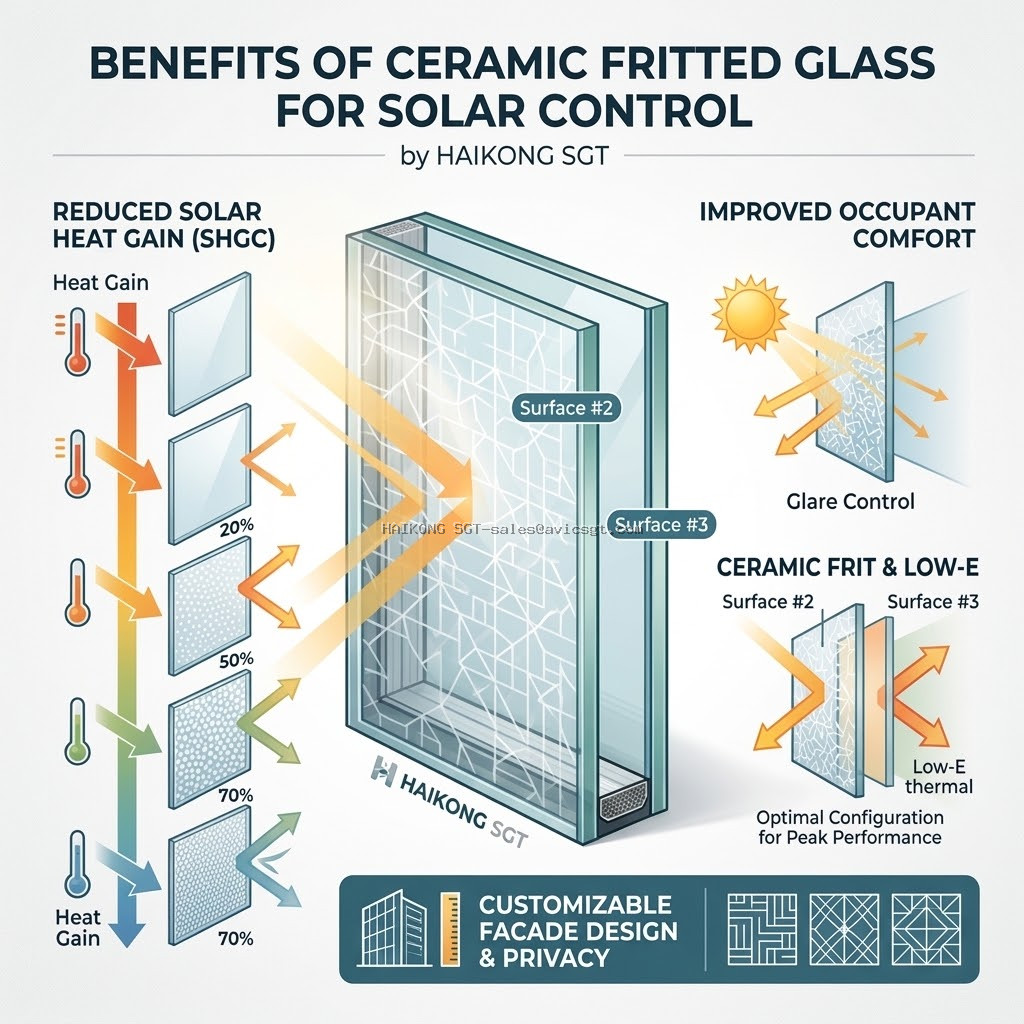
A fritted pattern can intercept solar radiation before it passes through the glazing system. Ceramic frit primarily absorbs and reflects solar energy, while some of the absorbed heat may be transferred or re-radiated toward the interior. Therefore, increasing frit coverage does not necessarily result in a linear reduction in SHGC. The actual thermal performance depends on factors such as frit coverage, glass configuration, orientation, and glazing properties, so thermal simulation is recommended for accurate evaluation, although the actual solar performance depends on the glass type, frit color, pattern, orientation, and complete glazing configuration.
For example, you can consider different frit coverage levels during early facade design:
- 20%–40% coverage:Suitable when you want meaningful solar and glare control while retaining substantial daylight.
- 50%–70% coverage:Appropriate for facades requiring stronger solar screening, particularly where direct sunlight is a major concern.
- Higher coverage:May provide greater visual screening but can also reduce daylight transmission and change facade appearance.
Therefore, you should evaluate the complete glazing specification rather than selecting frit coverage based on appearance alone.
Controlling Glare for Occupant Comfort
Direct sunlight can create uncomfortable glare on computer screens, floors, and interior surfaces. A carefully designed frit pattern can interrupt direct solar transmission and create a more controlled daylight environment.
This makes ceramic fritted glass for commercial facades particularly relevant to offices, airports, hotels, retail buildings, and other projects with extensive glazed elevations.
Ceramic Fritted Glass and Low-E: A More Complete Approach
Ceramic frit and Low-E coatings address different parts of solar and thermal performance. Frit primarily provides solar screening and visual modulation, while Low-E technology helps manage infrared heat transfer within the glazing system.
For a high-performance insulated glass unit,You may specify a configuration where the frit is positioned on Surface and a Low-E coating is applied on Surface. However, the appropriate frit surface and glazing configuration should be evaluated based on the project climate, insulating glass structure, thermal performance requirements, and frit durability. This configuration is provided only as one possible option and should not be considered a preferred or universally recommended arrangement, depending on the selected glass construction and manufacturer recommendations.
The exact configuration should always be verified through project-specific thermal calculations. Factors such as climate, facade orientation, glass composition, coating performance, frit coverage, and frame system all affect the final result.
Ceramic Fritted Glass vs. Conventional Clear Glass
|
Performance Factor |
Clear Glass | Ceramic Fritted Glass |
|
Solar screening |
Limited without additional treatment | Can be designed for solar screening |
|
Glare control |
Limited | Pattern can reduce direct solar glare |
|
Visual design |
High transparency |
Wide range of patterns and densities |
| Privacy potential | Low to moderate |
Can provide additional visual screening |
| Daylight control | Less flexible |
Coverage can be adjusted |
| Facade customization | Relatively limited |
Strong pattern and appearance flexibility |
This comparison shows why architects often consider fritted glazing when facade performance and visual design must work together.
How to Specify Ceramic Fritted Glass for Your Project
Before ordering architectural fritted glass, follow a structured selection process.
- Define the facade objective.Identify whether your priority is solar control, glare reduction, privacy, aesthetics, or a combination.
- Evaluate building orientation.South- and west-facing elevations may require stronger solar-control strategies depending on the project location.
- Select the frit pattern and coverage.Compare 20%, 40%, 50%, 60%, or 70% coverage according to daylight and visual requirements.
- Choose the glazing configuration.Consider monolithic, laminated, or insulated glass and determine whether Low-E should be included.
- Run performance calculations.Check SHGC, U-value, visible light transmission, glare considerations, and other project requirements.
- Confirm production and testing requirements.Review color consistency, frit adhesion, dimensions, heat treatment, and applicable standards before mass production.
Why Work With HAIKONG SGT?
Guangdong Haikong Special Glass Technology Co., Ltd., also known as HAIKONG SGT, has more than 30 years of experience in glass deep processing, with its history dating back to 1994.
As an architectural glass supplier, SGT combines glass manufacturing expertise with laboratory testing capabilities. Its testing equipment includes a Fourier Transform Infrared Spectrometer, Lambda 1050+ spectrophotometer, 60° angle optical tester, and CM700D portable color difference meter.
These instruments support evaluation of optical, thermal, and color performance for architectural glass. SGT reports more than 500 global projects, with applications extending across North America, Europe, Asia, and China.
The company also operates within the resources of Hainan Development, a publicly listed company under the State-owned Assets Supervision and Administration Commission (SASAC) of Hainan Province, China. Its stated quality systems include ISO 9001, ISO 45001, and ISO14001, supporting structured quality management and production control.
FAQ
1. What is ceramic fritted glass used for?
Ceramic fritted glass is used for facade decoration, solar screening, glare control, privacy, and daylight management. It is commonly considered for commercial buildings, hotels, airports, offices, and curtain wall systems.
2. Does ceramic fritted glass reduce solar heat gain?
It can reduce solar radiation entering a building by interrupting part of the incident sunlight. However, the actual SHGC depends on the complete glazing system, including frit coverage, glass composition, coating, and configuration.
3. Can ceramic fritted glass be combined with Low-E?
Yes. Ceramic fritted glass with Low-E coating can combine solar screening with low-emissivity thermal performance. The optimal surface position and glass configuration should be determined through project-specific calculations.
Conclusion
When you select ceramic fritted glass, you can address more than facade aesthetics. By controlling frit coverage and combining the glass with an appropriate Low-E configuration, you can develop glazing systems that balance solar heat control, glare management, daylight, and architectural appearance. With more than 30 years of glass deep-processing experience, laboratory testing capabilities, and projects across multiple regions, HAIKONG SGT can support your architectural glass requirements from specification through production.
CTA
Planning a commercial facade or curtain wall project? Contact HAIKONG SGT with your glass size, facade orientation, frit coverage target, Low-E requirement, and performance criteria. The SGT team can help you evaluate a suitable ceramic fritted glass configuration for your project.