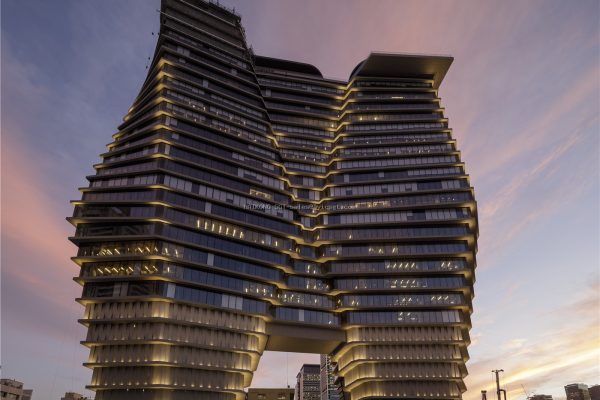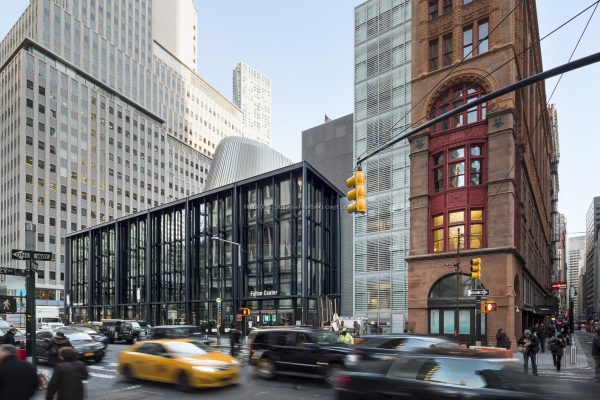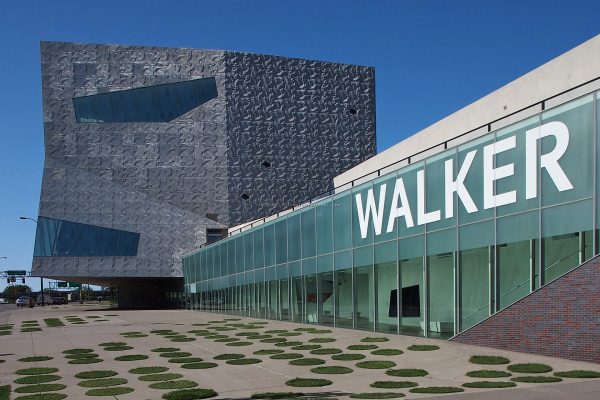
When you specify bent glass for a curved facade, entrance, skylight, or interior feature, the shape alone does not tell you how the glass will perform. Hot-bent glass and bent tempered glass can look similar, but their heating, forming, cooling, strength, and breakage characteristics differ significantly.
For architects, facade consultants, contractors, and glass buyers, choosing the wrong process can affect structural design, safety requirements, optical quality, and project approval. This guide explains how each type of curved glass is manufactured and helps you determine which solution fits your project.
What Is Bent Glass?
Bent glass is flat glass that has been heated and formed into a predetermined curve using gravity, molds, forming equipment, or a combination of these methods. The final geometry can range from simple cylindrical curves to more customized architectural shapes.
The key point is that bent glass does not automatically mean tempered glass. You need to confirm the heat-treatment process and the final safety configuration before specifying it for a building project.
Hot-Bent Glass: Controlled Heating and Forming
Hot-bent glass (typically annealed bent glass) is heated until soft, settles onto a curved mold to form the target shape, then undergoes slow, controlled cooling (annealing).
Typical characteristics include:
- Formed through thermal softening and controlled cooling
- Can support complex curved architectural designs
- Generally retains the characteristics of annealed glass unless further processed
- May provide greater flexibility for certain customized geometries
- Requires careful consideration when used in safety-critical locations
Because it is not automatically tempered, you should not specify annealed hot-bent glass simply because the application requires a curved shape.
Bent Tempered Glass: Forming Plus Rapid Cooling
Bent tempered glass follows a different production route. After heating, the glass is mechanically formed into the required curve and then rapidly cooled with air to create a tempered structure.
This process changes the stress distribution within the glass and increases its resistance to mechanical and thermal loads compared with annealed glass of comparable thickness.
For projects involving public areas, entrances, facades, and other locations where safety glazing requirements apply, you should evaluate bent tempered glass against the applicable project standards rather than selecting it based on appearance alone.
Bent Glass vs. Bent Tempered Glass: Key Differences
| Performance Factor | Hot-Bent / Annealed Bent Glass | Bent Tempered Glass |
|---|---|---|
| Forming process | Heated and shaped using molds or controlled forming | Heated, mechanically formed, then rapidly cooled |
| Heat treatment | Annealed unless additionally processed | Tempered through rapid cooling |
| Strength | Lower than comparable tempered glass | Higher resistance to mechanical and thermal stresses |
| Breakage behavior | Larger, sharper fragments can occur | Typically breaks into smaller fragments |
| Shape flexibility | Suitable for selected complex curves | Geometry depends on forming and tempering equipment |
| Safety application | Requires project-specific evaluation | Often selected where safety glazing is required |
| Optical considerations | Depends on forming accuracy and glass specification | Requires control of forming and tempering distortion |
The exact performance depends on glass thickness, dimensions, radius, composition, forming equipment, edge treatment, and the applicable building standard. Therefore, you should confirm the technical specification with your glass manufacturer before finalizing the design.
How Is Bent Glass Manufactured?
If you are evaluating a custom bent glass supplier, ask the manufacturer to explain the complete production sequence rather than looking only at the finished appearance.
Typical Hot-Bent Glass Process
- Glass preparation: The manufacturer cuts and processes the flat glass according to the required dimensions.
- Heating: The glass enters a controlled heating system and reaches the temperature required for forming.
- Forming: The softened glass follows a curved mold or forming surface to achieve the specified radius.
- Controlled cooling: The glass cools gradually when an annealed configuration is required.
- Inspection: Dimensions, surface quality, curvature, and optical characteristics are checked before delivery.
Typical Bent Tempered Glass Process
- Cutting and edge processing: Complete cutting and edge work before tempering.
- Heating: Heat the glass to the required tempering range.
- Mechanical forming: Use forming equipment to create the specified curved geometry.
- Rapid air cooling: Apply controlled cooling immediately after forming.
- Quality inspection: Check curvature, dimensions, surface condition, and visual quality.
This sequence explains why bent tempered glass should not be treated as simply “hot-bent glass with extra strength.” The forming and rapid-cooling stages create different performance characteristics.
Choosing the Right Architectural Curved Glass
Your application should determine the glass configuration.
Consider these factors before ordering:
- Safety: Determine whether the location requires safety glazing and what standard applies.
- Geometry: Confirm radius, height, width, edge configuration, and whether the curve is single or double.
- Structural requirements: Consider wind load, thermal stress, impact exposure, and installation conditions.
- Optical quality: Discuss reflection, distortion, roller-wave effects, and visual requirements.
- Lamination: For applications requiring retained glass after breakage, evaluate an appropriate laminated configuration.
- Project standards: Confirm the required testing and compliance criteria for the destination market.
For example, a curved decorative partition may have different requirements from a high-level curtain wall or entrance glazing. In safety-critical applications, a laminated configuration may also be considered to help retain broken glass, subject to the applicable design and safety requirements.
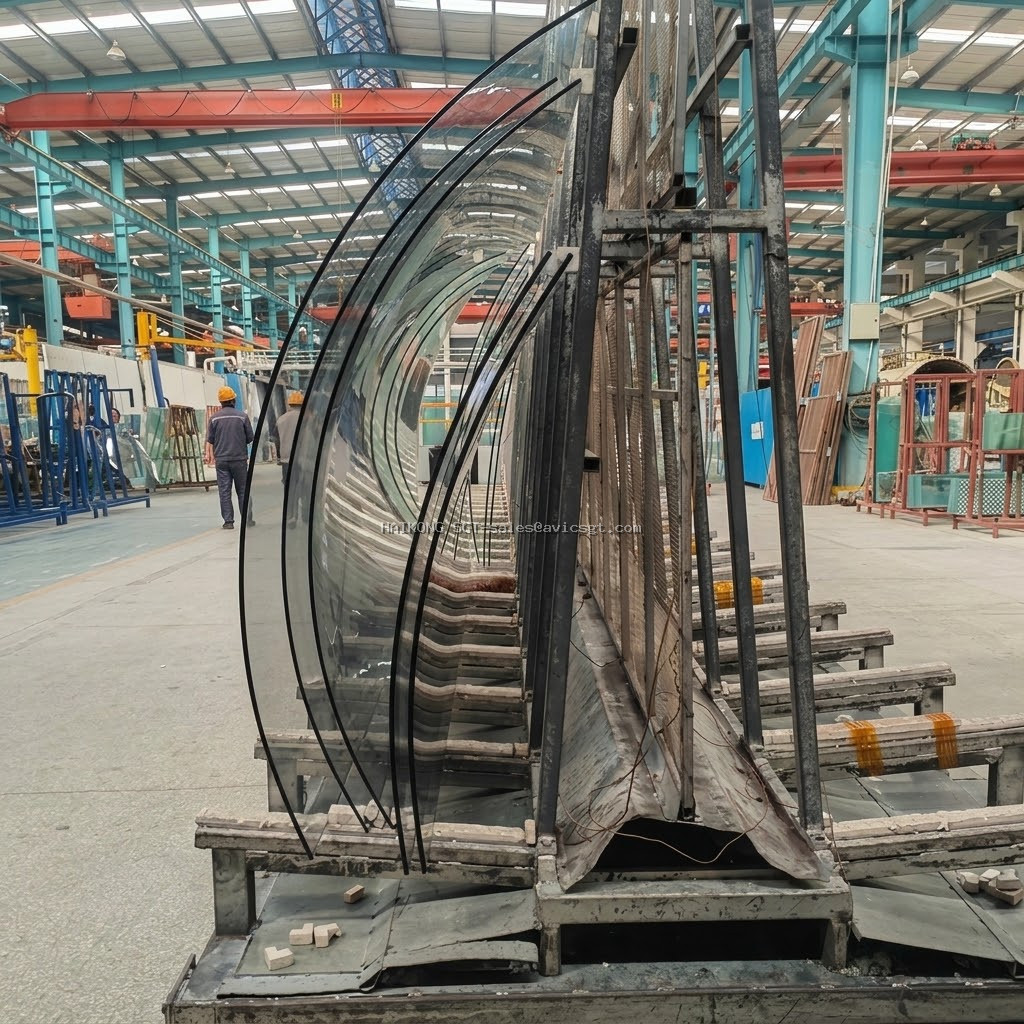
Why Work With an Experienced Bent Glass Manufacturer?
SGT, officially Guangdong Haikong Special Glass Technology Co., Ltd., has more than 30 years of experience in glass deep processing, with its industry history tracing back to 1994. The company reports more than 500 global projects and provides architectural glass solutions for projects across North America, Europe, Asia, and China.
SGT also operates professional photothermal testing capabilities, including:
- Fourier Transform Infrared Spectrometer
- Lambda 1050+ spectrophotometer
- 60° angle optical tester
- CM700D portable color difference meter
These instruments support optical, thermal, and color performance evaluation for architectural glass. For a custom bent glass project, this type of technical evaluation can help you address appearance and performance requirements before production.
FAQ
Is bent tempered glass stronger than hot-bent annealed glass?
Generally, yes. Tempering introduces a surface compression stress that improves resistance to mechanical and thermal stresses compared with comparable annealed glass. However, the actual performance depends on the complete glass specification and application.
Can bent glass be laminated?
Yes. Curved glass can be incorporated into laminated configurations when the design and manufacturing process support it. For safety-critical applications, you should confirm the required glass composition, interlayer, testing, and applicable standards with your supplier.
Conclusion
Choosing bent glass is not simply a matter of selecting a curved shape. You need to distinguish hot-bent annealed glass from bent tempered glass and evaluate strength, breakage behavior, optical quality, geometry, and project safety requirements together. With its long history in glass deep processing, global project experience, and professional testing capabilities, SGT can help you assess the appropriate curved architectural glass configuration for your application.
CTA
Planning a curved facade, entrance, skylight, or interior glazing project? Contact SGT with your glass dimensions, radius, application, quantity, and destination market. The technical team can help you evaluate the appropriate bent glass configuration and project requirements before production.