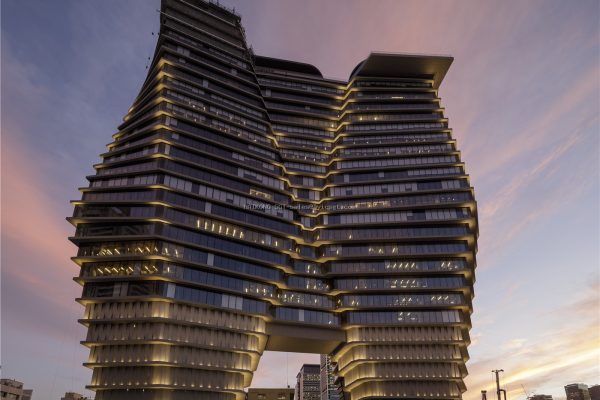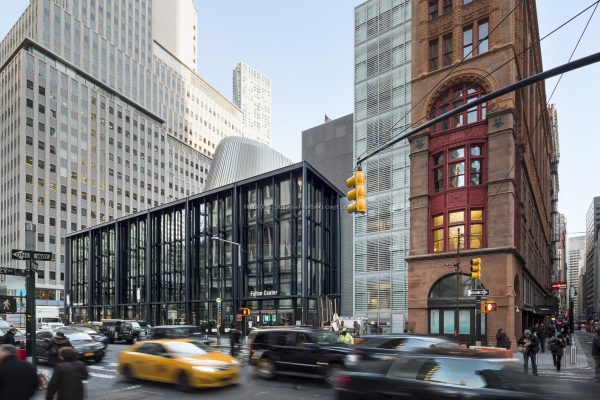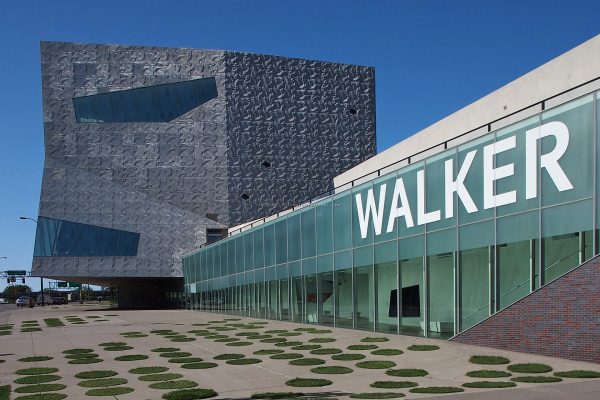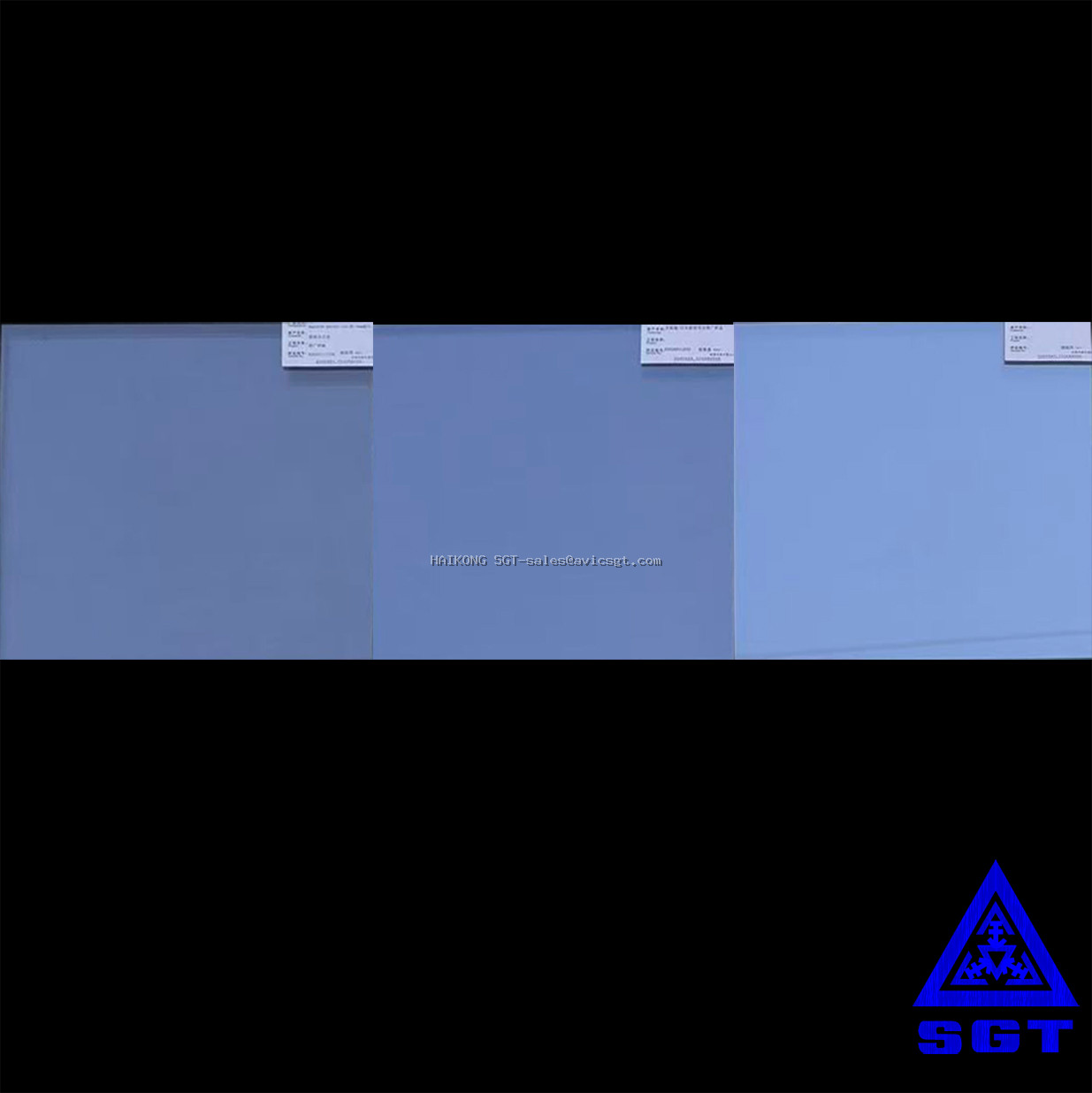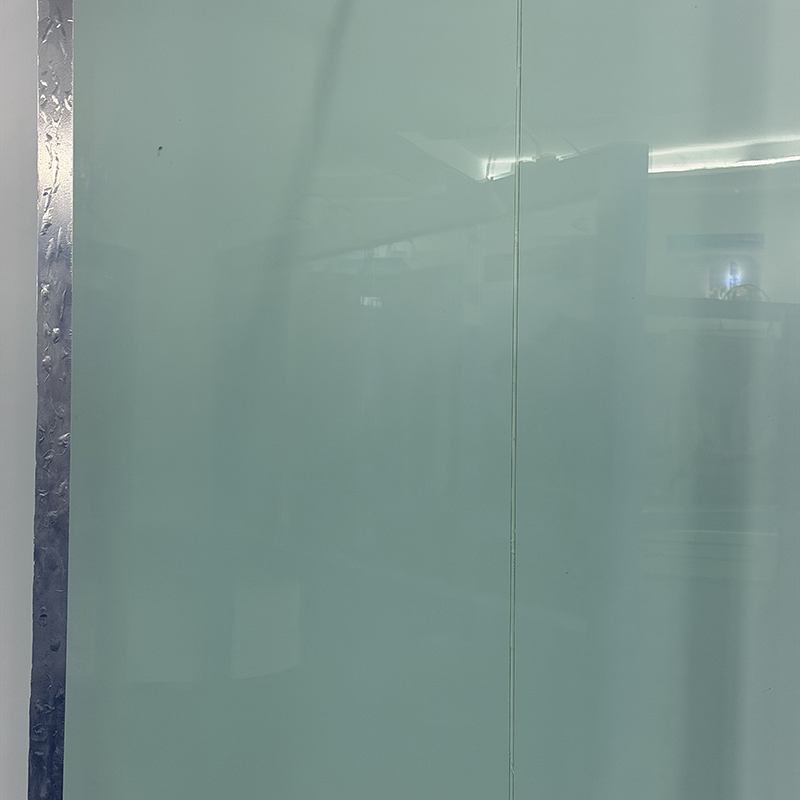
Architectural curved glass can turn a conventional facade into a distinctive architectural feature, but the curve you draw is not always the curve a glass processor can manufacture efficiently. Architects may specify a tight radius, large panels, Low-E performance, or insulated configurations before checking production limits. That gap can lead to redesigns, higher costs, installation problems, or unsuitable glass configurations.
If you define the bending radius, glass configuration, tolerances, and coating requirements early, you can reduce technical uncertainty before procurement. This guide explains the key considerations for architectural curved glass, including bending limits, springback, curved IGUs, Low-E coatings, and practical project checks.
Architectural Curved Glass: Start With the Bending Radius
The bending radius is one of the first parameters you should confirm with your glass manufacturer. A smaller radius generally requires more demanding forming technology and may limit the available glass thickness, dimensions, or configuration.
For curved tempered glass produced through roller-based bending and tempering, the achievable radius depends on factors such as:
- Glass thickness
- Panel dimensions
- Bending equipment
- Tempering process
- Required curvature
- Edge and shape tolerances
For roller-bent tempered glass, a preliminary minimum radius reference is generally R ≥1000–1200 mm. This value varies heavily with glass thickness, panel size and furnace type and shall only be used for conceptual design. You should treat this as a preliminary engineering reference rather than a universal manufacturing limit.
What Happens When the Radius Is Too Small?
For extremely tight radii (R < 500 mm), conventional bent tempered glass is rarely economical and often not feasible; hot-bent or hot-bent laminated glass is normally recommended. Your supplier may need to evaluate hot-bent glass or hot-bent laminated glass instead.
For spherical, double-curved, or highly complex geometries, you should confirm the forming method before finalizing the facade grid. A manufacturability review at the design stage can prevent you from specifying a geometry that requires major changes later.
Deflection, Springback and Curved Glass Tolerances
Curved glass does not behave exactly like a flat glass panel during processing. After forming and cooling, springback can affect the final curvature, while dimensional tolerances can influence joints between adjacent facade panels.
For large architectural projects, you should define:
- Nominal bending radius
- Arc length and chord dimensions
- Sagitta or camber requirements
- Panel width and height
- Edge tolerances
- Joint width
- Installation reference points
These parameters help your manufacturer evaluate whether the finished panels can align with the supporting facade system. For a complex curved facade, the glass geometry and the supporting frame should be coordinated before production drawings are released.
Curved IGU and Low-E Glass Configuration
A curved facade often needs more than a curved outer appearance. You may also need thermal insulation, solar control, safety performance, or acoustic properties.
Curved Insulating Glass Units
A curved IGU combines curved glass with an insulating cavity. The IGU design requires careful consideration of spacer geometry, edge sealing, sealant compatibility, and fabrication tolerances.
The primary objective is to maintain reliable edge sealing after assembly and installation. Your specification should therefore identify the intended glass configuration, cavity requirements, spacer system, and sealant system before production.
Low-E Curved Glass
Low-E coatings introduce another design consideration. If the glass will undergo a high-temperature tempering process, you should confirm that the selected coating is compatible with the process.
For tempered curved glass, use temperable (on-line) Low-E coatings rather than offline Low-E coatings applied after tempering. Your supplier should confirm the coating specification and expected optical and thermal performance for the selected glass configuration.
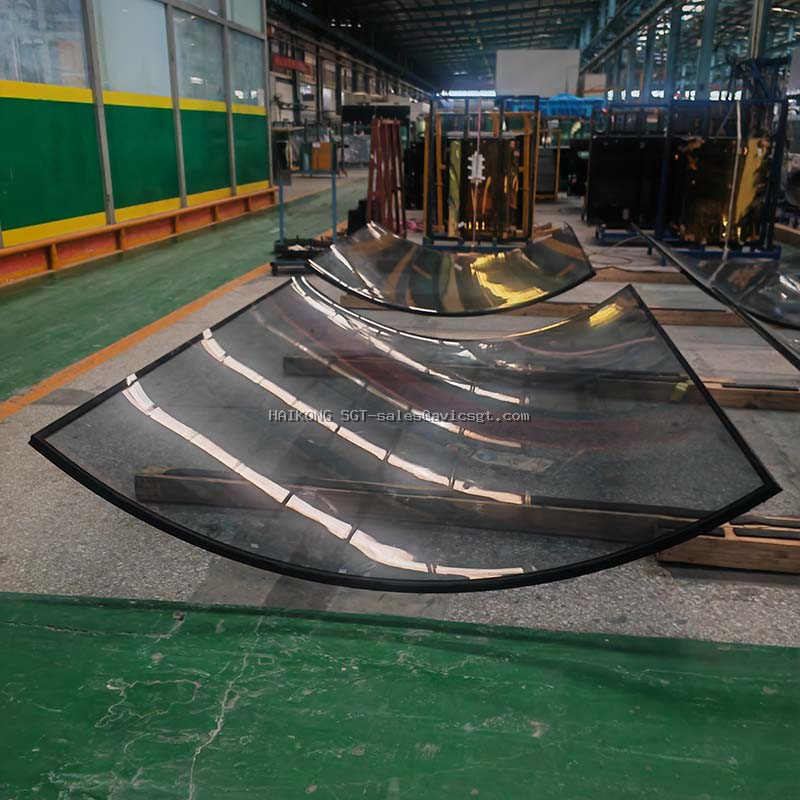
Curved Glass Configuration Comparison
| Configuration | Typical Application | Key Consideration |
|---|---|---|
| Bent tempered glass | Facades, entrances, curved glazing | Radius and forming limits |
| Hot-bent glass | Tight-radius architectural forms | More complex forming process |
| Curved laminated glass | Safety glazing, complex facades | Interlayer and forming compatibility |
| Curved IGU | Energy-efficient facades | Edge seal and spacer design |
| Curved Low-E IGU | Thermal and solar-control facades | Coating and tempering compatibility |
The appropriate configuration depends on your project geometry, safety requirements, thermal targets, facade system, and available processing technology.
A Practical Architectural Curved Glass Design Process
Before you release a curved facade specification for quotation, follow these steps:
- Define the geometry
Provide the radius, arc length, chord, sagitta, panel dimensions, and whether the design is single- or double-curved. - Confirm the forming process
Ask your glass manufacturer whether the required geometry fits the available bending technology. - Select the glass configuration
Determine whether you need tempered, laminated, insulating, Low-E, or a combined configuration. - Review tolerances
Establish acceptable radius, dimensional, edge, and joint tolerances with the facade contractor and glass processor. - Check safety requirements
Identify whether the glass is located in a guard, overhead, entrance, high-level facade, or another application requiring specific safety glazing provisions. - Approve production drawings
Coordinate the final glass geometry with the curtain wall or supporting structure before fabrication.
Why Work With an Experienced Curved Glass Manufacturer?
For a complex facade, you need more than a product quotation. You need technical coordination between the architectural design, glass processing, performance requirements, and installation system.
HAIKONG SGT, also known as Guangdong Haikong Special Glass Technology Co., Ltd., has more than 30 years of glass deep-processing experience and traces its glass-industry history back to 1994. The company operates as a wholly owned subsidiary of Hainan Development and provides architectural glass solutions for projects in North America, Europe, Asia, and China.
SGT also operates professional photothermal testing equipment, including a Fourier Transform Infrared Spectrometer, Lambda 1050+ spectrophotometer, 60° angle optical tester, and CM700D portable color difference meter. These capabilities support optical, thermal, and color-performance testing for architectural glass applications.
FAQ
1. What is the minimum bending radius for curved glass?
There is no single universal minimum radius. The achievable radius depends on glass thickness, dimensions, forming technology, and the manufacturer’s equipment. For some roller-bent applications, R ≥ 1000–1200 mm may serve as a preliminary reference, but you should confirm the actual limit with your processor.
2. Can curved glass be made into an IGU?
Yes. Curved glass can be configured as an insulating glass unit when the glass geometry, spacer, edge seal, sealant system, and assembly process are appropriately coordinated.
3. Can Low-E coating be used on curved tempered glass?
Yes, but coating compatibility with the tempering process must be confirmed. For applications requiring high-temperature processing, a suitable temperable Low-E coating may be required.
Conclusion
Designing architectural curved glass successfully requires you to coordinate geometry, bending radius, tolerances, glass configuration, coating requirements, and facade integration before production. By checking these parameters early, you can make your curved facade specification more practical and reduce avoidable changes during fabrication and installation.
Need to evaluate a curved glass facade design? Contact HAIKONG SGT with your panel dimensions, bending radius, glass thickness, Low-E requirements, and intended application. SGT can use these project parameters to help you review the appropriate architectural glass configuration and technical requirements.