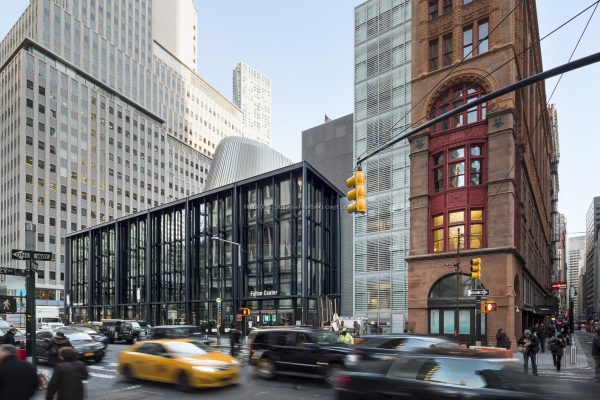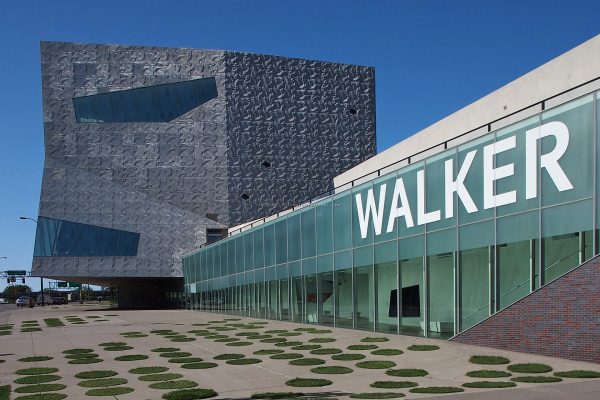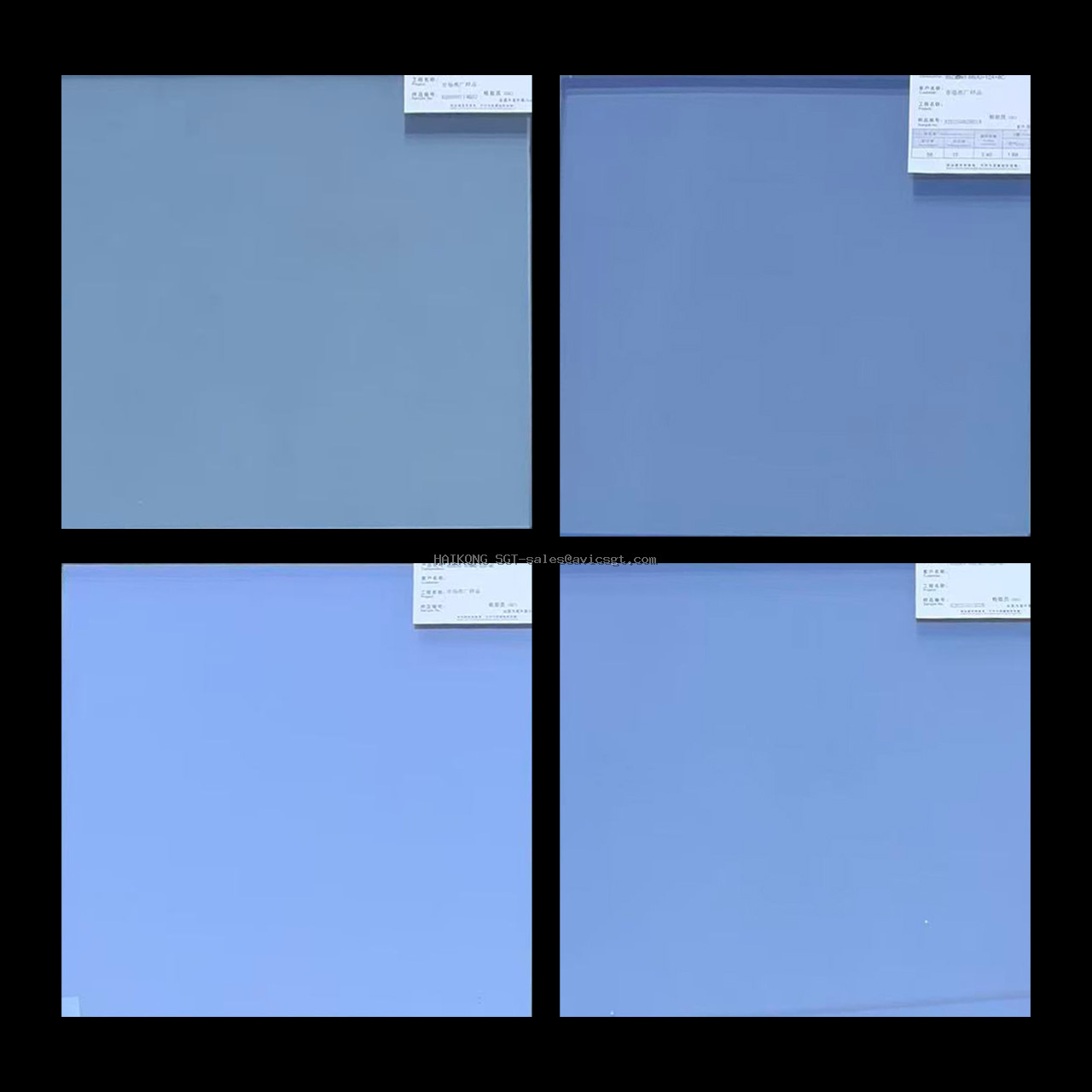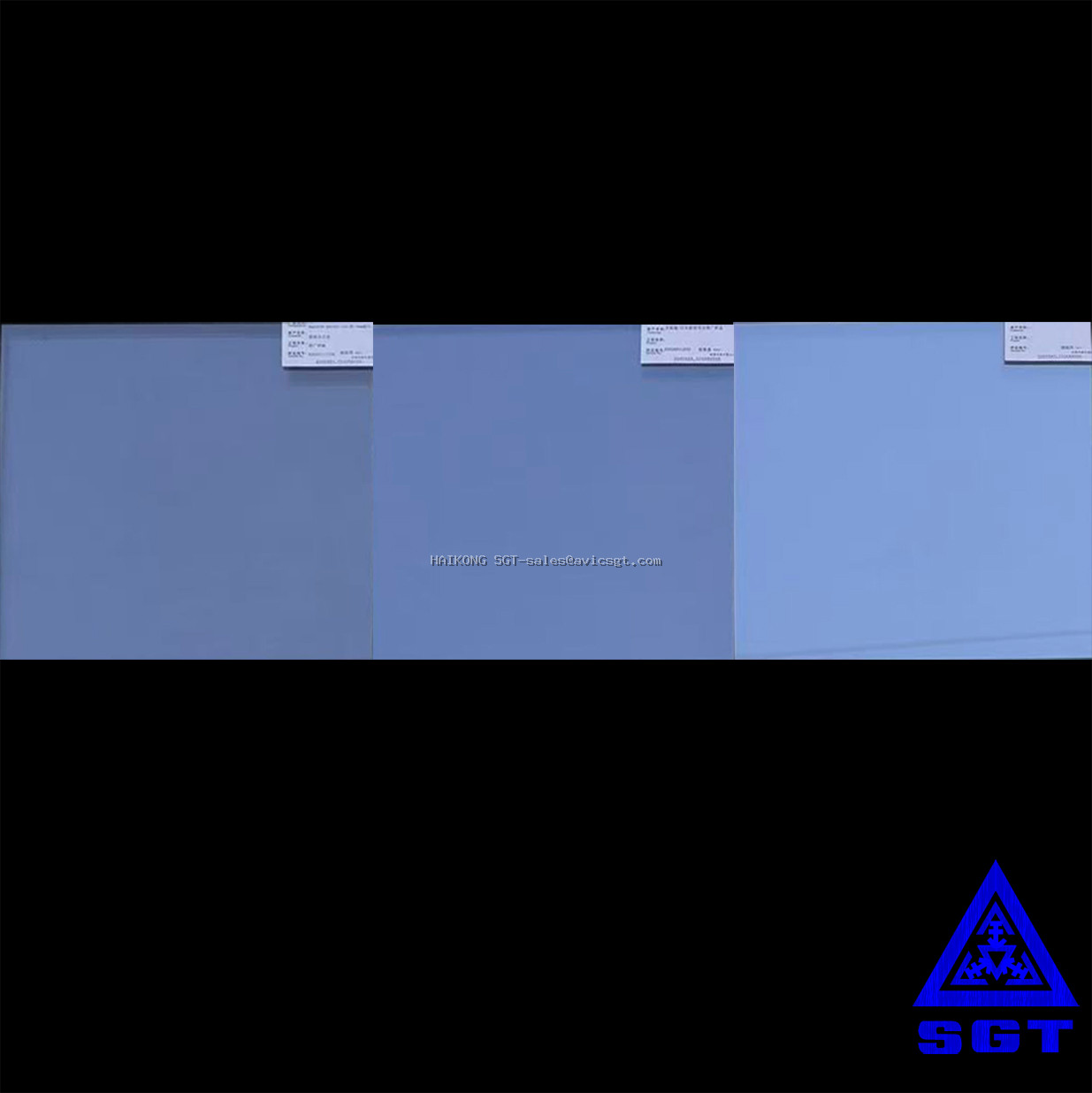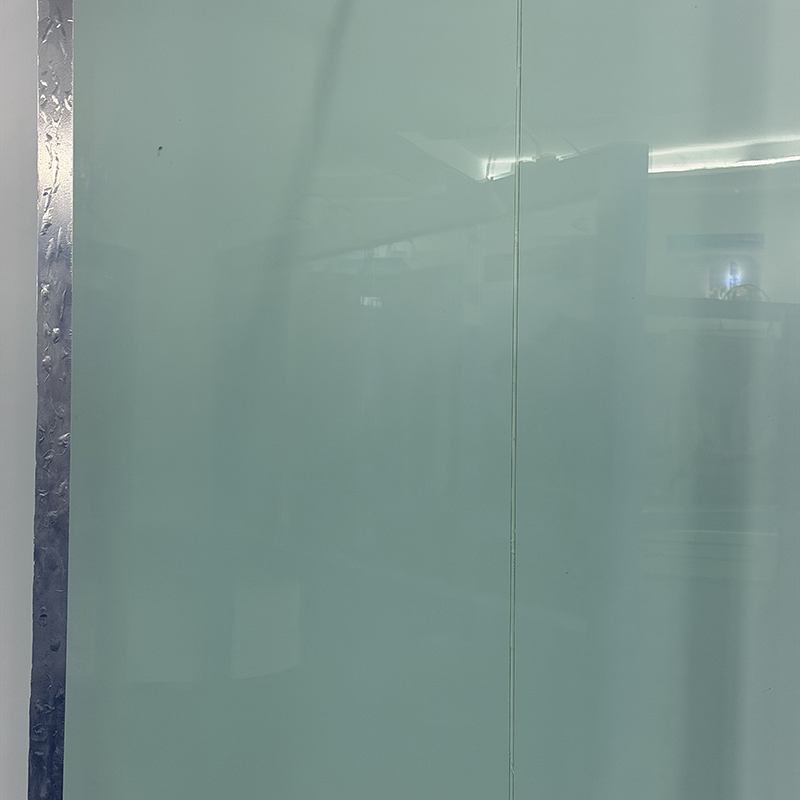
Fritted glass enables architects to turn standard transparent glazing into customized architectural surfaces, delivering privacy screening, glare control and unique facade aesthetics without fully blocking natural daylight.
From airports and museums to commercial buildings and luxury hotels, you can use ceramic patterns ranging from simple dots and lines to complex images and gradients. HAIKONG SGT, with more than 30 years of glass deep-processing experience and over 500 global projects, develops architectural glass solutions for demanding building applications.
What Is Fritted Glass?
Fritted glass is glass with a ceramic-based coating or pattern that is permanently fused to the glass surface through a high-temperature firing process. Instead of applying ordinary paint that remains as a surface layer, the ceramic frit becomes integrated with the glass during heat treatment.
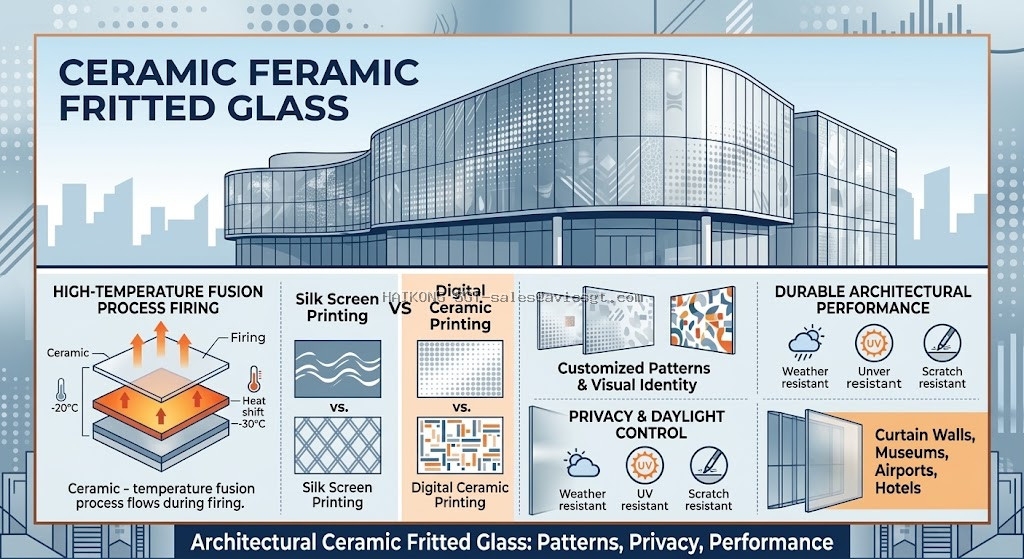
The process generally involves applying inorganic ceramic pigments to the glass through silk screen printing or digital ceramic printing, followed by heating in a tempering or firing process.At typical tempering temperatures of 680–720°C, ceramic pigments fully fuse into the glass substrate permanently and becomes a durable part of the glass surface.
This makes ceramic fritted glass particularly suitable for architectural applications where long-term appearance and performance matter.
Why Architects Specify Ceramic Fritted Glass
You can select fritted glass when a project requires:
- Custom dots, lines, grids, gradients, or graphic patterns
- Controlled privacy without completely blocking daylight
- Decorative facades and architectural glass features
- Visual screening for structural or mechanical elements
- Durable surface patterns for exterior glazing
- Integration with tempered, laminated, or insulating glass configurations
Ceramic Fritted Glass: Two Main Printing Methods
The right printing technology depends on your pattern, production volume, colors, and design complexity.
1. Screen Printed Glass
Traditional screen printed glass uses a prepared screen to transfer ceramic ink onto the glass surface. This method works especially well when you need consistent, repeatable patterns across a large quantity of panels.
Typical applications include:
- Standard dot patterns
- Lines and stripes
- Grids
- Repeated geometric designs
- Large-volume architectural projects
Because the same screen can reproduce a consistent pattern across multiple panels, silk screen printing can be an efficient choice for standardized designs.
2. Digital Ceramic Printing
Digital ceramic printing works more like a large-format industrial printer. Instead of relying on a physical screen for every pattern, the system digitally applies ceramic inks according to the design file.
This approach is useful when you need:
- Multiple colors
- Complex graphics
- Gradual color transitions
- Non-repeating artwork
- Customized panels within the same project
Therefore, ceramic printed glass gives architects more flexibility when the facade needs to function as both glazing and visual artwork.
Fritted Glass for Privacy and Daylight Control
One of the most useful advantages of fritted glass is that you can control visual transparency through pattern density.
For example, a gradient dot pattern can remain relatively open around the main eye-level viewing area while becoming denser toward the lower or upper sections of a panel. This allows you to obscure desks, ceilings, mechanical systems, or structural components while maintaining useful daylight.
You can also create a semi-private appearance using white or light-colored ceramic patterns. Depending on the viewing direction and lighting conditions, the patterned area can provide visual screening while still allowing occupants to maintain a connection with the exterior.
This makes privacy ceramic fritted glass relevant to:
- Office buildings
- Hotel facades
- Airports
- Museums and cultural buildings
- Curtain walls
- Interior partitions
- Balconies and semi-private spaces
Ceramic Fritted Glass vs. Conventional Decorative Glass
Choosing the right decorative glazing requires more than comparing appearance. You should also consider durability, pattern flexibility, production volume, and privacy requirements.
|
Feature |
Ceramic Fritted Glass | Conventional Surface Coating |
|
Pattern customization |
High |
Low to medium |
|
Repeated patterns |
Excellent |
Poor, batch color variation risks for large runs |
|
Complex digital graphics |
Excellent with digital printing |
Poor; unable to deliver fine gradients or detailed artwork |
| Surface durability |
High after high temperature firing, fused into glass substrate |
Low; surface bonded layer prone to scratching and peeling |
| UV exposure |
UV stable, suitable for long term exterior architectural applications |
Poor UV resistance; subject to fading and chalking under outdoor sunlight |
| Privacy control | Adjustable through pattern density |
Limited adjustment; only basic opacity tuning without gradient capability |
| Large facade applications |
Well suited with consistent batch performance |
Not recommended for large scale facades; fit for small size interior use only |
For projects where the pattern must remain stable over long-term architectural use, the ceramic-firing process provides an important durability advantage.
How Is Fritted Glass Made?
If you are evaluating architectural ceramic fritted glass, the production process typically follows these steps:
- Design the pattern
Define dots, stripes, graphics, colors, opacity, and coverage according to the architectural drawings. - Select the printing method
Choose screen printing for repeatable patterns or digital ceramic printing for complex and customized graphics. - Apply ceramic frit
Transfer the ceramic material onto the glass surface according to the approved design. - Heat-process the glass
The glass undergoes high-temperature treatment so the ceramic material can fuse with the glass surface. - Perform quality testing
Check optical, thermal, color, and dimensional performance according to project requirements. - Integrate the glass into the glazing system
Depending on the project, the fritted panel can be incorporated into suitable tempered, laminated, or insulating glazing configurations.
HAIKONG SGT: Architectural Glass Expertise
HAIKONG SGT has been involved in glass manufacturing and deep processing since 1994, giving the company more than three decades of industry experience. Its development has expanded from Shenzhen glass production into special glass manufacturing and architectural applications.
The company operates professional photothermal and color testing capabilities, including:
- Fourier Transform Infrared Spectrometer
- Lambda 1050+ spectrophotometer
- 60° angle optical tester
- CM700D portable color difference meter
These instruments support testing of optical, thermal, and color performance for architectural glass. HAIKONG SGT also states that its products are evaluated against international testing standards and project-specific technical requirements.
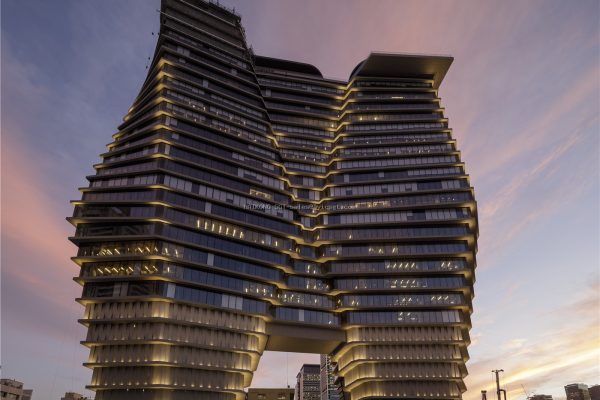
The company’s project portfolio covers 500+ global projects, with applications across North America, Europe, Asia, and China. A relevant example is the Macau Galaxy StarWorld Hotel project, where specialty architectural glass contributes to the visual and functional requirements of a high-end hospitality environment.
FAQ
1. Does ceramic fritted glass fade or peel?
When properly fired, ceramic frit becomes fused with the glass surface rather than remaining as conventional paint. This provides strong resistance to weathering, UV exposure, and surface wear. Actual performance should still be evaluated according to the selected glass composition, ceramic system, processing conditions, and project environment.Proper surface placement is critical: ceramic frit is recommended on exterior or interior surface to avoid fading inside insulated glass cavities.
2. Can fritted glass provide privacy while maintaining daylight?
Yes. You can adjust pattern density, coverage, color, and transparency to balance privacy and daylight. Gradient dots are particularly useful when you want stronger screening in selected areas while keeping other sections visually open.
3. Should you choose screen printing or digital ceramic printing?
Choose screen printed glass when you need consistent, repeatable patterns at production scale. Digital ceramic printing is generally more suitable when your design includes complex graphics, multiple colors, gradients, or individually customized panels.
Conclusion
Whether you are designing a curtain wall, hotel facade, airport, museum, or commercial building, fritted glass allows you to combine architectural aesthetics with practical privacy and daylight control. By selecting the right ceramic pattern, printing technology, glass configuration, and quality-testing process, you can create glazing that supports both design objectives and project performance requirements.
If you are planning a customized architectural glass project, HAIKONG SGT can help you evaluate pattern design, printing technology, glass configuration, and technical requirements. Contact the SGT team with your drawings, preferred pattern, dimensions, and performance targets to discuss a suitable fritted glass solution.