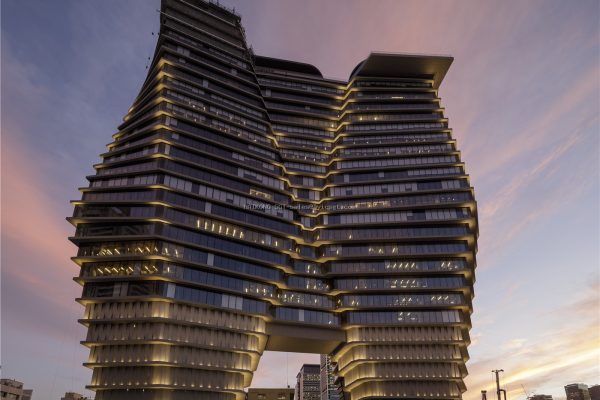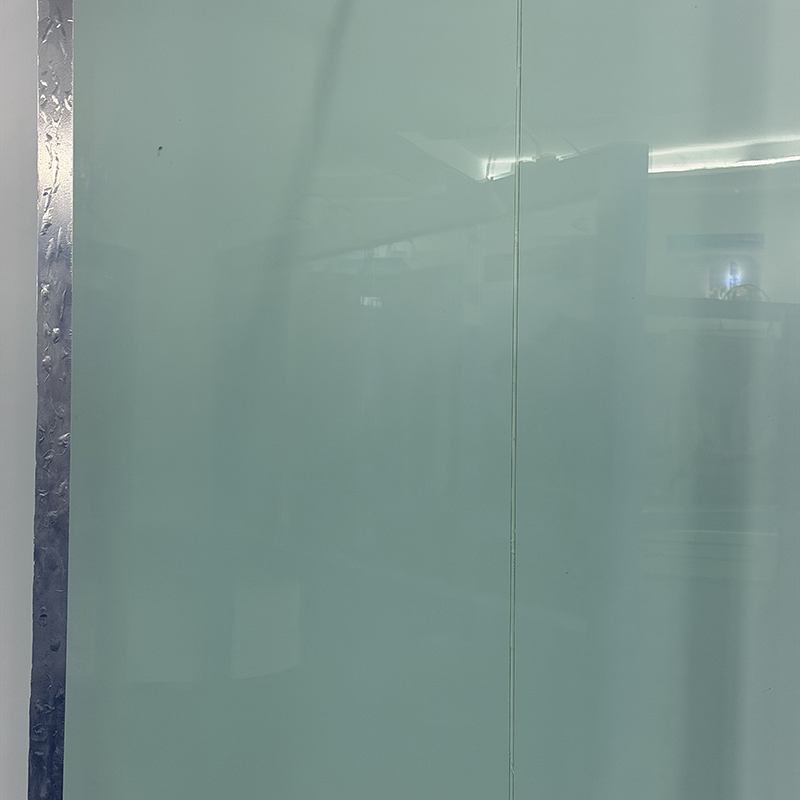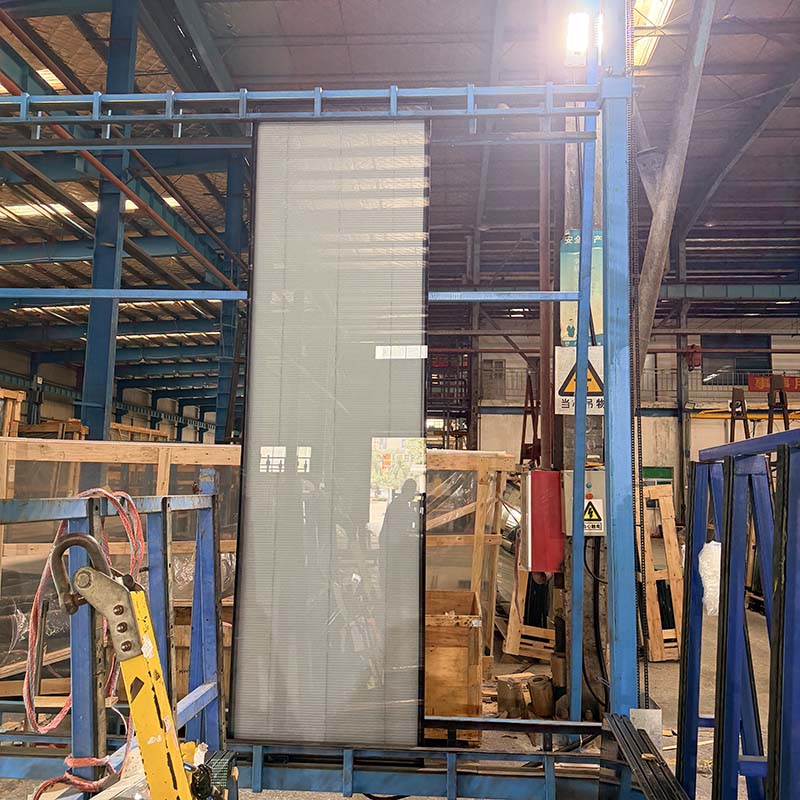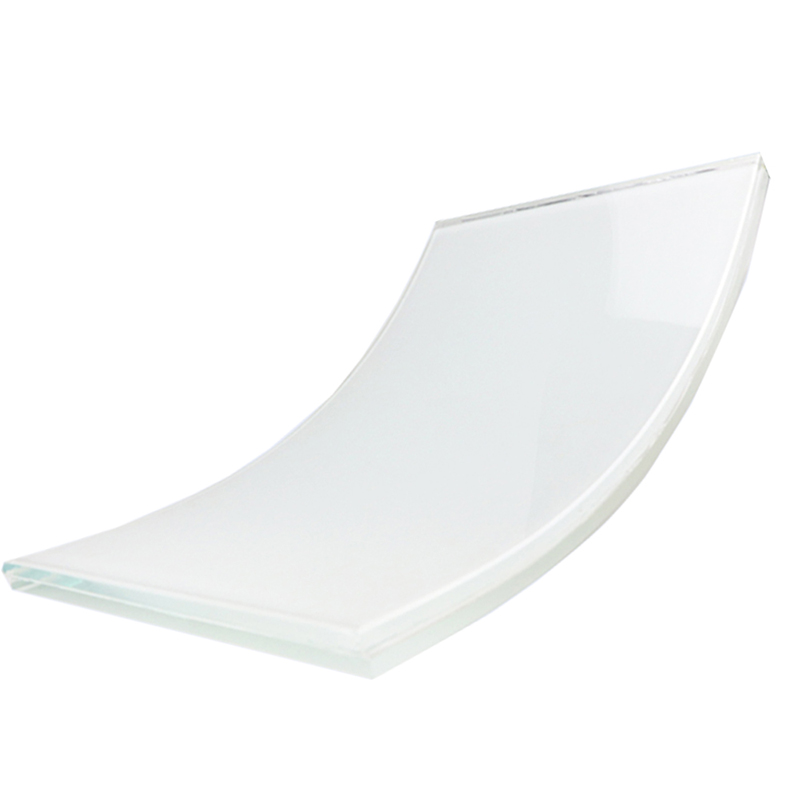
Custom curved tempered glass is no longer limited to basic cylindrical bending. Instead, modern architecture demands far more complex geometries. As a result, buildings now rely on irregular, double-curved, and free-form glass systems.
Unlike standard curved glass, custom curved tempered glass allows architects to achieve highly advanced shapes. For example, it supports:
- J-shape, U-shape, and S-shape transitions
- Double-curved (3D) spherical and saddle surfaces
- Free-form geometries with continuously changing radii
- Non-standard and asymmetrical facade designs
Therefore, this material has become essential for high-end architectural facades, landmark buildings, and complex structural glazing systems.
Why Custom Curved Tempered Glass Matters in Modern Architecture
From a procurement and engineering perspective, custom curved tempered glass is not only about appearance. Instead, it focuses on precision, structural performance, and geometric control.
In addition, buyers usually expect several key factors:
- Stable curvature accuracy for facade alignment
- Reliable performance under wind load and structural stress
- Low optical distortion for visual consistency
- Compatibility with IGU and Low-E glass systems
- Stable production for large-scale architectural projects
Because of these requirements, manufacturers must go beyond simple bending capability. In fact, the key question is no longer “can it be bent”, but “can it be manufactured accurately in complex geometry”.
What Is Custom Curved Tempered Glass
Custom curved tempered glass is produced by heating flat glass to its softening point. Then, it is formed in a precision-controlled mold. Finally, the glass is rapidly cooled to create surface compression and internal tension.
As a result, the process improves both strength and safety while enabling complex shaping.
Key characteristics include:
- It is 4–5 times stronger than annealed glass
- It breaks into small blunt fragments for safety
- It supports single, double, and free-form curved surfaces
- It works well with laminated and insulated glass systems
Types of Curved Glass Used in Architecture
1. Curved Tempered Glass
This type is widely used in curtain walls, skylights, and facade systems. It provides essential structural safety for buildings.
2. Hot Bent (Annealed) Curved Glass
This type is used when tighter radii or higher optical clarity is required. However, it is usually laminated when applied in exterior environments to ensure safety.
3. Double-Curved and Free-Form Glass
This category is the most advanced form of custom curved tempered glass. It is commonly used in twisting towers and parametric facades.
For example, it includes:
- Conical and elliptical geometries
- Saddle-shaped surfaces
- Twisted and irregular facade systems
- Fully free-form architectural skins
Why Manufacturing Precision Matters
In facade engineering, even small curvature errors can create serious problems. Therefore, manufacturers must control accuracy strictly.
Common risks include:
- Misalignment in curtain wall systems
- Sealant stress and potential leakage
- Visible optical distortion under natural light
- Increased on-site adjustment costs
As a result, high-quality production requires strict tolerance control during bending, tempering, and cooling.
Engineering Capability and Production Control
To produce high-quality custom curved tempered glass, manufacturers must use an integrated system.
For example, it includes:
- CNC cutting and precision shaping systems
- Automated washing and edge processing
- Controlled tempering furnaces for curved geometry
- Laminating lines for PVB and SGP interlayers
- IGU production lines for energy-efficient facades
- Coating and digital printing compatibility systems
At the same time, HAIKONG SGT operates a 200,000㎡ production base. Therefore, it supports large-scale architectural glass manufacturing for complex curved and special-shaped projects worldwide.
Optical Performance and Distortion Control
Optical quality is extremely important, especially in large facade installations.
To ensure consistency, manufacturers apply several methods:
- Uniform convection heating systems
- Precision-controlled quenching airflow
- Balanced cooling curves for curved surfaces
- Strict post-production optical inspection
As a result, the glass maintains stable visual performance even in large-scale curved facades.
Safety and Structural Performance
Depending on project needs, custom curved tempered glass can be produced in different configurations.
For example:
- Fully tempered glass for high-impact resistance
- Heat-strengthened glass for controlled stress performance
- Laminated glass with PVB or SGP for safety and acoustic performance
In addition, these systems provide several benefits:
- High structural stability in high-rise buildings
- Safe fracture behavior
- UV and acoustic performance when laminated
- Strong compatibility with IGU façade systems
Application Areas
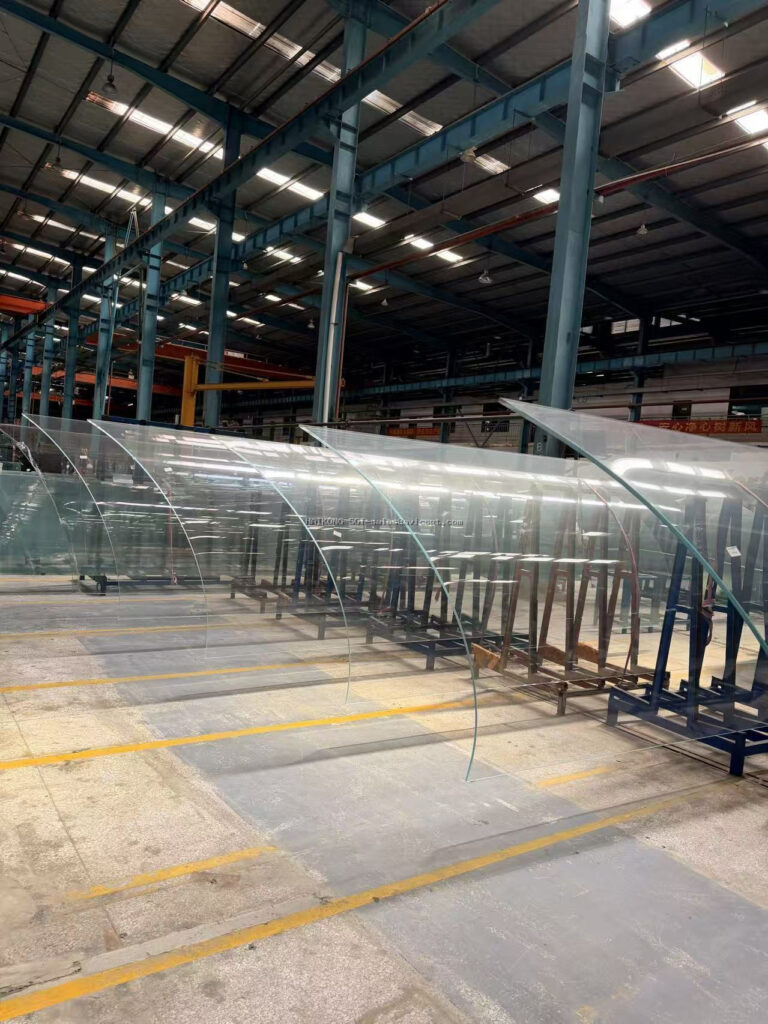
Custom curved tempered glass is widely used in modern architecture. For example, it appears in:
- High-rise curtain wall systems
- Airports and transportation hubs
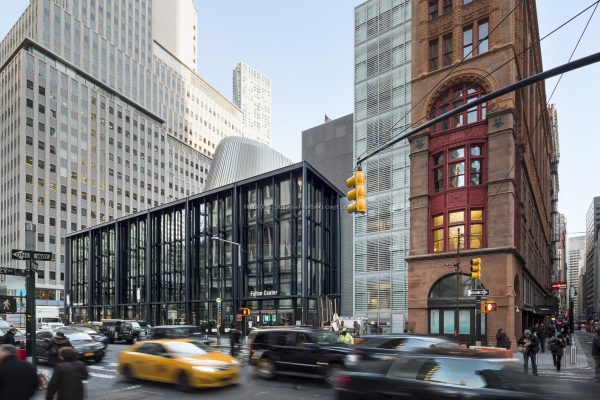
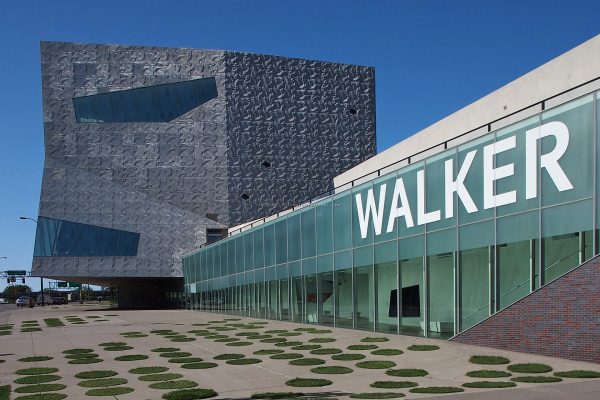
- Museums and cultural landmark buildings
- Hotels and commercial facades
- Observation elevators and panoramic glass structures
- Interior architectural features and installations
Therefore, it plays both a structural and aesthetic role in architecture.
Procurement Considerations for Buyers
Before selecting a supplier of custom curved tempered glass, procurement teams should carefully evaluate several factors:
- Curvature tolerance capability
- Minimum and maximum bending radius
- Double-curved and free-form manufacturing capability
- Laminated and IGU integration capacity
- Compliance with EN, ASTM, and ISO standards
- Proven experience in landmark facade projects
In addition, these factors directly affect project safety and installation efficiency.
FAQ
Q1: What is the difference between Single-Curved (Cylindrical) and Double-Curved (3D/Spherical) glass?
The key difference lies in geometric axes and manufacturing complexity.
First, Single-Curved Glass is bent along only one axis. As a result, it forms a cylindrical or cone shape. This type is widely used as the industry standard for curved facades, building corners, and glass showcases.
In contrast, Double-Curved (3D) Glass is formed along multiple axes at the same time. Therefore, it creates spherical, paraboloid, or free-form geometries. This process requires specialized molds and advanced thermal slumping techniques. As a result, it is ideal for highly complex architectural landmarks and iconic building designs.
Q2: Can Low-E (Low-Emissivity) performance coatings be applied to curved glass?
Yes, Low-E coatings can be applied to curved glass. However, the process requires specific technical control.
In most cases, we use post-temperable soft-coat Low-E glass. First, the coating is applied before the bending process. Then, the glass enters the bending furnace for thermal forming.
During this stage, precise process control is critical. Our advanced convection bending furnaces are carefully calibrated. Therefore, they prevent the Low-E silver layer from oxidizing, burning, or changing color under high temperatures (over 600°C).
As a result, the coating maintains stable performance throughout the curved glass production process.
Conclusion
Custom curved tempered glass is a precision-engineered architectural material. It allows modern buildings to move beyond simple geometry and achieve complex curved, double-curved, and free-form designs.
Ultimately, its value lies in geometric accuracy, structural safety, and facade performance.
With advanced production systems and strict engineering control, HAIKONG SGT delivers reliable custom curved tempered glass solutions for global architectural projects.