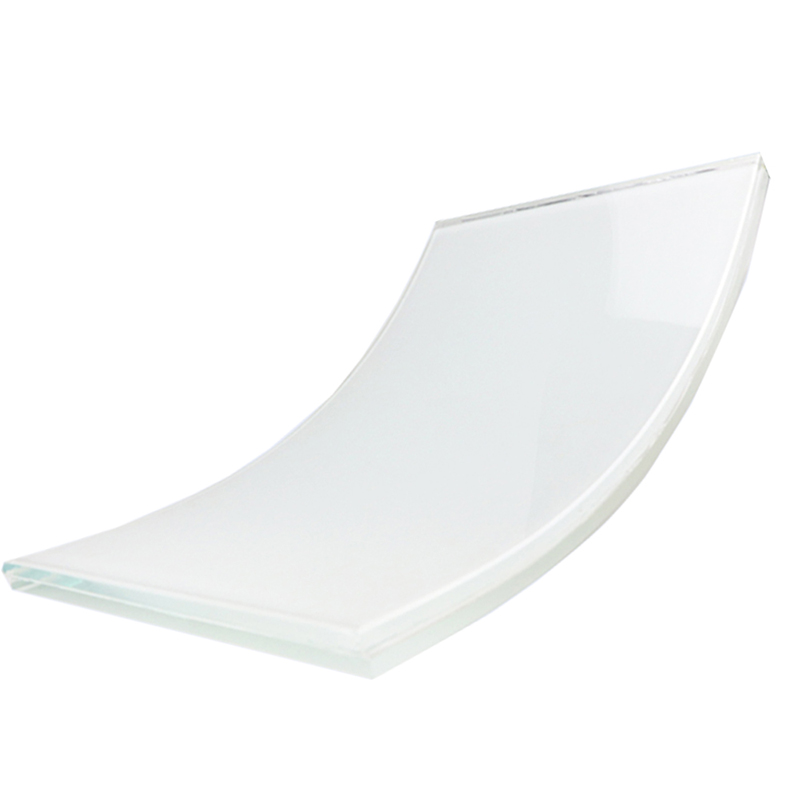
When you specify laminated safety glass for structural glazing systems, the interlayer selection determines whether the facade behaves like a decorative enclosure or a true load-bearing system.
In engineering practice, the debate between PVB and SGP is not about appearance—it is about structural mechanics, long-term stability, and failure behavior under extreme load conditions.
HAIKONG SGT, a state-backed China glass fabrication factory, supplies both laminated systems for curtain walls, skylights, and structural glass applications across global projects.
Structural Performance in Laminated Safety Glass Systems
When engineers calculate laminated glass thickness for structural glazing, the key parameter is shear modulus (G), not just glass strength.
SGP (SentryGlas Plus) is engineered for high strength laminated safety glass panels, with a shear modulus of approximately 160 MPa at 20°C. In contrast, PVB typically remains around 5 MPa under similar conditions.
This difference fundamentally changes structural behavior:
- SGP transfers load between glass plies more efficiently
- Deflection under wind pressure is significantly reduced
- The system behaves closer to monolithic glass rather than layered safety glass
In facade engineering, this allows designers to reduce glass thickness while maintaining safety performance, which directly impacts steel framing size and installation cost.
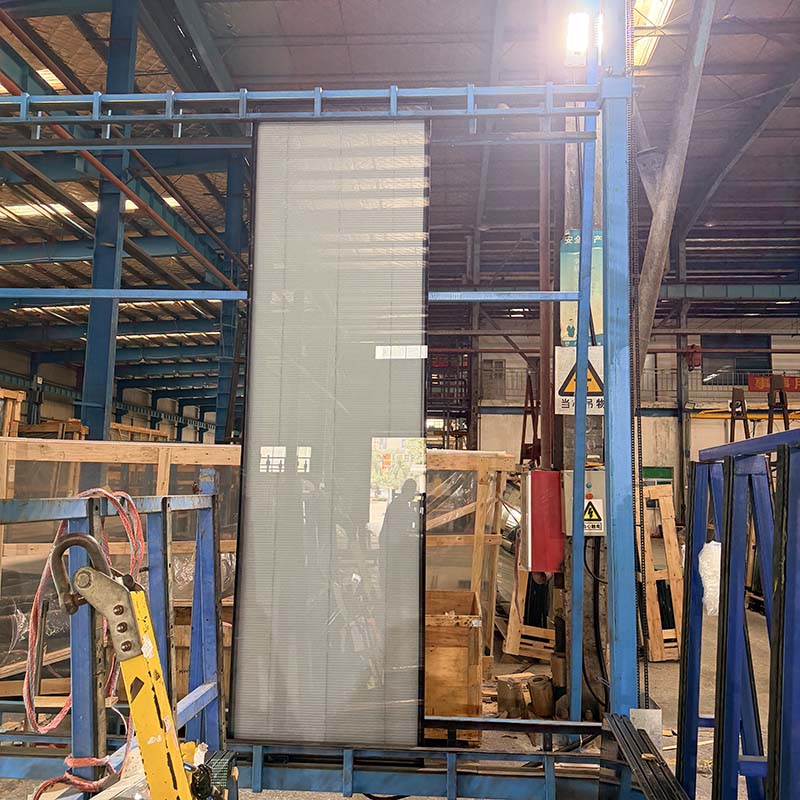
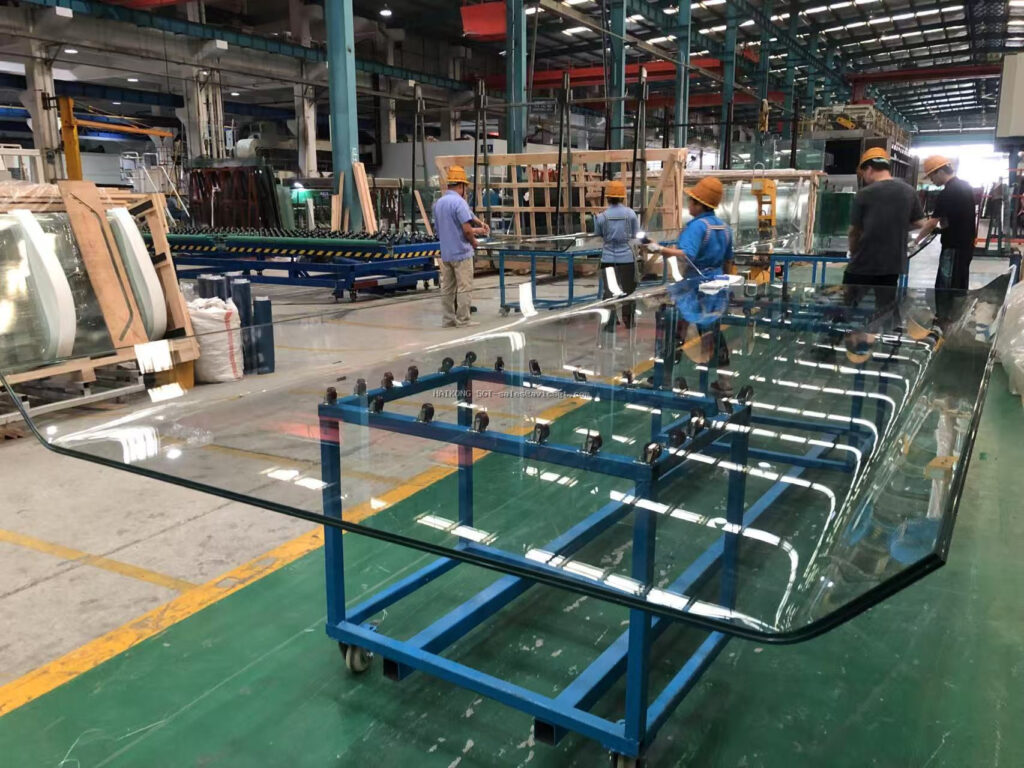
At HAIKONG SGT, laminated production lines support oversized structural panels up to 3200 × 13000 mm, enabling large-span curtain wall systems with reduced structural support density.
Post-Breakage Behavior Under Real Structural Load
One of the most critical evaluation points for laminated safety glass in structural applications is its behavior after fracture.
Under impact failure conditions:
PVB interlayers deform significantly. The broken glass fragments tend to sag under self-weight, which can create partial collapse in overhead or inclined installations.
SGP, due to its higher rigidity, maintains residual structural integrity. Even after full glass fracture, the interlayer continues to hold the glass in place and retains a significant portion of load-bearing capacity for a limited safety window.
This behavior is essential in:
- Glass skylight systems
- Overhead canopies
- Glass floors and walkways
- High-rise curtain wall safety zones
In engineering specifications, this is often the difference between a controllable failure and a hazardous collapse scenario.
Edge Stability and Long-Term Weather Resistance
For exterior laminated safety glass systems, edge stability is often the weakest point in long-term performance.
PVB is hygroscopic by nature. In high humidity or coastal environments, moisture ingress at the glass edge can accelerate:
- Interlayer whitening
- Bubble formation
- Gradual glass interlayer separation
Over time, UV exposure also increases yellowness index, reducing optical clarity.
- Coastal curtain walls
- Fully exposed glass railings
- Skylight systems with open edges
Cost Behavior and Lifecycle Engineering Value
From a procurement perspective, laminated glass price comparison between SGP and PVB is often misunderstood.
SGP has a higher material cost at the interlayer level. However, structural optimization changes the total system economics:
- Reduced glass thickness lowers raw glass consumption
- Lighter panels reduce aluminum framing and steel support size
- Installation load requirements decrease
- Maintenance and replacement frequency is reduced
In large-scale facade systems, these factors often offset initial material cost differences, especially in high-rise or infrastructure-grade projects.
Engineering Selection Guide for Laminated Safety Glass
PVB and SGP are not competitors—they serve different engineering envelopes.
PVB laminated glass is typically specified for:
- Interior partitions and office glazing
- Standard laminated glass windows in residential buildings
- Non-load-bearing facadesystems with full framing support
SGP laminated glass is required for:
- Point-supported structural glazing systems
- Glass fin and structural rib applications
- Skylights and overhead glazing
- Glass flooring systems with pedestrian load
- High wind load coastal facades
HAIKONG SGT provides customized laminated safety glass manufacturing with CNC cutting, tempering, and multi-layer lamination systems designed for structural-grade architectural projects.
FAQ
1. How do I determine the correct laminated safety glass thickness for structural glazing projects?
Thickness selection is not based solely on glass size but on load conditions, support type, and interlayer stiffness. In structural glazing systems, SGP allows for thinner glass construction due to its higher shear modulus, which improves load transfer between panes. Engineers typically reduce thickness when switching from PVB to SGP, but final specification must consider wind load, span distance, and safety redundancy requirements. For critical facade systems, HAIKONG SGT provides engineering support and load-based configuration recommendations to ensure compliance with project specifications.
2. How do I choose between SGP and PVB laminated safety glass for a structural project?
The selection between SGP and PVB should be based on structural load, exposure conditions, and safety requirements rather than cost alone. SGP laminated safety glass is recommended for high-load or high-risk applications such as skylights, glass floors, point-supported facades, and coastal buildings, where stiffness and post-breakage stability are critical. Its high shear modulus allows the glass to act as a structural component and maintain integrity after impact.
PVB is suitable for interior glazing or fully supported systems with low structural demand. For project-specific guidance, HAIKONG SGT provides engineering support to help optimize laminated safety glass thickness, configuration, and performance based on real load conditions.
Conclusion
In structural engineering applications, laminated safety glass is not just a material choice—it is a load-bearing system decision.
PVB remains suitable for standard architectural glazing where cost efficiency is prioritized. However, for structural facades, skylights, and high-risk installations, SGP provides significantly higher mechanical stability, improved failure behavior, and better long-term environmental resistance.
HAIKONG SGT delivers engineered laminated glass solutions supported by industrial-scale production capacity, advanced lamination lines, and full-size structural processing capability.
For facade engineers, contractors, and procurement teams, selecting the correct laminated system early in design directly reduces structural risk and lifecycle cost.
Contact HAIKONG SGT for structural calculation support, laminated glass samples, or project-specific facade engineering solutions.