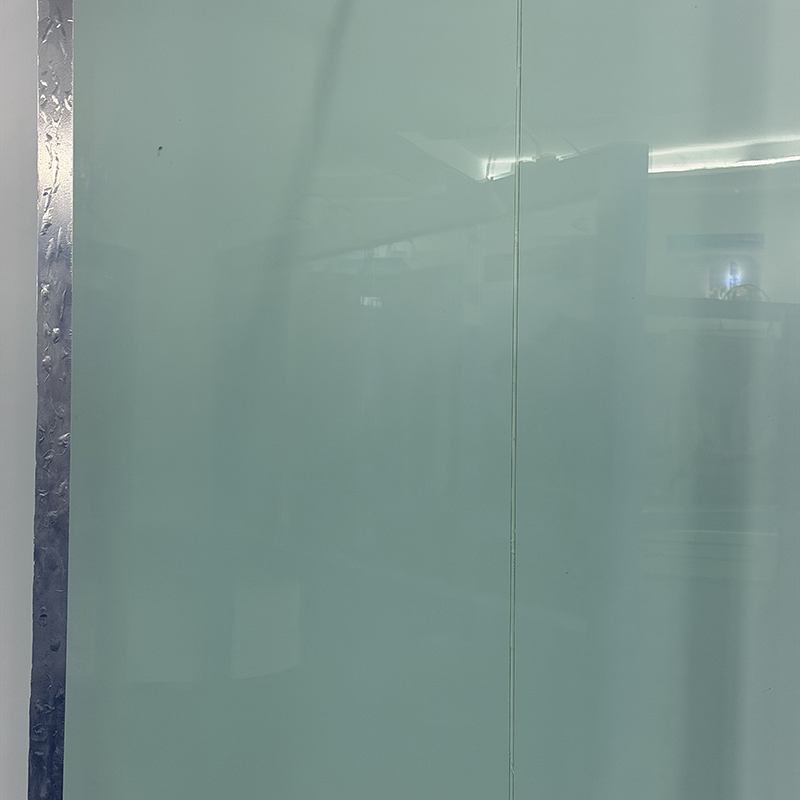
When projects require extreme load capacity, ordinary glazing systems may fail to meet engineering requirements. Architectural laminated glass provides a safer solution for demanding applications such as glass floors, structural glass fins, bridges, and blast-resistant buildings.
HAIKONG SGT develops heavy-duty laminated glass solutions with thickness configurations up to 80 mm, including 22mm+22mm laminated structures using advanced interlayers such as SGP and PVB. These systems are engineered for high load resistance, post-breakage safety, and complex architectural designs.
Why Choose Ultra-Thick Laminated Glass for Structural Projects?
Large architectural projects increasingly require glass that performs as a structural component rather than only a transparent surface.
For applications exposed to high vertical loads or extreme lateral forces, standard 8mm or 12mm laminated glass may not provide sufficient performance.
Ultra-thick laminated glass is designed for:
- Glass floors and pedestrian bridges
- Structural glass fins for curtain walls
- High-load staircases and platforms
- Aquarium viewing panels
- Blast-resistant and security buildings
Unlike conventional laminated glass, 22mm+22mm configurations involve advanced mechanical engineering, including interlayer shear transfer, stress control, and precision manufacturing.
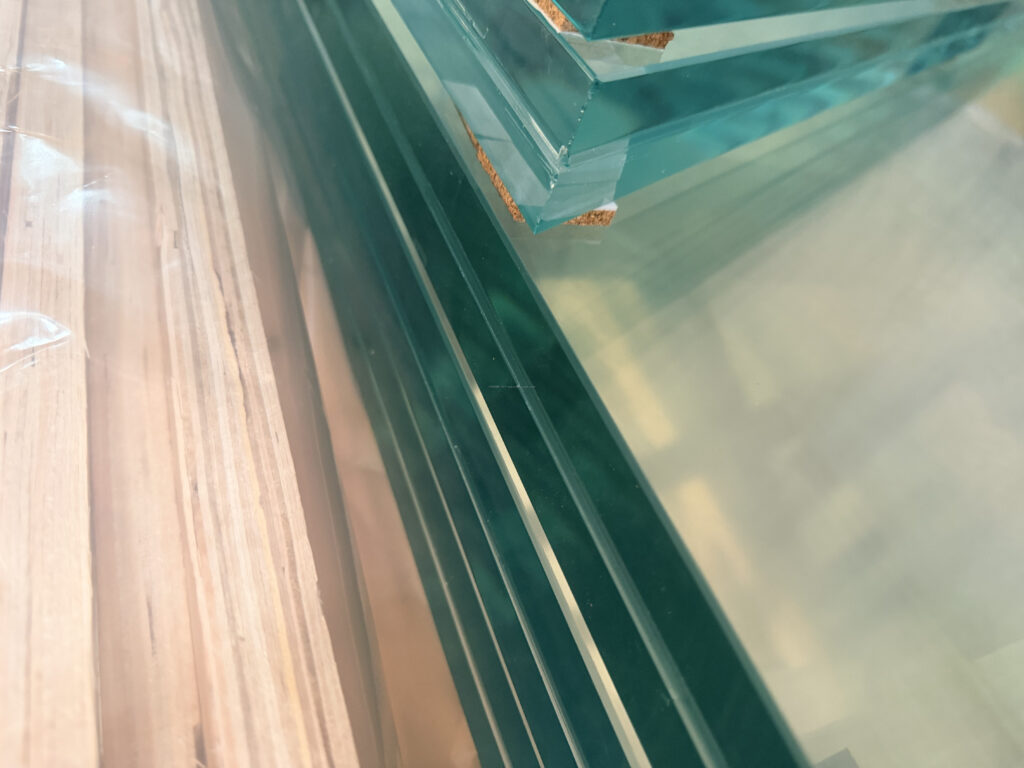
Structural Laminated Glass Performance: Shear Transfer and Equivalent Thickness
The structural performance of laminated glass depends heavily on the interaction between glass layers and the interlayer.
In a 22mm+22mm laminated glass system, the interlayer determines whether the two glass panels behave independently or as one integrated structural unit.
With a low shear performance interlayer:
- Two 22mm glass sheets work almost separately.
- Load distribution efficiency decreases.
- The overall bending resistance is limited.
With a high-performance SGP interlayer:
- The layers achieve stronger mechanical coupling.
- The composite panel approaches the mechanical behaviour of a monolithic 44 mm plate, with performance dependent on temperature and load duration.
- Bending resistance improves significantly.
- Designers can reduce overall weight while maintaining safety requirements.
For structural glazing projects, SGP laminated glass is often selected because of its higher stiffness, tear resistance, and better post-breakage performance compared with standard PVB systems.
Ultra Thick Laminated Glass Manufacturing Challenges
Producing heavy-duty laminated glass requires precise control throughout every processing stage.
HAIKONG SGT combines more than 30 years of glass deep processing experience with advanced testing equipment to support demanding architectural projects worldwide.
1. Edge Alignment and Layer Position Control
Large multi-layer glass panels create significant manufacturing challenges.
During the lamination of multiple 22mm glass sheets:
- Glass weight increases dramatically.
- Minor dimensional differences become amplified.
- Incorrect alignment can create installation problems.
For structural applications, edge-to-edge offset shall comply with the project-specified tolerance, commonly 0.5–1.5 mm for structural applications.
SGT uses precision positioning systems to maintain layer alignment and reduce stress concentration risks.
2. Residual Stress Control and Heat Soak Testing
Ultra-thick glass requires careful thermal management.
Because 22mm glass heats and cools slower than standard glass, uncontrolled temperature changes may create internal stress.
To improve reliability, heavy-duty laminated glass production requires:
- Controlled tempering processes
- Residual stress inspection
- Quality verification before project delivery
These procedures help reduce risks related to nickel sulfide inclusions and spontaneous breakage.
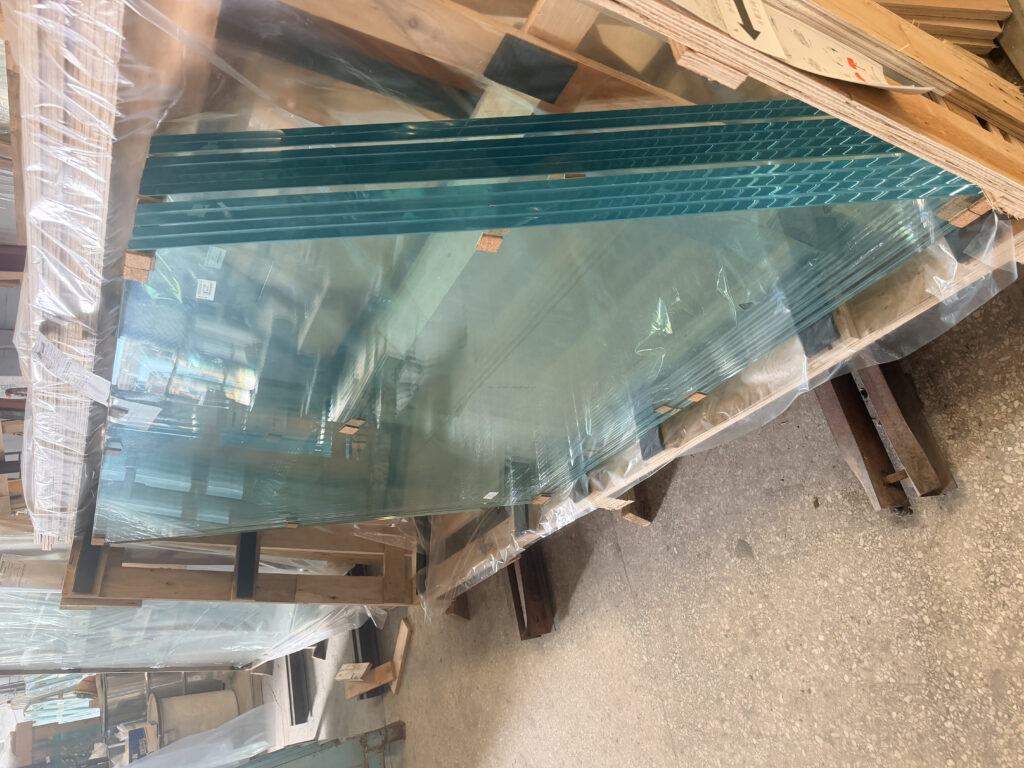
Applications of Structural Laminated Glass
Ultra-thick laminated glass supports advanced architectural designs where safety and transparency must work together.
Structural Glass Fins
Glass fins act as transparent supporting structures in modern curtain wall systems.
Engineers evaluate:
- Wind pressure resistance
- Deflection limits
- Buckling resistance
- Connection loads
22mm+22mm laminated glass fins with SGP interlayers provide improved stiffness and stability for large facade systems.
Glass Floors and Bridges
Heavy-duty laminated glass is widely used in:
- Observation decks
- Glass walkways
- Luxury commercial buildings
- Tourist attractions
Multi-layer glass structures provide enhanced load-bearing capability and safety after breakage.
Security and Blast-Resistant Applications
For high-security environments, multilayer laminated glass can be engineered for:
- Forced entry resistance
- Blast mitigation
- Ballistic protection
Typical projects include:
- Banks
- Government buildings
- Security facilities
- Special architectural structures
Ultra-Thick Laminated Glass Inspection Checklist
Before accepting a structural laminated glass project, verify:
| Inspection Item | Requirement |
|---|---|
| Edge alignment | Check edge overhang and layer positioning |
| Delamination inspection | Confirm no bonding separation at glass edges |
| Interlayer certification | Verify SGP/PVB performance data |
| Structural analysis | Review FEA reports and engineering calculations |
| Quality testing | Confirm required HST and inspection records |
SGT supports project evaluation with technical documentation, testing data, and customized glass engineering solutions.
FAQ
1. What is 22mm+22mm laminated glass used for?
22mm+22mm laminated glass is mainly used for structural applications including glass fins, glass floors, bridges, security glazing, and large architectural projects requiring high load capacity.
2. Why choose SGP instead of PVB for structural laminated glass?
SGP provides higher stiffness and better post-breakage performance. It allows laminated glass layers to work together more effectively under structural loads.
3. Can ultra-thick laminated glass be customized?
Yes. SGT provides customized laminated glass solutions with different thicknesses, layer combinations, dimensions, and interlayer options based on project requirements.
Conclusion
For complex architectural projects requiring strength, safety, and transparency, architectural laminated glass provides an engineered alternative to conventional glazing. Ultra-thick 22mm+22mm laminated structures with SGP interlayers improve shear transfer, structural stability, and post-breakage performance for demanding applications.
With over 30 years of glass deep processing experience, HAIKONG SGT delivers customized laminated glass solutions for global architects, developers, and construction partners.
Contact SGT today to discuss your structural laminated glass requirements and receive a customized engineering solution for your project.