
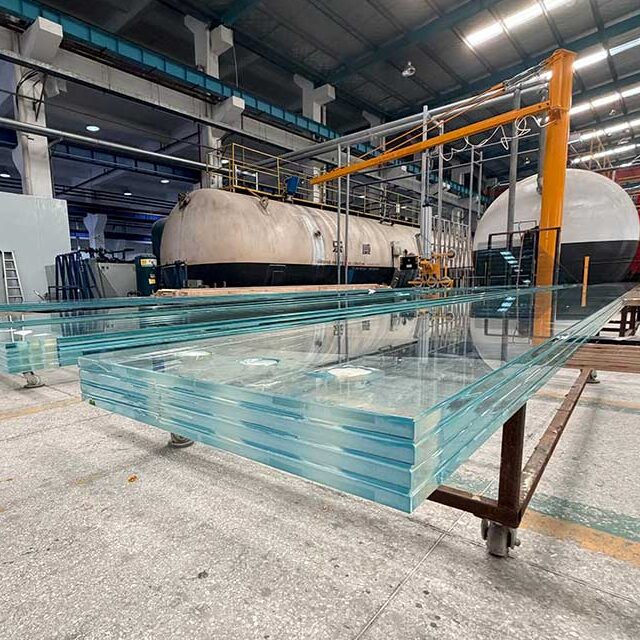
PRODUCT DETAILS
| Parameter | Specification |
|---|---|
| Maximum Size | 3300 mm × 18000 mm |
| Thickness Range | 6–80 mm |
| Minimum Size | No explicit lower limit; customizable based on project requirements (subject to lamination process and mold capabilities) |
| Interlayer Options | PVB, SGP, EVA, PU, etc. |
| Layer Configurations | Customizable 2-ply, 3-ply, 4-ply, and multi-ply composite structures |
PROCESSING ROUTE
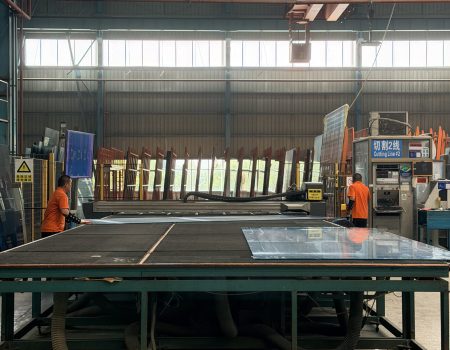
Cutting
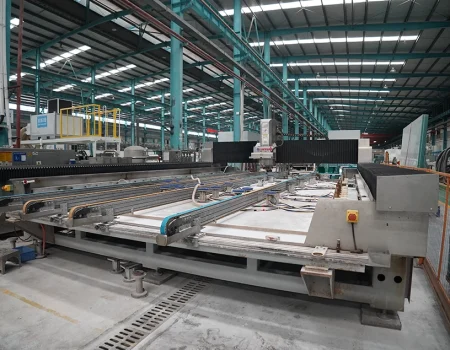
Edging
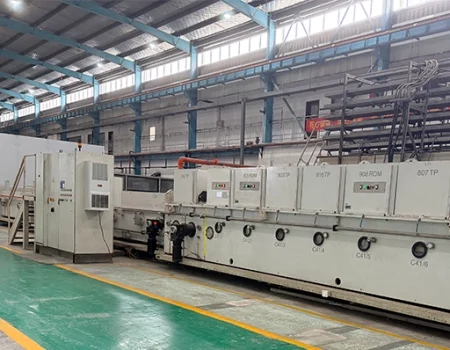
Coating(Optional)
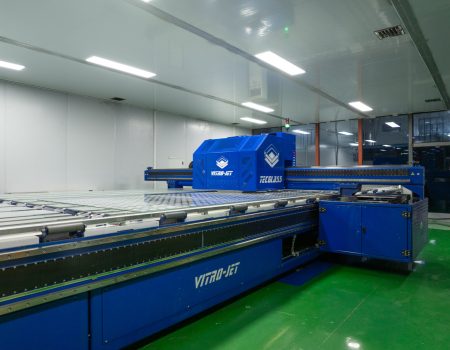
Digital printing(Optional)
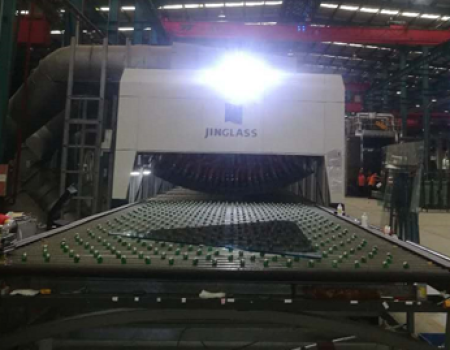
Tempering
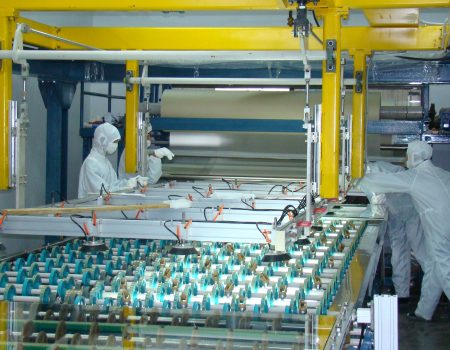
Laminating
Laminated Glass & Multilayer Laminated Glass: Engineered Safety for Modern Architecture
In contemporary architecture, glass is no longer only a transparent divider between interior and exterior spaces. Instead, it must be safe, secure, and structurally reliable.
Therefore, laminated glass has become the material of choice for architects and specifiers who require more than standard glass performance. In addition, multilayer glass systems provide higher levels of protection when standard glazing systems are not enough.
What Is Laminated Glass?
Laminated glass (also known as laminated safety glass) is a composite product. It consists of two or more glass lites. Manufacturers bond these layers using polymer interlayers such as PVB or SGP.
The interlayer sits between the glass sheets like a sandwich layer. Under heat and pressure, manufacturers bond the materials in an autoclave. As a result, the unit becomes a single structural element.
Unlike ordinary float glass, this material behaves differently after breakage. When impact occurs, the glass cracks, but the interlayer holds fragments in place.
Therefore, this glazing system prevents dangerous glass fallout and maintains a protective barrier.
Why Laminated Glass Is Used
The main purpose of laminated glass is safety and security.
Traditional annealed glass breaks into sharp fragments. Tempered glass shatters into small pieces, but it does not hold its shape after breakage.
In contrast, this safety glazing solution solves both problems.
Moreover, multilayer glazing systems allow engineers to increase protection levels. By adding more glass layers, manufacturers improve resistance to impact, blast, and forced entry.
How Laminated Glass Is Manufactured
The production process includes several controlled steps.
1. Cutting and Preparation
Manufacturers cut glass sheets to final dimensions. They also complete all drilling, notching, and edge processing before lamination.
Because post-processing is not possible, precision is critical.
2. Cleaning
Technicians clean and dry the glass surface carefully. This step ensures proper adhesion between glass and interlayer.
3. Interlayer Placement
Next, manufacturers place PVB or SGP interlayers between glass sheets.
Interlayer thickness usually ranges from 0.38 mm to 2.28 mm.
Engineers select thickness based on performance requirements.
4. Pre-Lamination
The assembly passes through nip rollers. This process removes trapped air.
As a result, initial bonding is achieved before autoclaving.
5. Autoclave Process
Manufacturers place the assembly in an autoclave.
They apply heat of 120–150°C and pressure of 10–14 bar.
Therefore, the interlayer bonds permanently with glass.
The final product becomes a unified structural panel.
Standard vs Multilayer Laminated Glass
| Feature | Standard | Multilayer |
|---|---|---|
| Layers | 2 glass + 1 interlayer | 3–9 glass layers |
| Thickness | 6.38–12.76 mm | 15–60+ mm |
| Application | Safety glazing | Security / ballistic |
| Impact resistance | High | Extremely high |
| Weight | Moderate | Heavy |
PVB vs SGP Interlayers
The interlayer determines performance. Therefore, selection is critical.
PVB Interlayer
PVB is widely used in architectural laminated glass.
It provides:
High optical clarity
Strong adhesion
UV protection up to 99.5%
Good acoustic performance
Lower cost
Therefore, PVB is suitable for standard windows, doors, and balustrades.
SGP Interlayer
SGP is a high-performance ionoplast interlayer.
It provides significantly stronger mechanical properties.
Compared with PVB:
It is 50× stiffer
It has higher tear resistance
It provides stronger post-breakage strength
It maintains better edge stability
As a result, this advanced system is used in structural and high-security applications.
Advantages of Laminated Glass
1. Safety
When this glass system breaks, fragments remain attached to the interlayer.
Therefore, it prevents injury and glass fallout.
2. Security
Multilayer glass systems resist forced entry.
In addition, they can be engineered for ballistic protection.
3. Acoustic Performance
The interlayer absorbs sound vibration.
As a result, noise transmission is significantly reduced.
4. UV Protection
This glazing system blocks up to 99% UV radiation.
Therefore, it protects interior materials from fading.
5. Structural Strength (SGP)
SGP laminates retain load after breakage.
As a result, they are used in structural glazing systems.
Applications
Exterior Applications
Curtain walls and facades
Skylights and canopies
Balustrades and railings
High-rise windows
Storefront glazing
Hurricane-resistant glazing
Interior Applications
Glass floors and stairs
Interior partitions
Museum display cases
Acoustic barriers
Shower enclosures
Security Applications
Banks and financial institutions
Government buildings
Jewelry stores
Armored vehicle glazing
Schools and public facilities
Multilayer Laminated Glass
When standard laminated systems are not enough, multilayer glass systems provide higher protection.
It is used for:
Ballistic resistance
Forced entry resistance
Blast mitigation
Structural load applications
Conclusion
Laminated glass and multilayer glass systems are essential materials in modern architecture.
They provide safety, security, and structural performance that standard glass cannot achieve.
Therefore, architects can design safer and more advanced building systems without compromising aesthetics.



Reviews
There are no reviews yet.