
PRODUCT DETAILS
| Parameter | Specification |
|---|---|
| Maximum Size | 3300 mm × 18000 mm |
| Thickness Range | 6–80 mm |
| Minimum Size | No explicit lower limit, customizable to project requirements (subject to lamination process and mold capabilities) |
| Interlayer / Mesh Options | PET film, aluminum mesh, copper mesh, etc. |
| Layer Configurations | Customizable 2-ply, 3-ply, 4-ply, and multi-ply composite structures |
PROCESSING ROUTE
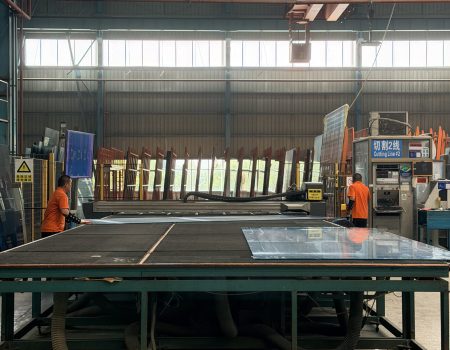
Cutting
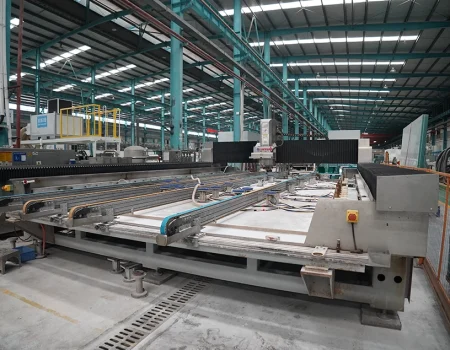
Edging
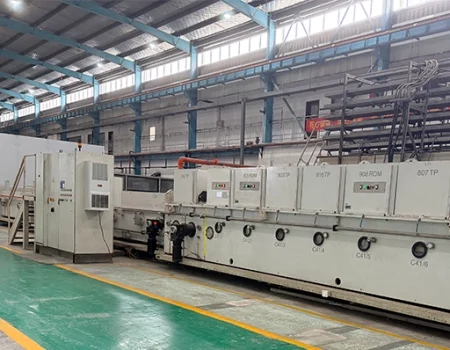
Coating
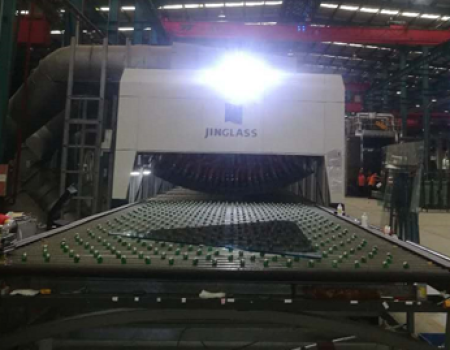
Tempering
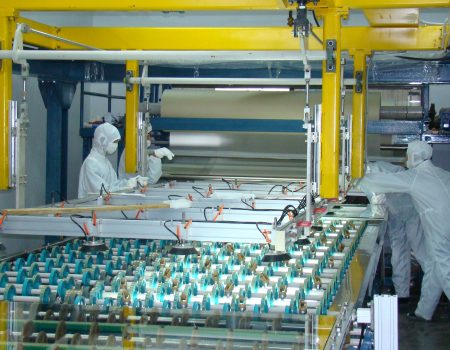
Laminating(optional)
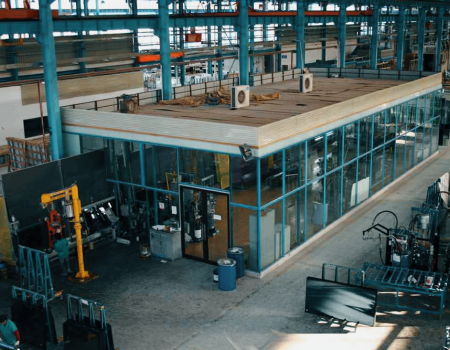
Insulating
Bent Tempered Insulating Glass: Curved High-Performance Glazing for Modern Architecture
In the realm of contemporary architecture, straight lines are no longer the only language of expression. Sweeping curves, flowing facades, and seamless transitions between interior and exterior spaces have become hallmarks of landmark buildings worldwide. At the intersection of structural safety and thermal performance lies bent tempered insulating glass—a product that transforms architectural vision into buildable reality.
This comprehensive guide explores everything architects, specifiers, and building owners need to know about bent tempered insulating glass: its manufacturing process, performance advantages, technical parameters, application scenarios, quality standards, and how to specify the right solution for your next project.
What Is Bent Tempered Insulating Glass?
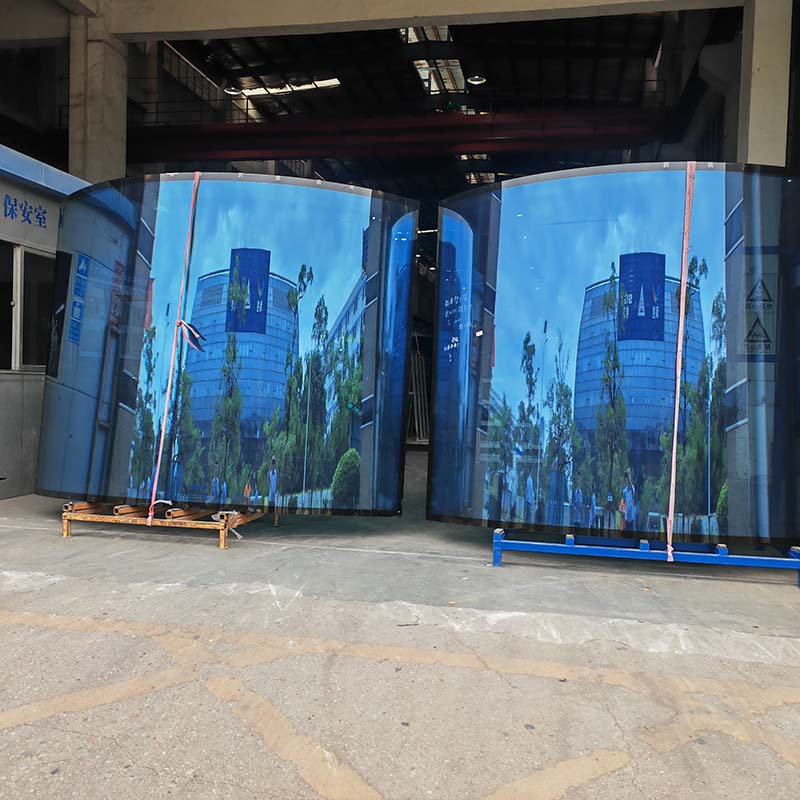
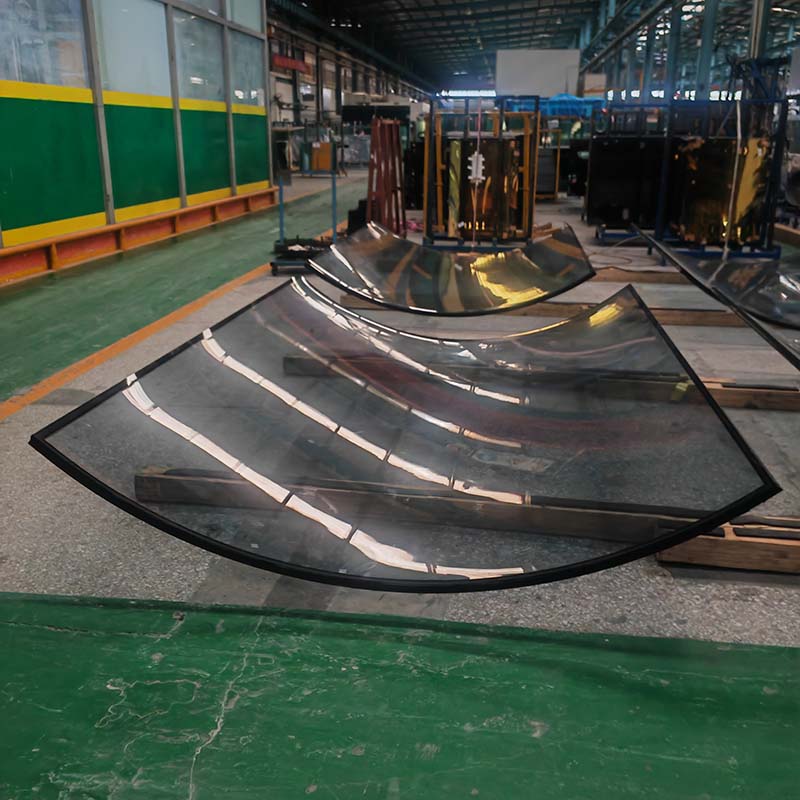
Bent tempered insulating glass (also referred to as curved insulating glass unit, curved IGU, curved double glazed unit, or curved DGU) is a high-performance glazing product that combines two or more panes of curved glass separated by a spacer and hermetically sealed at the edge. The glass panes themselves are thermally tempered and bent, creating a safety glass product that curves while maintaining the thermal and acoustic insulation properties of an insulating glass unit (IGU).
Unlike conventional flat insulating glass, bent tempered insulating glass follows a predetermined radius of curvature, allowing it to seamlessly integrate into curved building envelopes, cylindrical facades, spiral atriums, and other geometrically complex architectural designs.
The Manufacturing Process
The production of bent tempered insulating glass involves two critical stages: curved glass fabrication and IGU assembly.
Stage 1: Curved Glass Fabrication
Architectural curved glass is primarily formed through two methods: tempered bending (fast cooling after shaping) and slumping (gravity bending over a form followed by slow cooling/annealing).
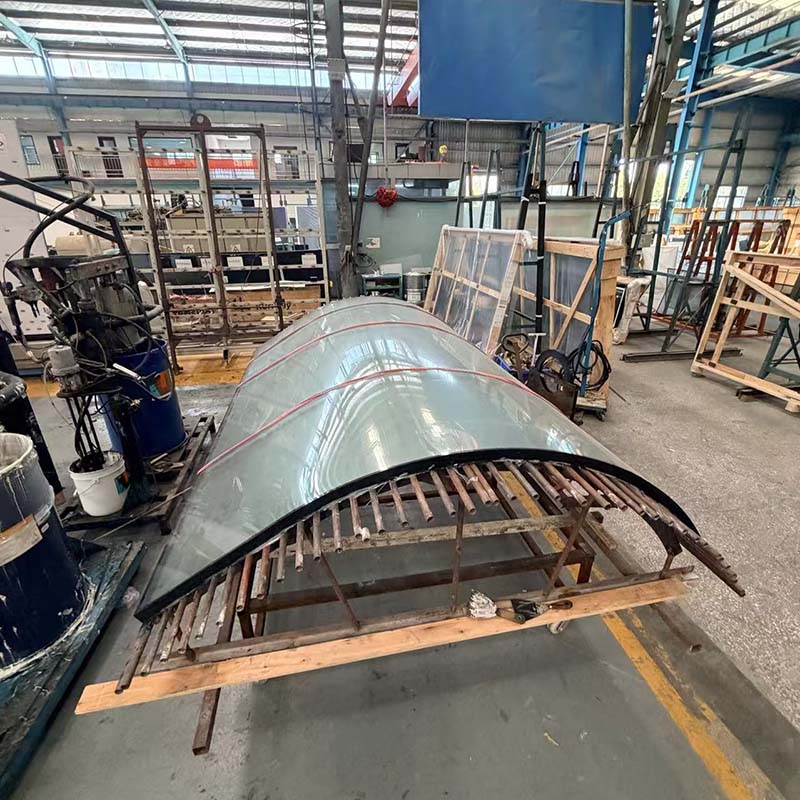
In the tempered bending process, flat glass is first cut to final dimensions, including any necessary holes or notches—since post-tempering fabrication is impossible. The glass is then heated in a special furnace to approximately 600-630°C, at which point it becomes soft and pliable. In this softened state, the glass is shaped around a concave die (for cylindrical curves) or through roller-based forming systems. Immediately after shaping, the glass is rapidly cooled (quenched) with forced air jets, creating the high surface compressive stress characteristic of fully tempered glass.
Advanced manufacturers have pushed the boundaries of what is possible with curved tempering. For example, modern equipment can produce curved glass with arc length exceeding 5 meters and edge curvature accuracy controlled within 0.5 millimeters. Some facilities feature 16-meter flat and curved tempering lines capable of handling jumbo-sized panels.
Heat Strengthening Alternative: For applications requiring superior optical quality, laminated heat-strengthened glass can be specified as an alternative to fully tempered glass, offering better visual performance while maintaining adequate strength.
Stage 2: IGU Assembly
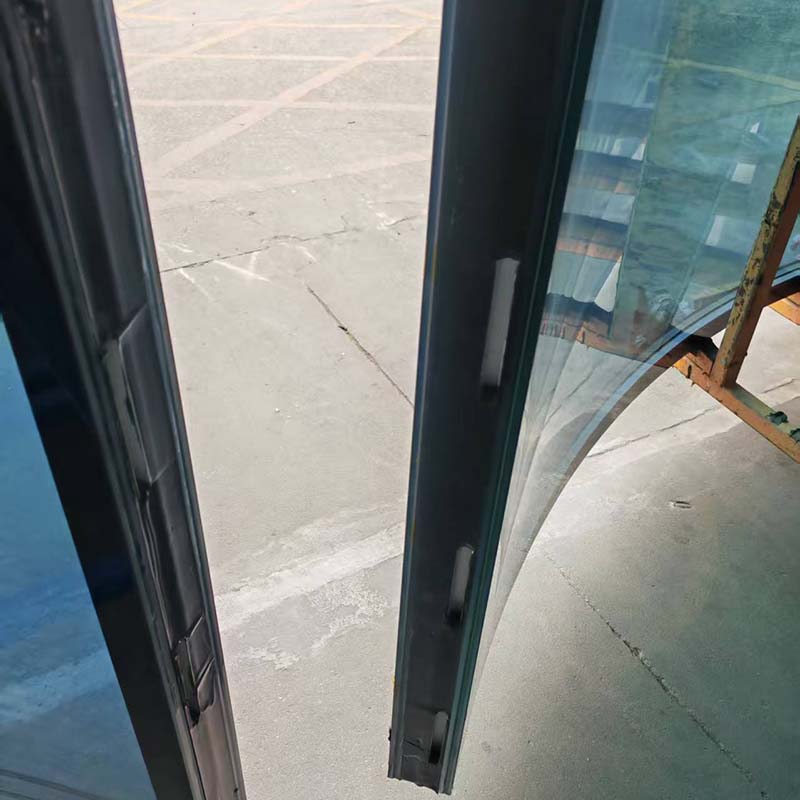
Once individual curved glass panes are tempered and shaped, they proceed to insulating glass unit assembly. The key components of a bent tempered insulating glass unit include:
Multiple glass panes (typically 2 or 3 layers of curved tempered glass)
Warm-edge spacer system (such as flexible thermoplastic spacers) that maintains the proper gap between panes
Desiccant-filled spacer to absorb residual moisture within the sealed airspace
Primary seal (polyisobutylene/PIB butyl) applied to the spacer edges
Secondary seal (silicone or polysulfide) providing structural integrity and hermetic sealing
Inert gas fill (typically argon or krypton) within the cavity to enhance thermal insulation
Modern manufacturing innovations, such as precise flexible spacer cutting and butyl coating optimization, have significantly improved product performance while achieving major aesthetic upgrades. Advanced warm-edge sealing technologies also enhance argon gas retention rates and overall durability.
Performance Advantages
1. Structural Strength and Safety
Bent tempered insulating glass inherits the strength characteristics of fully tempered glass: approximately four to five times stronger than annealed glass of the same thickness. The tempering process also ensures safety fragmentation—when broken, the glass shatters into small, blunt granular pieces rather than large, sharp shards.
The Curvature Advantage: Curved glass exhibits increased stiffness compared to flat glass of the same thickness. This structural benefit reduces support requirements, improves sightlines, and allows for larger spans with fewer mullions. As a result, bent tempered insulating glass enables frameless or minimally-framed curtain wall designs that maximize transparency.
2. Thermal Insulation
The insulating glass configuration provides excellent thermal performance, significantly reducing heat transfer between interior and exterior environments. Key thermal metrics include:
U-value (thermal transmittance): For a typical bent tempered insulating glass configuration (e.g., 6 mm Low-E coated glass + 12 mm argon-filled airspace + 6 mm clear glass), U-values can range from approximately 1.16 to 1.48 W/m²·K depending on specific coatings and gas fills. High-performance vacuum insulating glass (VIG) products achieve even lower U-values, down to 0.40 W/m²·K, with tested lifespans of 25 years and expected lifespans of 50 years.
Solar Heat Gain Coefficient (SHGC): Typically ranging from 0.53 to 0.65, this metric measures how much solar radiation passes through the glass, helping architects balance daylighting against cooling loads.
Visible Light Transmittance (Tvis): High-performance bent tempered insulating glass can achieve visible light transmittance up to 80% , ensuring ample natural daylight while maintaining thermal control.
These performance characteristics make bent tempered insulating glass an essential component of energy-efficient building envelopes, helping projects meet green building standards and reduce operational carbon emissions.
3. Sound Insulation
The multiple glass panes and sealed airspace in bent tempered insulating glass provide effective noise reduction. Depending on glass thickness, interlayer selection, and cavity configuration, sound reduction values can exceed 36 decibels (dB) , significantly attenuating exterior noise in urban environments.
4. Condensation Resistance
The hermetic seal and desiccant-filled spacer system prevent moisture from entering the cavity between glass panes, eliminating condensation within the IGU. Additionally, the insulating properties reduce temperature differentials across the glass surface, minimizing condensation formation on interior faces even in high-humidity environments.
5. Solar Control and Low-E Coatings
Bent tempered insulating glass can incorporate low-emissivity (Low-E) coatings to enhance thermal performance and solar control. Two types of coatings are available:
Pyrolytic (“hard”) coatings: Applied during glass manufacturing, these can be used on both concave and convex curved surfaces.
Magnetron sputtered (“soft”) coatings: Currently applicable to the concave surface of bent glass without damage from rollers during the tempering process, though manufacturers continue to develop techniques for soft coatings on either surface.
For projects requiring superior solar control in tropical or subtropical climates, double-silver or triple-silver Low-E coatings can be specified to minimize solar heat gain while maintaining moderate visible light transmittance.
6. Aesthetic Versatility
Bent tempered insulating glass can be further enhanced with:
Digital ceramic printing for custom patterns, logos, or gradients
Enamel coatings for opaque or semi-opaque decorative finishes
Screen printing for precise geometric designs
Tinted or low-iron substrates for specific color rendering and transparency requirements
Technical Parameters and Specifications
When specifying bent tempered insulating glass, the following parameters must be defined:
| Parameter | Typical Range / Considerations |
|---|---|
| Glass thickness per pane | 3 mm to 19 mm (depending on application and structural requirements) |
| IGU total thickness | 16 mm to 60+ mm (glass + airspace + glass) |
| Airspace width | 6 mm to 27 mm (12 mm and 16 mm are common for argon fill) |
| Gas fill | Air, Argon (90%+), Krypton, or Xenon |
| Radius of curvature | Minimum radius depends on glass thickness and manufacturer capability; typical minimum around 500 mm for thicker glass, tighter for thinner glass |
| Maximum panel dimensions | Up to 8+ meters arc length, 3+ meters chord height (manufacturer dependent) |
| Edge accuracy tolerance | ≤ 0.5 mm for precision applications |
| Low-E coating options | Single-silver, double-silver, or triple-silver; hard or soft coating types |
| Interlayer options (if laminated) | PVB (standard), SGP (structural/sentinel), EVA |
| Standards compliance | EN 1279 (IGU), EN 12150 (tempered glass), ASTM E2190, AS/NZS 4666, 3C (China) |
Note: Performance data for thermal metrics should be calculated using industry-standard software such as LBNL WINDOW according to ASHRAE/NFRC conditions. Always consult manufacturers for project-specific performance calculations.
Quality Standards and Certifications
Bent tempered insulating glass must comply with rigorous international standards to ensure safety, durability, and performance:
| Standard | Scope |
|---|---|
| EN 1279 | Insulating glass units—long-term test method and requirements (Europe) |
| EN 12150 | Thermally toughened soda lime silicate safety glass (Europe) |
| EN 14179 | Heat-soaked thermally toughened soda lime silicate safety glass (Europe, for NiS risk reduction) |
| ASTM E2190 | Standard specification for insulating glass units (USA) |
| ASTM C1048 | Heat-strengthened and fully tempered flat glass (USA) |
| AS/NZS 2208 | Safety glazing materials in buildings (Australia/New Zealand) |
| GB/T 11944 | Sealed insulating glass unit (China) |
| CCC (3C) | China Compulsory Certification for safety glass |
| ISO 9001 | Quality management systems |
Reputable manufacturers can also perform Heat Soak Testing (HST) according to EN 14179 standards to significantly reduce the probability of nickel sulfide (NiS)-induced spontaneous breakage.
Application Scenarios
Bent tempered insulating glass is transforming both exterior and interior architectural design. Key applications include:
Exterior Applications
| Application | Specific Uses | Why Bent Tempered Insulating Glass |
|---|---|---|
| Curtain walls and facades | High-rise office towers, mixed-use developments, cultural institutions | Combines curved aesthetic with thermal performance and structural strength; reduced mullion requirements improve sightlines |
| Skylights and canopies | Atriums, airport terminals, train stations, shopping centers | Safety fragmentation protects people below; thermal insulation controls solar heat gain |
| Building entrances and storefronts | Retail flagship stores, hotel lobbies, corporate headquarters | Curved full-height glazing creates welcoming, transparent portals |
| Observation decks and panoramic windows | Tourist attractions, luxury residential, hospitality | Unobstructed views with thermal comfort and structural safety |
| Spiral facades and twisted towers | Signature architectural landmarks | Enables geometrically complex forms while maintaining energy performance |
Interior Applications
| Application | Specific Uses | Why Bent Tempered Insulating Glass |
|---|---|---|
| Atrium glazing | Office buildings, hotels, cultural centers | Natural light transmission with thermal control; curved forms enhance spatial flow |
| Glass partitions | Conference rooms, executive offices, open-plan spaces | Acoustic privacy combined with visual transparency |
| Elevator surrounds and lift glazing | Commercial buildings, luxury residential | Curved glass follows elevator geometry; safety glass for passenger protection |
| Stair railings and balustrades | Interior architectural features | Strength and safety with elegant curved lines |
Landmark Projects Showcasing Bent Tempered Insulating Glass
1. Lusail Towers, Qatar
The iconic towers feature an oval facade with spiral curvature, achieved using advanced curved tempered forming technology. 92 double SGP laminated high-performance coated curved insulating glass panels were supplied, with edge curvature accuracy controlled within 0.5 millimeters. The glass meets demanding requirements for heat resistance, corrosion resistance, and energy efficiency in the harsh desert climate.
2. New Performing Arts Centre (NPAV), Brisbane, Australia
Designed by Snøhetta and Blight Rayner, this AUD $150 million project uses nearly 150 pieces of 7-meter double laminated insulating tempered glass. The curved glass panels, featuring different curvature sizes, echo the winding Brisbane River. The design required frameless glass with arc rate below 0.7‰ and semicircular arc lengths—a significant production challenge overcome through advanced convection heating and intelligent temperature control systems.
3. One Dalton, Boston, USA
This 61-story residential tower designed by Pei Cobb Freed & Partners features a gently curving triangular floorplan extruded vertically. The glass panels span 12 feet tall by nearly 6 feet wide with a 30-degree curve, incorporating laminated, tinted Low-E coated glass, low-iron substrate, and argon-filled airspaces.
4. Sanya International Duty-Free City, China
The world’s largest duty-free complex features over 5-meter-long high-performance curved insulating glass with large arc lengths. The project incorporates long-lasting insulating systems combined with next-generation flexible warm-edge sealing technology, significantly improving argon gas retention and durability.
Challenges and Solutions in Bent Tempered Insulating Glass
Challenge 1: Post-Processing Limitations
Once glass is tempered and bent, no further cutting, drilling, or fabrication is possible. All holes, notches, edge treatments, and surface coatings must be completed before the bending and tempering process.
Solution: Thorough design coordination and early engagement with glass processors. Provide complete shop drawings with all openings and edge details specified before production begins.
Challenge 2: Optical Distortion
Rapid cooling during tempering can create roller wave distortion and anisotropy (iridescence visible under polarized light), which may be more noticeable in curved panels.
Solution: For applications demanding superior optical quality, consider laminated heat-strengthened glass instead of fully tempered glass, or work with manufacturers employing advanced convection heating systems that provide more uniform temperature distribution.
Challenge 3: Coating Compatibility
Not all Low-E coatings can withstand the bending and tempering process without damage.
Solution: Specify bendable Low-E coatings specifically designed for post-bending tempering. Hard coatings are generally more robust, while soft coatings must be applied to the concave surface and carefully managed during processing.
Challenge 4: NiS Spontaneous Breakage Risk
Like all thermally tempered glass, bent tempered insulating glass carries a small risk of nickel sulfide (NiS)-induced spontaneous breakage.
Solution: Specify heat soak tested (HST) bent tempered glass according to EN 14179 standards, which significantly reduces the probability of NiS-related failure by causing defective panels to break in the factory rather than on the building.
Challenge 5: Fabrication Complexity
Large-format curved glass with tight radii requires specialized equipment, precise temperature control, and skilled craftsmanship—capabilities not all glass processors possess.
Customization Capabilities
Leading bent tempered insulating glass manufacturers offer extensive customization options:
Curved tempered glass (cylindrical curves, single-axis)
Multi-curved glass (double-curved or complex geometries)
Jumbo-size curved glass (up to 8+ meters arc length)
Ultra-long/wide/thick curved glass for monumental applications
Curved laminated insulating glass (with PVB or SGP interlayers) for fall protection and security
Curved insulated glass with Low-E coatings (single-silver, double-silver, triple-silver)
Curved ceramic fritted glass for spandrel or decorative applications
Curved insulating glass with digital printing for custom patterns or branding
Future Trends in Bent Tempered Insulating Glass
The bent tempered insulating glass market continues to evolve, driven by:
Demand for net-zero energy buildings driving specifications for high-performance triple-silver Low-E coatings and vacuum insulating glass (VIG) technologies
Integration of smart glass technologies (electrochromic, thermochromic) into curved insulating glass units
Expansion of maximum panel sizes as furnace and bending technologies advance
Development of double-curved tempering capabilities enabling truly organic, free-form architectural geometries
Enhanced automation in flexible spacer cutting, butyl application, and gas filling for curved IGUs
Conclusion
Bent tempered insulating glass represents the convergence of architectural ambition and technical capability. It enables designers to create buildings that flow, curve, and spiral—all while meeting the thermal performance, safety, and durability requirements of modern construction codes.
From the twisting towers of Lusail to the undulating facades of Boston’s One Dalton, bent tempered insulating glass has proven itself as a reliable, high-performance solution for the world’s most demanding architectural projects.
When specifying bent tempered insulating glass, thorough design coordination, clear technical parameters, and partnership with an experienced manufacturer are essential. The result—a building envelope that is both beautiful and high-performing—is well worth the effort.


Reviews
There are no reviews yet.