Heat Bent Laminated Glass

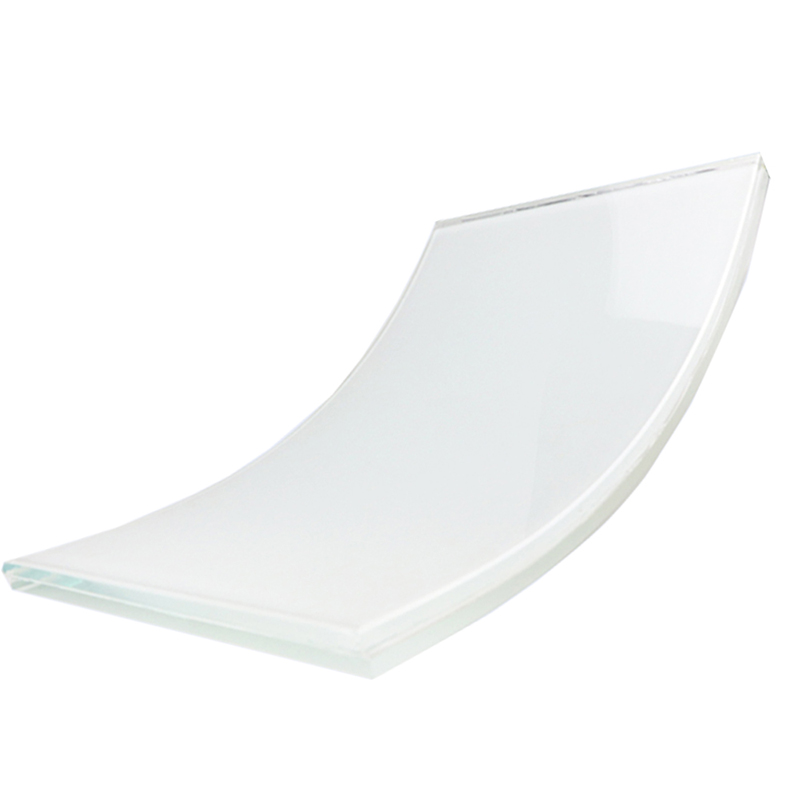
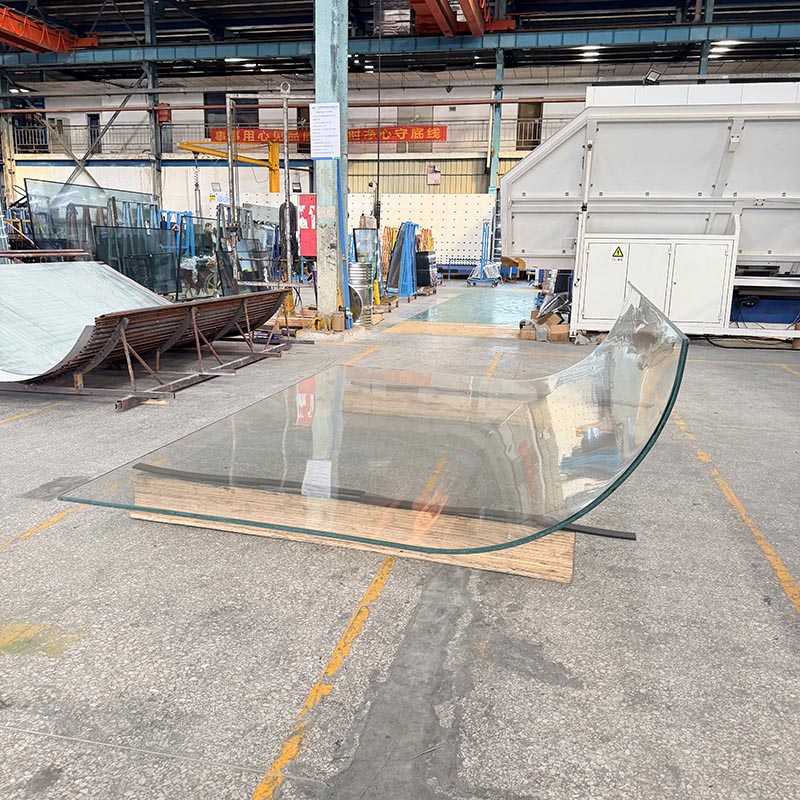
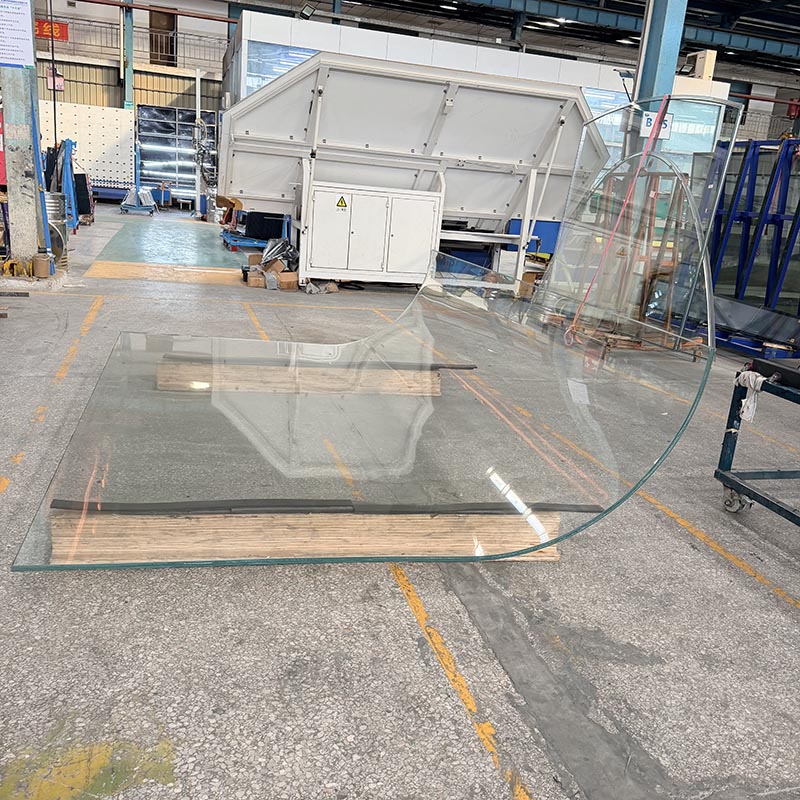
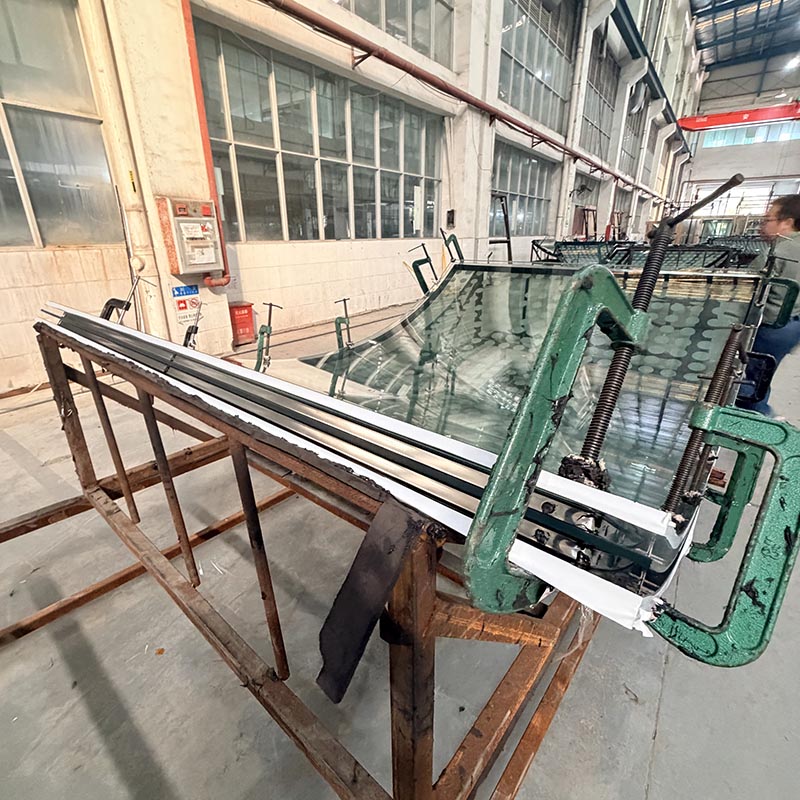
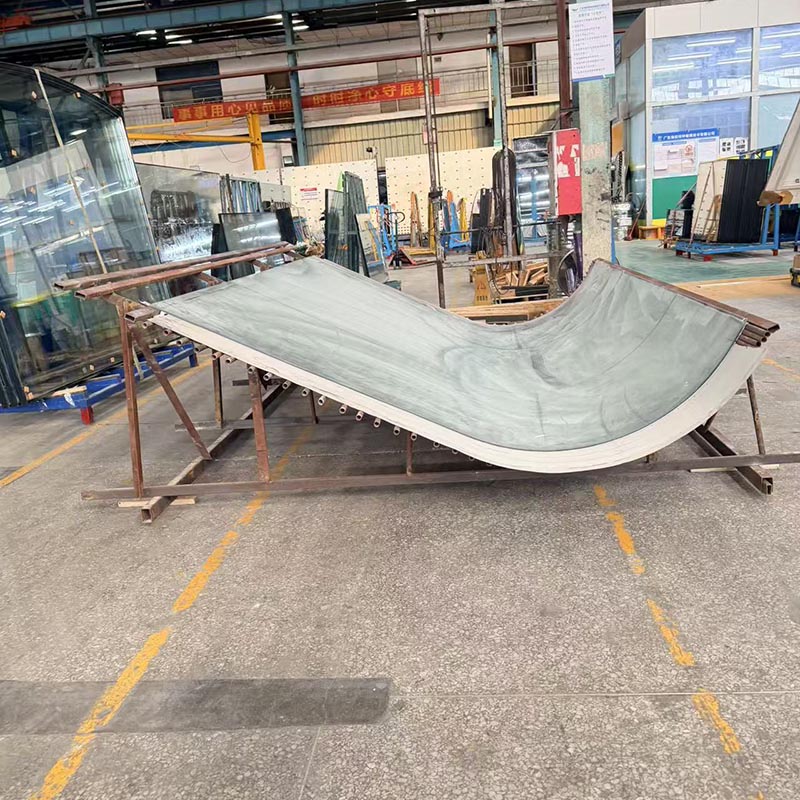
Heat-Bent Glass is a kind of curved glass produced by heating glass to softening temperature, bending it naturally in molds, and then cooling slowly through annealing. It features accurate curvature, smooth surface and beautiful appearance. It can be processed into various shapes such as single curve, double curve and special-shaped curves without changing the original properties of glass. It can be combined with tempering, laminating, insulating and other processes, widely used in curtain walls, interior decoration, special-shaped windows & doors, display cabinets, furniture glass, etc.

PRODUCT DETAILS

ParameterSpecification
ProductCurved Annealed Glass
Maximum SizeUp to 3000 × 11000 mm
Glass Thickness4 – 25 mm
Curvature TypeSingle curvature, double curvature, circular arc, U-shape, S-shape, and other custom-shaped profiles
Process FeaturesAnnealed glass with no internal stress; no spontaneous breakage; good surface flatness
Composite OptionsCan be further processed as tempered, laminated, insulating, ceramic fritted, or digital printed glass
ApplicationsCurved curtain walls, special-shaped windows & doors, interior partitions, furniture, and decorative projects

PROCESSING ROUTE

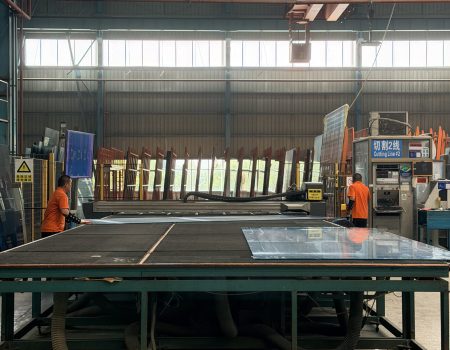
Cutting Line

Cutting

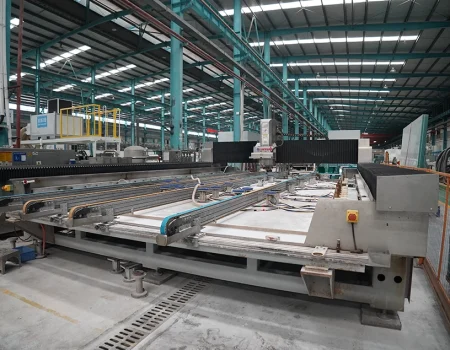
Glass-Edging-Machine

Edging

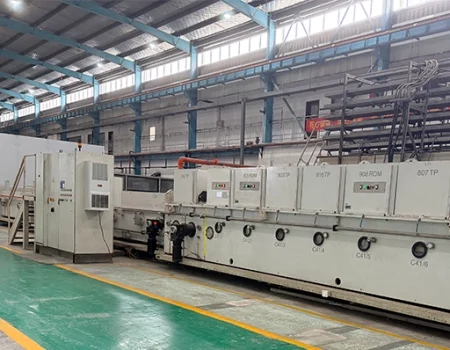
Coating Line

Coating(optional)

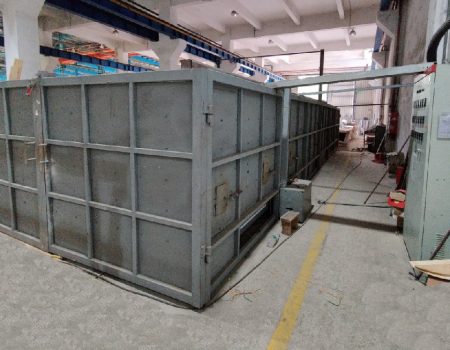
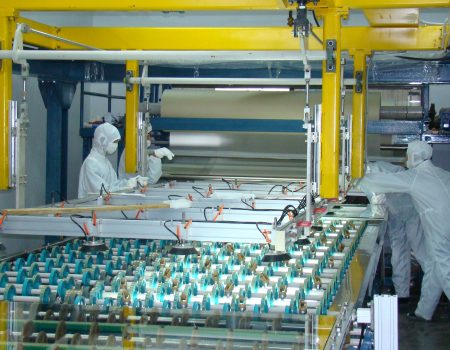
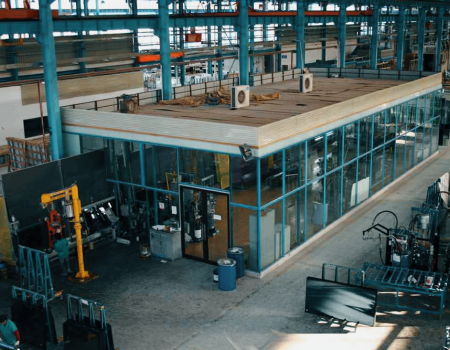
Heat Bending Oven

Heat Bending

Laminated Line

Laminating

IGU Line

Insulating(optional)

Heat Bent Glass & Heat Bent Laminated Glass: The Complete Guide to Curved Architectural Glazing

In the world of contemporary architecture, curves have replaced corners as the defining aesthetic of landmark buildings. From the sweeping glass facades of luxury retail stores to the dramatic spiral staircases of corporate headquarters, curved glass brings fluidity, elegance, and a sense of movement to built environments.

At the forefront of this design revolution is heat bent glass—a versatile material that transforms ordinary flat glass into custom-curved architectural elements. And when safety requirements demand more, heat bent laminated glass provides the perfect solution, combining aesthetic curvature with post-breakage integrity.

This comprehensive guide explores everything you need to know about heat bent glass and heat bent laminated glass: how they are made, their advantages and limitations, how they compare to bent tempered glass, and where to specify each product for optimal architectural results.

What Is Heat Bent Glass?

Heat bent glass (also referred to as hot bent glass or hot curved glass) is a type of curved glass produced by heating flat glass until it becomes pliable, then shaping it over or into a mold using gravity or mechanical pressure, followed by controlled cooling (annealing). Unlike bent tempered glass, which undergoes rapid cooling (quenching) to induce compressive stress, heat bent glass is cooled slowly, allowing the shape to set without adding extra strength.

The result is a curved form that maintains the clarity and optical performance of flat glass while unlocking entirely new design possibilities.

The Manufacturing Process of Heat Bent Glass

The production of heat bent glass involves several carefully controlled stages:

1. Preparation: Flat glass sheets are cut to the required size, edges are ground and polished, and any necessary holes or notches are drilled. Since heat bent glass cannot be cut after bending, all fabrication must be completed before the glass enters the furnace.

2. Heating: The prepared glass is placed in a specialized bending furnace and heated to approximately 600–700°C (1,100–1,300°F)—the temperature at which glass becomes soft and pliable. Modern computer-controlled ovens ensure consistent temperature distribution, which is critical for achieving uniform curvature and optical clarity.

3. Shaping (Bending): Once heated to the softening point, the glass is shaped using one of two primary methods:

  • Slumping (Gravity Bending): The softened glass is placed on top of a pre-heated mold. Under its own weight, the glass sags into the mold, conforming precisely to its shape. This method is ideal for producing large-radius curves and accounts for the majority of heat bent glass production.

  • Press Bending: For more complex or tighter curves, mechanical force is applied to press the softened glass into or around a mold. This method offers greater control over the final shape and is used for applications requiring precise tolerances.

4. Annealing (Controlled Cooling): After shaping, the glass undergoes a slow, controlled cooling process called annealing. This gradual cooling relieves internal stresses that could otherwise cause the glass to crack spontaneously or distort over time. The cooling phase is critical—rapid or uneven cooling can create internal stress or optical distortion. Once fully cooled, the glass retains its curved shape permanently.

Design Flexibility: The True Advantage

The true strength of heat bent glass lies in its design flexibility. Unlike bent tempered glass, which faces significant limitations in the producible radii (typically R>1000mm for cylindrical shapes), heat bent glass can achieve:

  • Gentle curves: Radii of 1.5 meters or more, ideal for subtle architectural accents

  • Medium curves: Radii between 0.8 and 1.5 meters, commonly used in interior partitions and curved windows

  • Tight curves: Radii under 0.8 meters, requiring precise control for specialty applications

Most significantly, heat bent glass enables biaxial curvature (double curvature), where glass curves in two directions simultaneously—creating compound shapes such as domes, saddles, and free-form geometries. This capability is essential for creating truly unique architectural features where tempered curved glass cannot achieve the required curvature.

Heat Bent Glass vs. Bent Tempered Glass: Understanding the Difference

A common point of confusion in the curved glass market is the distinction between heat bent glass and bent tempered glass. While both products create curved glass, they differ fundamentally in their production processes, performance characteristics, and application suitability.

The table below provides a side-by-side comparison:


FeatureHeat Bent GlassBent Tempered Glass
Production ProcessHeated, slowly bent into shape, then gradually cooled (annealed)Heated, bent, and rapidly cooled (quenched) for added strength
StrengthSame strength as regular annealed glass4–5 times stronger than regular glass
Breakage BehaviorShatters into large, sharp pieces (laminated hot bending pieces stay bonded to interlayer)Shatters into small, blunt pieces (inherently safer)
Safety ClassificationNot safety glass (unless laminated)Safety glass by definition
Optical QualityGenerally better optical clarity with fewer distortionsSlight optical distortions may occur due to rapid cooling
Design FlexibilityHigh—ideal for complex or custom curves, including double curvatureModerate—primarily used where strength is required; radius limitations (typically R>1000mm)
Minimum RadiusCan achieve tight radii below 300mm (depending on thickness)Limited; typically R>1000mm for cylindrical bends
Coating CompatibilitySoft coatings feasible on both surfacesSoft coatings typically limited to concave surface only
CostGenerally more expensive due to custom molds and labor-intensive processingTypically less expensive for volume production
Primary ApplicationsDecorative elements, custom furniture, artistic designs, complex architectural featuresStructural facades, safety-focused projects (balustrades, skylights, railings)

Summary: Which One Is Right for Your Project?

Choose Heat Bent Glass when:

  • Design requires tight radii or double curvature that tempered bending cannot achieve

  • Superior optical clarity and minimal distortion are essential

  • The application is primarily decorative or non-structural (or will be laminated for safety)

  • You need custom, one-off shapes that do not justify the tooling costs of tempered bending

Choose Bent Tempered Glass when:

  • Safety glass classification is required by building codes

  • Maximum impact resistance and structural strength are essential

  • The glass will be installed in high-traffic or safety-critical locations

  • Volume production with lower per-unit cost is a priority

Advantages of Heat Bent Glass

Heat bent glass offers several compelling advantages that have made it the material of choice for designers pushing the boundaries of architectural expression:

1. Unmatched Design Flexibility

The most significant advantage of heat bent glass is its ability to achieve virtually any curvature—from gentle sweeps to tight radii, from simple cylindrical bends to complex double-curved geometries. This flexibility opens up new possibilities for architects and designers, enabling fluid, organic forms that were previously impossible.

2. Superior Optical Quality

Because heat bent glass is cooled slowly (annealed) rather than rapidly quenched, it exhibits minimal optical distortion. The glass maintains excellent clarity, with no roller wave or anisotropy (iridescence) issues that can affect bent tempered glass. For applications where visual quality is paramount—such as luxury retail displays, museum showcases, or high-end residential glazing—heat bent glass is the preferred choice.

3. Enhanced Structural Integrity Through Curvature

The curved shape of bent glass inherently enhances its load resistance and minimizes deflections. Even though heat bent glass has the same material strength as flat annealed glass, its curved geometry provides additional structural efficiency, making it suitable for certain load-bearing applications where flat glass of the same thickness would be inadequate.

4. Compatibility with Advanced Coatings

Heat bent glass offers greater flexibility in applying Low-E coatings and ceramic frits. Unlike bent tempered glass, where soft coatings are typically limited to the concave surface only, heat bent glass can accommodate coatings on both convex and concave surfaces. This allows architects to specify high-performance solar control coatings on the exterior surface of curved glazing without processing constraints.

5. Ability to Achieve Double Curvature

Perhaps the most distinctive advantage of heat bent glass is its ability to produce double-curved glass—complex 3D shapes with two distinct radii of curvature along perpendicular axes, creating forms such as domes, saddles, and compound curves. Double-curved glass is used in architectural domes, modern building envelopes, atriums, and custom artistic installations. Bent tempered glass is generally limited to cylindrical (single-axis) curves.

Limitations of Heat Bent Glass

No product is without constraints, and heat bent glass has important limitations that specifiers must understand:

1. Not Safety Glass (Unless Laminated)

The most critical limitation: heat bent glass that is not laminated does not meet safety glass standards. When broken, annealed glass shatters into large, sharp shards that can cause severe injury. Therefore, heat bent glass should never be specified in applications where human impact is possible unless it is laminated.

2. Lower Strength Compared to Tempered Glass

Heat bent glass has the same strength as standard annealed glass—approximately one-fourth to one-fifth the strength of tempered glass. It cannot withstand the same levels of impact, wind load, or thermal stress as bent tempered glass.

3. Poor Thermal Stability

Annealed glass has limited resistance to thermal shock. Sudden temperature changes—such as direct sun exposure followed by cold rain—can cause heat bent glass to crack. This makes it unsuitable for exterior applications in climates with significant temperature swings unless protected or laminated.

4. Higher Cost for Custom Work

Each heat bent glass panel typically requires its own custom mold, and the slow annealing process limits production throughput. For large-volume applications where standard curvatures are acceptable, bent tempered glass is generally more cost-effective.

5. Longer Lead Times

The slow heating, shaping, and controlled cooling process makes heat bent glass production more time-consuming than bent tempered glass. Projects requiring large quantities of curved glass may face extended lead times.

Heat Bent Laminated Glass: Combining Curvature with Safety

For architects who need both the design flexibility of heat bent glass and the safety of a security-rated glazing product, heat bent laminated glass offers the ideal solution.

What Is Heat Bent Laminated Glass?

Heat bent laminated glass consists of two or more layers of heat bent glass (or a combination of heat bent and tempered glass) bonded together with a resilient plastic interlayer—typically polyvinyl butyral (PVB) or SentryGlas® (SGP). The interlayer is placed between the glass layers, and the entire assembly is subjected to heat and pressure in an autoclave, which permanently bonds the layers together.

When heat bent laminated glass breaks, the glass fragments adhere to the interlayer rather than falling freely. The pane may crack, but the interlayer holds the broken pieces in place, maintaining the integrity of the opening and preventing dangerous glass fallout.

The Manufacturing Process

Producing heat bent laminated glass involves a multi-stage process that combines bending and lamination technologies:

1. Individual Glass Bending: Each glass layer is first bent individually using the heat bending process described above, with all layers bent to precisely matching curvatures.

2. Interlayer Placement: A PVB or SGP interlayer is placed between the bent glass layers. The interlayer thickness (typically 0.38mm to 2.28mm per layer) is selected based on the required safety level and mechanical loads.

3. Pre-Lamination (De-airing): The glass-interlayer sandwich is preheated to remove air trapped between the layers, typically using vacuum bags or nip rollers.

4. Autoclave Bonding: The assembly is placed in an autoclave—a pressurized vessel that applies high heat (approximately 120-150°C) and pressure (approximately 10-14 bar) simultaneously. This heat and pressure activate the interlayer, causing it to flow and bond permanently to the glass surfaces.

5. Cooling and Inspection: The laminated assembly is slowly cooled to room temperature, then inspected for optical quality, edge bonding, and dimensional accuracy.

PVB vs. SGP Interlayers: Choosing the Right Material

The choice of interlayer material significantly affects the performance of heat bent laminated glass:


FeaturePVB (Polyvinyl Butyral)SGP (SentryGlas® / Ionoplast)
StrengthStandard impact resistanceHigh strength—ideal for structural applications
Post-Breakage PerformanceHolds fragments; moderate residual strengthSuperior residual strength; glass stays rigid even when cracked
StiffnessStandardApproximately 4× stiffer than PVB
UV ProtectionBlocks up to 99% of UV radiationExcellent UV protection
Edge StabilityMay require sealing for exposed edgesPerforms reliably even with exposed edges
Typical ApplicationsStandard safety glazing, acoustic insulation, UV protectionCurtain walls, skylights, glass floors, staircases, hurricane-resistant windows
CostMore economicalPremium

Recommendation: For standard architectural applications where safety and UV protection are the primary concerns, PVB interlayers provide excellent performance at a moderate cost. For structural applications, high-traffic areas, hurricane zones, or installations where the glass edges will be exposed (e.g., frameless railings), SGP is the preferred choice.

Advantages of Heat Bent Laminated Glass

1. Post-Breakage Integrity

The most important advantage of heat bent laminated glass is its behavior after breakage. When cracked, the glass fragments remain bonded to the interlayer. The pane may be compromised, but it stays in place—preventing dangerous glass fallout and maintaining a barrier against weather, intrusion, or fall hazards.

2. Achieves Safety Glass Status

Heat bent laminated glass meets safety glass standards (such as ANSI Z97.1 and EN 12600) even though the individual glass layers are not tempered. The interlayer provides the safety function by retaining broken fragments, allowing architects to use annealed bent glass in safety-critical applications where tempered bending is not feasible.

3. Excellent Acoustic Insulation

The PVB interlayer in laminated glass acts as a sound-dampening membrane, reducing noise transmission significantly. Laminated heat bent glass can achieve sound reduction values of 35-40dB or higher, making it ideal for curved glazing in urban environments, near airports, or along busy roadways.

4. UV Protection

PVB interlayers block up to 99% of harmful ultraviolet radiation, protecting interior furnishings, artwork, and merchandise from fading and UV damage. This property makes heat bent laminated glass the preferred choice for museum display cases, retail storefronts, and high-end residential applications.

5. Enhanced Security

Laminated glass resists forced entry and penetration. Even after impact, the interlayer holds the glass together, delaying access and providing valuable response time in security-sensitive applications such as bank teller windows, jewelry displays, and government building glazing.

6. Combines Curvature with Structural Performance

Heat bent laminated glass can incorporate tempered glass layers when additional strength is required, creating a hybrid product that combines the curvature of heat bending with the strength of tempering. This versatility allows architects to achieve the best of both worlds.

Applications of Heat Bent Glass and Heat Bent Laminated Glass

The versatility of heat bent glass and heat bent laminated glass makes them suitable for a wide range of architectural applications.

Exterior Applications


ApplicationWhy Heat Bent / Laminated Glass
Curtain walls and facadesSweeping curved glass facades create dramatic architectural statements; double curvature capabilities enable truly unique building envelopes
Skylights and canopiesLaminated construction provides fall protection; double-curved glass allows domed geometries that shed water effectively
Building entrances and storefrontsFull-height curved glass creates welcoming, transparent portals; lamination provides safety for high-traffic areas
Solariums and conservatoriesCurved glass maximizes light capture while maintaining visual clarity
Architectural domesDouble-curved glass enables true 3D domed structures

Interior Applications


ApplicationWhy Heat Bent / Laminated Glass
Stair railings and balustradesCurved glass follows staircase geometry; lamination provides fall protection even if glass is cracked
Glass partitions and room dividersSeamless curved dividers create fluid, open spaces while maintaining acoustic separation
Elevator surrounds and lift glazingBent glass follows elevator geometry; safety glass classification for passenger protection
Retail displays and museum showcasesSuperior optical clarity showcases products without distortion; UV protection prevents fading
Furniture and decorative elementsCustom curves enable unique design expressions

Landmark Projects: Heat Bent Glass in Action

Houston Museum of Fine Arts (MFAH): The museum’s exterior features a distinctive “Cool Jacket” —a nearly complete wrapping of translucent hot-bent semicircular tubes made of laminated glass. The glass tubes not only serve as a dramatic design element but also regulate daylight incidence and reduce solar energy entry into the building.

Sedak Hot-Bent Laminate: A hot-bent glass laminate consisting of two 1.35 x 5.0 meter panels demonstrates the capability of large-format curved laminated glass. The two eight-millimeter-thick glass panes were curved into cylinders and then laminated, achieving both curvature and safety in monumental dimensions.

How to Choose Between Heat Bent Glass and Heat Bent Laminated Glass

The decision between monolithic heat bent glass and heat bent laminated glass depends on the application’s safety requirements:


Application ContextRecommended ProductReasoning
Decorative interior elements not accessible to occupants (high ceilings, artwork displays)Monolithic Heat Bent GlassMinimal safety risk; lower cost
Interior applications with occupant access (partitions, furniture, displays)Heat Bent Laminated Glass (PVB)Safety glass classification; UV protection; acoustic benefits
Exterior glazing (facades, windows)Heat Bent Laminated Glass (PVB or SGP)Fall protection; security; thermal and acoustic performance
Overhead glazing (skylights, canopies)Heat Bent Laminated Glass (SGP recommended)Maximum fall protection; SGP provides superior residual strength
High-traffic public spaces (railings, balustrades, storefronts)Heat Bent Laminated Glass (SGP)Superior impact resistance and post-breakage performance
Security-critical applications (banks, jewelry stores, government buildings)Heat Bent Laminated Glass (SGP)Maximum forced-entry resistance

Standards and Certifications

Heat bent glass and heat bent laminated glass are governed by several international standards:


StandardScope
EN 1863Heat-strengthened soda lime silicate glass (monolithic flat) — curved heat-strengthened glass is mentioned but not part of the standard
EN 12543Laminated glass and laminated safety glass—European standard covering safety glass
ANSI Z97.1American National Standard for safety glazing materials (US)
CPSC 16 CFR 1201US Consumer Product Safety Commission safety standard for architectural glazing
EN 12600Pendulum impact test standard for flat glass in buildings

Important note: There is currently no dedicated European standard for curved heat-strengthened glass (EN 1863 explicitly states that curved heat-strengthened glass is not part of the standard). For this reason, architects and engineers specifying heat bent glass should work closely with experienced manufacturers and consider project-specific testing to validate performance.

Conclusion

Heat bent glass and heat bent laminated glass represent the intersection of design freedom and architectural performance. For architects seeking to move beyond flat planes and create buildings that flow, curve, and inspire, heat bent glass provides the flexibility to achieve virtually any curvature—from gentle sweeps to tight radii, from simple cylindrical bends to complex double-curved geometries.

When safety requirements demand more, heat bent laminated glass delivers the best of both worlds: the design flexibility of heat bending combined with the post-breakage integrity of lamination. Whether specified with PVB for standard safety glazing or SGP for structural applications, laminated bent glass enables architects to use curved annealed glass in safety-critical applications where tempered bending is not feasible.

By understanding the distinctions between heat bent glass, bent tempered glass, and heat bent laminated glass—and by selecting the right product for each application—building professionals can specify curved glazing solutions that are as safe and durable as they are beautiful.


References

  1. VSOM GLASS. “Hot Bending Glass vs. Tempered Curved Glass: What’s the Difference and Which One is Right for Your Project?” Available at: https://www.vsomglass.com/ar/hot-bending-glass-vs-tempered-curved-glass-whats-the-difference-and-which-one-is-right-for-your-project/ 

  2. Glass on Web. “Devil’s Detail: Bent Glass.” Available at: https://www.glassonweb.com/article/devils-detail-bent-glass 

  3. Glass on Web. “Approaching Hot Bent Annealed Glass.” Available at: https://www.glassonweb.com/article/approaching-hot-bent-annealed-glass 

  4. European Glass Group. “Bend Glass.” Available at: https://europeanglass.co.uk/bend-glass/ 

  5. Alibaba. “Curved Glass Price: Types, Structure, and How to Optimize Performance in Industry.” Available at: https://www.alibaba.com/product-insights/curved-glass-price.html 

  6. Alibaba. “All About Hot Curved Glass: Specifications, Performance, and Common Uses.” Available at: https://www.alibaba.com/product-insights/hot-curved-glass.html 

  7. Eliter Glass and Mirror. “China Bent Tempered Glass Manufacturers Suppliers Factory – Customized Bent Tempered Glass.” Available at: https://www.eliterglasscn.com/curved-glass/bent-tempered-glass.html 

  8. Isoclima Specialty Glass. “Shaping the Future with Bent Glass Solutions.” Available at: https://www.isoclimagroup.com/us/isoclima-specialty-glass-shaping-the-future-with-bent-glass-solutions/ 

  9. Shandong Lanjing Glass Technology Co., Ltd. “The Differences Between Tempered Curved Glass And Hot Bend Glass.” Available at: https://www.lanjingglasstech.com/blog/the-differences-between-tempered-curved-glass-and-hot-bend-glass.html 

  10. Structurae. “Bonded Glass Tubes as Translucent Jacket of the Museum of Fine Arts in Houston – Design, Engineering and Testing.” Available at: https://structurae.net/en/literature/journal-article/bonded-glass-tubes-as-translucent-jacket-of-the-museum-of-fine-arts-in-houston-design-engineering-and-testing 

  11. sedak. “Constructional masterwork in glass.” Available at: https://www.sedak.com/en/company/news/constructional-masterwork-in-glass 

  12. Huize Glass. “Compare PVB vs SGP Interlayer Performance and Applications.” Available at: https://www.huizeglass.com/info/compare-pvb-vs-sgp-interlayer-performance-and-app-84154059.html 


DEEP PROCESSING GLASS

Customized, Reliable and High-Performance for Global Projects

Deep-processed glass integrates safety, energy saving, sound insulation, aesthetics and multi-functional pro-tection. Through precise technologies including tempering, laminating insulating, heat bending, ceramic friting,digital printing, bird-safe, frosted and bulletproof processing, it greatly improves glass strength, thermal perfor-mance ond safety. It mects the multiple demands of modern architecture for high-end customization, greenenergy saving, safety, reliability and artistic aesthetics, and is widely used in lancmark facades, commercialspaces, high-end residences and special security scenarios.

INDUSTRYIENGINEERING CASES

Strength, Safety and Aesthetics in Every Piece

Related Products

Scroll to Top

Leave a message,we will contact you soon!

Get Parameters