
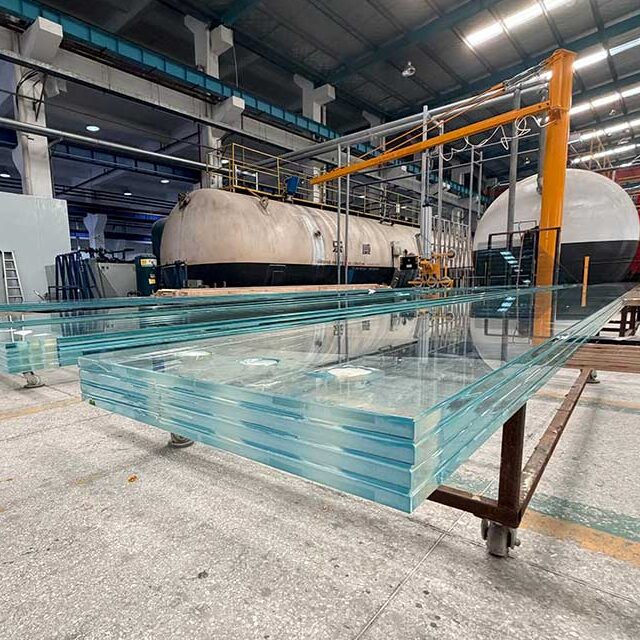
Laminated Glass
Laminated Glass is a composite glass product consisting of two or more glass sheets bonded permanently with one or more layers of organic polymer interlayers through a specialized process of high-temperature pre-pressing (or vacuuming) followed by high-temperature and high-pressure autoclaving. Common interlayer materials include PVB, SGP, EVA, and PU, enabling laminated glass with varying levels of safety performance, sound insulation, energy efficiency, or decorative effects. In building curtain wall applications, glass ribs are designed based on wind pressure resistance and deflection requirements from large glass panel self-weight. Multi-layer configurations (two, three, four, or more plies) are frequently used to meet structural and safety demands, with PVB and SGP being the most widely adopted interlayers.
PRODUCT DETAILS
| Parameter | Specification |
|---|---|
| Maximum Size | 3300 mm × 18000 mm |
| Thickness Range | 6–80 mm |
| Minimum Size | No explicit lower limit; customizable based on project requirements (subject to lamination process and mold capabilities) |
| Interlayer Options | PVB, SGP, EVA, PU, etc. |
| Layer Configurations | Customizable 2-ply, 3-ply, 4-ply, and multi-ply composite structures |
PROCESSING ROUTE
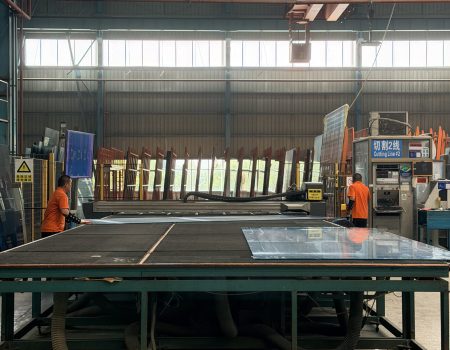
Cutting
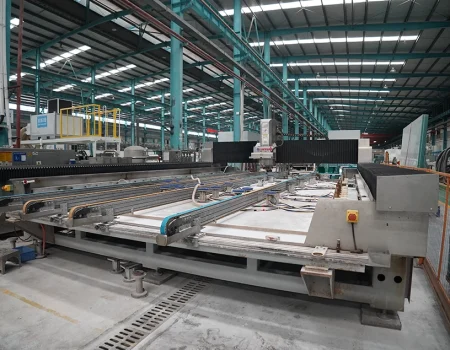
Edging
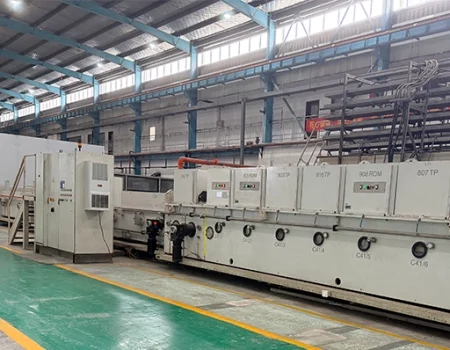
Coating(Optional)
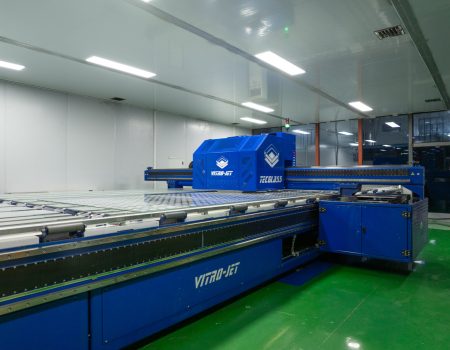
Digital printing(Optional)
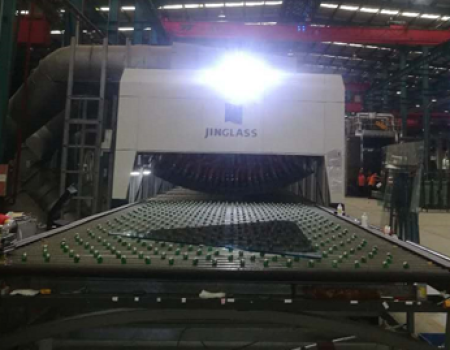
Tempering
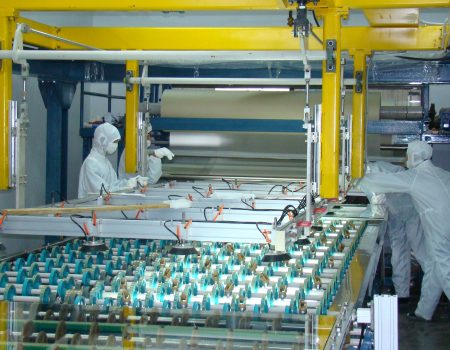
Laminating
Laminated Glass & Multilayer Laminated Glass: Engineered Safety for Modern Architecture
In contemporary architecture, glass is no longer merely a transparent divider between interior and exterior spaces. It must be safe, secure, and structurally reliable. Laminated glass has emerged as the material of choice for architects and specifiers who demand more than what standard glass can provide—and when ordinary laminated glass reaches its limits, multilayer laminated glass delivers uncompromising protection.
This comprehensive guide explores everything you need to know about laminated glass and multilayer laminated glass: how they are made, the critical role of interlayer materials (PVB vs. SGP), their key advantages, performance specifications, applications across the built environment, and how to select the right product for your project.
What Is Laminated Glass?
Laminated glass (also known as Laminated Safety Glass) is a composite glazing product consisting of two or more glass lites permanently bonded together with one or more polymer interlayers using heat and pressure. The interlayer—typically made of polyvinyl butyral (PVB) or ionoplast (SGP/SentryGlas®)—sits between the glass layers like the filling in a sandwich. Under heat and pressure in an autoclave, the interlayer fuses to the glass surfaces, creating a single, cohesive unit.
Multilayer laminated glass extends this concept by incorporating three, five, seven, or even up to nine glass layers with interlayers between each ply. This multi-ply construction significantly enhances impact resistance, penetration prevention, and post-breakage load capacity, making it suitable for ballistic protection, structural glazing, and extreme security applications.
Unlike ordinary float glass, which shatters into large, razor-sharp shards upon breakage, laminated glass behaves fundamentally differently: when impacted, the glass may crack, but the interlayer holds the fragments firmly in place, preventing dangerous dispersal and maintaining a barrier against weather, intrusion, and fall hazards.
Why Laminate Glass? The Purpose Behind the Process
The fundamental reason to specify laminated glass is to transform ordinary glass into a safety and security material that can withstand real-world threats.
Traditional annealed glass breaks easily and creates hazardous shards that cause severe injury. Tempered glass, while stronger and designed to fragment into small, relatively harmless pieces, offers no protection against glass fallout—in overhead applications, shattered tempered glass can rain down from above. Laminated glass addresses both vulnerabilities simultaneously: it provides impact resistance and post-breakage integrity.
Furthermore, multilayer laminated glass allows engineers to tailor protection levels precisely. By adding more glass layers and interlayers, the composite unit can be engineered to resist handgun rounds, rifle ammunition, forced entry attempts, bomb blasts, or even extreme storm debris.
How Laminated Glass Is Manufactured
The production of high-quality laminated glass involves a precise, multi-stage process:
Cutting and Preparation: Glass sheets are cut to final dimensions—all holes, notches, and edge treatments must be completed before lamination, as post-lamination fabrication is not possible.
Cleaning: Glass surfaces are thoroughly cleaned and dried to ensure perfect adhesion between glass and interlayer.
Interlayer Placement: One or more polymer interlayers (PVB or SGP) are positioned between the glass layers. Interlayer thickness typically ranges from 0.38 mm to 2.28 mm per layer, depending on performance requirements.
Pre-lamination (De-airing): The assembled glass-interlayer sandwich is passed through nip rollers to expel trapped air and achieve initial adhesion.
Autoclaving: The assembly is placed in an autoclave—a pressurized vessel—where it is subjected to high heat (approximately 120–150°C) and high pressure (10–14 bar). This step permanently bonds the interlayer to the glass, creating optical clarity and structural integrity.
Inspection: Finished panels are inspected for optical quality, edge bonding, and dimensional accuracy.
For multilayer laminated glass, steps 3–5 are repeated or scaled to accommodate additional glass and interlayer layers, requiring precise alignment and extended autoclave cycles.
Standard Laminated Glass vs. Multilayer Laminated Glass
| Feature | Standard Laminated Glass | Multilayer Laminated Glass |
|---|---|---|
| Layer count | 2 glass layers + 1 interlayer | 3–9 glass layers + 2–8 interlayers |
| Typical thickness | 6.38 mm to 12.76 mm | 15 mm to 60+ mm |
| Primary applications | Safety glazing, skylights, balustrades, windows | Ballistic protection, blast mitigation, structural glass, high-security |
| Impact resistance | High (safety glass standard) | Extreme (bullet-resistant, forced-entry rated) |
| Post-breakage integrity | Excellent | Exceptional (can retain structural load) |
| Weight | Moderate | Heavy (requires reinforced framing) |
| Cost | Economical | Premium |
PVB vs. SGP Interlayers: The Critical Decision
The interlayer is the heart of any laminated glass product. The choice between PVB and SGP determines the performance characteristics of the finished unit.
PVB (Polyvinyl Butyral)
PVB is the most widely used interlayer for laminated glass. It has decades of proven performance in both automotive and architectural applications. PVB interlayers provide:
Excellent optical clarity (light transmission approx. 86%, haze <2%)
Strong adhesion to glass
UV radiation blocking up to 99%–99.5%
Sound dampening properties—laminated glass acts as a noise barrier, with acoustic versions achieving Sound Reduction Factor (Rw) of up to 54 dB in triple glazing
Cost-effectiveness—PVB is widely available from multiple manufacturers at competitive prices
PVB is suitable for most standard architectural applications, including windows, doors, balustrades, and overhead glazing where safety is the primary concern.
SGP (SentryGlas® / Ionoplast Interlayer)
SGP is a high-performance ionoplast interlayer originally developed by DuPont. It offers significantly enhanced mechanical properties compared to PVB:
Tear strength is 5× greater than PVB (50 MJ/m³ vs. 10–15 MJ/m³)
Rigidity (shear modulus) is approximately 50× to 100× higher
Ultimate Tensile Strength reaches 34.5 MPa, versus 20 MPa for PVB
Post-breakage load capacity is dramatically superior—an SGP-laminated unit can hold a 3,300 kg load with minimal deflection, whereas an equivalent PVB unit displaces dramatically after 400 seconds
Bending deflection is only 1/4 that of PVB under equivalent load
Edge stability is excellent—SGP resists moisture ingress and delamination better than PVB, making it suitable for exposed-edge applications
Optically, SGP outperforms PVB: light transmission approx. 88%, haze <0.5%, and Yellow Index <1.0 (compared to PVB’s 6–10), meaning SGP remains clearer and resists yellowing over time.
Which Interlayer Should You Choose?
| Selection Criteria | Recommended Interlayer |
|---|---|
| Standard safety glazing (windows, doors, railings) | PVB (cost-effective, proven performance) |
| Overhead glazing (skylights, canopies) | SGP (superior post-breakage integrity) |
| Structural glass (floors, stairs, beams) | SGP (high load retention after breakage) |
| Ballistic and forced-entry resistance | Multilayer SGP or SGP+polycarbonate composite |
| Acoustic insulation (noise reduction) | PVB acoustic grade (or SGP) |
| Exposed edges (frameless glass) | SGP (better edge stability) |
| Large curtain wall panels | SGP (higher stiffness, thinner glass possible) |
| Budget-constrained projects | PVB |
Advantages of Laminated Glass
Whether standard or multilayer, laminated glass offers a compelling set of benefits:
1. Safety and Injury Prevention
The most fundamental advantage: when laminated glass breaks, glass fragments adhere to the interlayer rather than scattering. This prevents dangerous shards from causing injury and maintains a barrier against the opening. For overhead applications—skylights, canopies, glass roofs—laminated glass is often required by building codes specifically to prevent dangerous glass fallout.
2. Forced Entry and Ballistic Resistance
Multilayer laminated glass provides formidable resistance to intrusion attempts. It withstands high-impact forces from tools such as hammers, crowbars, and axes. For ballistic threats, multilayer laminated glass can be engineered to meet UL 752 and EN 1063 standards, with thicknesses ranging from 15 mm (P6B handgun resistance) to 45 mm (P8B high-power rifle resistance).
3. Sound Insulation
The PVB interlayer dampens sound vibrations, significantly improving acoustic performance compared to monolithic glass of the same thickness. Acoustic-grade laminated glass can achieve Rw values of 52 dB in double glazing and 54 dB in triple glazing, dramatically reducing noise transmission from traffic, railways, and aircraft.
4. UV Protection
Laminated glass blocks up to 99.9% of harmful ultraviolet radiation, protecting interior furnishings, artwork, flooring, and merchandise from fading and UV damage. This makes it the preferred choice for museums, galleries, retail stores, and high-end residential applications.
5. Structural Integrity (SGP Laminates)
SGP-laminated multilayer glass exhibits dramatically higher post-breakage load capacity than PVB equivalents. Even after breakage, an SGP-laminated panel can retain sufficient strength to hold a human load for extended periods, ensuring safety until replacement can occur.
6. Weather and Storm Resistance
Laminated glass withstands extreme temperature fluctuations, wind loads, and impact from flying debris during hurricanes and severe storms. Since Hurricane Andrew in 1992, laminated glass has demonstrated its protection capability in hurricane-prone regions.
7. Security and Blast Mitigation
Multilayer laminated glass is used in banks, embassies, government buildings, and high-security facilities where protection against forced entry, bomb blasts, and ballistic attack is required.
Applications of Laminated Glass in Architecture
Exterior Applications
| Application | Why Laminated Glass |
|---|---|
| Curtain walls and facades | Impact resistance, UV protection, structural performance |
| Skylights and canopies | Required by code for overhead glazing to prevent fall-through if broken |
| Balustrades and railings | Post-breakage integrity prevents dangerous edge exposure; SGP laminates provide cantilever strength |
| Windows (high-rise buildings) | Fall protection—if glass breaks, fragments remain bonded |
| Storefronts and entrance doors | Forced entry resistance, safety glazing compliance |
| Hurricane-resistant glazing | Impact resistance from windborne debris |
Interior Applications
| Application | Why Laminated Glass |
|---|---|
| Glass floors and staircases | Structural load-bearing with post-breakage integrity; anti-slip treatments available |
| Partitions and room dividers | Safety for occupant contact; acoustic insulation |
| Balustrades (interior staircases) | Safety and aesthetic transparency |
| Museum display cases | UV protection, security, optical clarity |
| Acoustic barriers | Noise reduction in open-plan offices and public spaces |
| Shower enclosures and bathroom glazing | Safety glass classification |
Security Applications
| Application | Recommended Configuration |
|---|---|
| Bank teller windows | Multilayer laminated glass (UL 752 Level 1–3) |
| Embassies and government buildings | Multilayer SGP with ballistic rating (UL 752 Level 5–8) |
| Jewelry stores and luxury retail | Forced-entry resistant laminated glass |
| Armored vehicles | Multilayer glass-polycarbonate composite |
| Schools and public buildings | Impact-resistant laminated safety glass |
Multilayer Laminated Glass for Extreme Requirements
When standard laminated glass is insufficient, multilayer laminated glass provides engineered solutions for the most demanding applications.
Ballistic (Bullet-Resistant) Glass
Ballistic-rated multilayer laminated glass is constructed from multiple layers of glass bonded with PVB or SGP interlayers. Thickness ranges from 24 mm to 53 mm depending on the weapon threat level. Products such as VETROGARD Attack achieve EN 356 resistance classifications P6B, P7B, and P8B with thicknesses of 15 mm, 22 mm, and 27 mm respectively.
Forced-Entry Resistance
Multilayer laminated glass designed for forced-entry resistance withstands repeated impacts from tools such as hammers, crowbars, and axes. Security glazing for banks, embassies, and government buildings typically incorporates multiple PVB or stiff PVB interlayers with tempered glass plies.
Structural Glass (Floors, Stairs, Beams)
For load-bearing applications, multilayer SGP-laminated glass provides the necessary post-breakage capacity to ensure occupant safety even if breakage occurs. SGP’s high tear strength and rigidity mean the panel can retain significant structural load after cracking.
Blast-Mitigation Glazing
Multilayer laminated glass with high-performance interlayers is used in bomb-blast-resistant glazing for high-risk buildings. The interlayer absorbs blast energy and retains fragments, preventing dangerous glass propulsion into occupied spaces.
Technical Specifications
| Parameter | Standard Laminated Glass | Multilayer Laminated Glass |
|---|---|---|
| Layer count | 2 glass + 1 interlayer | 3–9 glass + 2–8 interlayers |
| Glass thickness per ply | 3 mm to 19 mm | 3 mm to 19 mm |
| Total thickness | 6.38 mm to 12.76 mm (typical) | 15 mm to 60+ mm |
| Interlayer type | PVB (0.38–2.28 mm) or SGP | PVB, SGP, or polycarbonate composite |
| Maximum panel size | Up to 3,300 mm × 10,500 mm | Manufacturer dependent |
| Light transmission | 86–90% (clear) | 80–90% (depending on layers) |
| UV blocking | 99–99.9% | 99–99.9% |
| Sound reduction (Rw) | Up to 54 dB (triple glazing) | Up to 54 dB (triple glazing) |
| Standards | EN 12543, EN 14449, ANSI Z97.1, CPSC 16 CFR 1201, ISO 12543 | Same, plus EN 356 (ballistic), UL 752 |
Laminated Glass vs. Tempered Glass: A Quick Comparison
| Property | Laminated Glass | Tempered Glass |
|---|---|---|
| Breakage pattern | Cracks, fragments adhere to interlayer | Shatters into small, blunt pieces |
| Fallout risk | Low (interlayer holds fragments) | High (pieces fall freely) |
| Post-breakage integrity | Maintains barrier | No barrier remains |
| Security | Resists penetration (PVB/SGP interlayer) | Limited penetration resistance |
| UV protection | 99%+ (inherent) | None (requires coating) |
| Acoustic insulation | Excellent (interlayer dampens sound) | Moderate |
| Cutting/modification | Cannot be cut after lamination | Cannot be cut after tempering |
| Best applications | Overhead glazing, security, acoustic | Impact resistance, safety fragmentation |
Conclusion
Laminated glass and multilayer laminated glass represent the pinnacle of safety and security glazing for modern architecture. From standard two-ply units for balustrades and skylights to multi-layer ballistic assemblies for embassies and financial institutions, laminated glass delivers performance that monolithic glass cannot match.
The choice of interlayer—PVB for cost-effective safety and acoustic performance, SGP for structural integrity and extreme security—allows specifiers to tailor each product to the precise demands of the application.
Whether your project requires overhead fall protection, forced-entry resistance, ballistic defense, acoustic insulation, or UV-sensitive artifact preservation, there is a laminated glass solution engineered to meet the challenge. Contact us to discuss your requirements—from standard laminated glass to custom multi-layer laminated glass assemblies.
DEEP PROCESSING GLASS
Customized, Reliable and High-Performance for Global Projects
Deep-processed glass integrates safety, energy saving, sound insulation, aesthetics and multi-functional pro-tection. Through precise technologies including tempering, laminating insulating, heat bending, ceramic friting,digital printing, bird-safe, frosted and bulletproof processing, it greatly improves glass strength, thermal perfor-mance ond safety. It mects the multiple demands of modern architecture for high-end customization, greenenergy saving, safety, reliability and artistic aesthetics, and is widely used in lancmark facades, commercialspaces, high-end residences and special security scenarios.
INDUSTRYIENGINEERING CASES
Strength, Safety and Aesthetics in Every Piece
PRODUCT USED: