

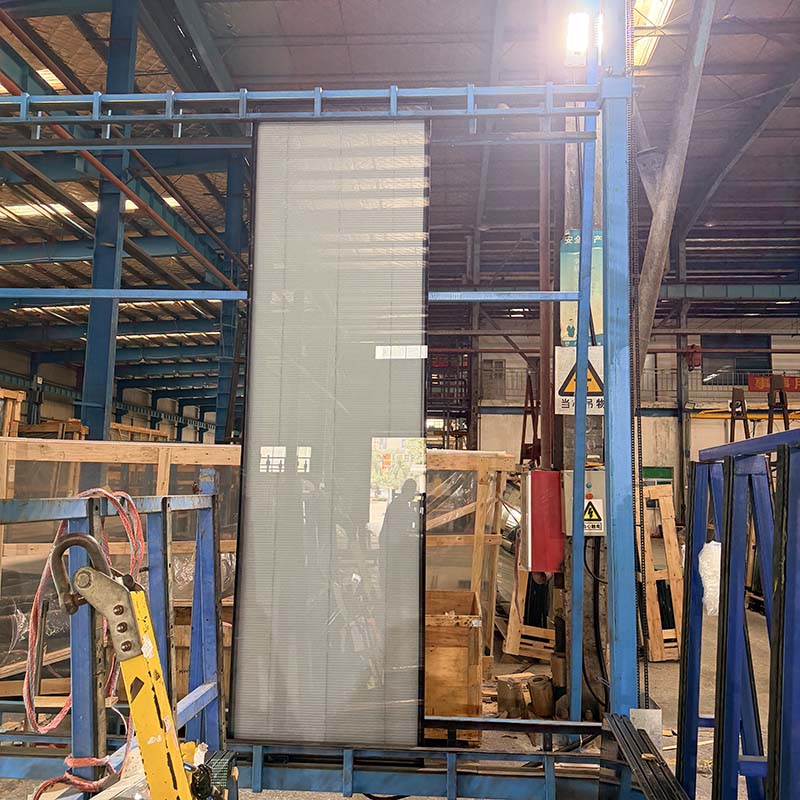
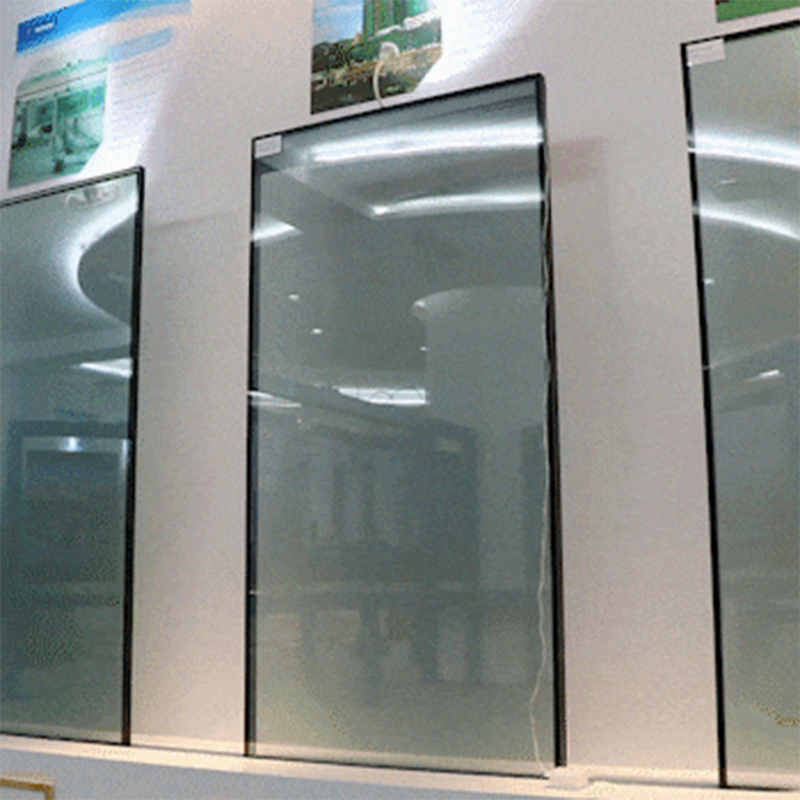
Insulated Glass With Internal Blinds
Insulating glass with built-in blinds is a composite energy-saving glass product with a louver system integrated inside the insulating glass cavity, combining thermal insulation, sound insulation, solar shading and privacy control in one unit.
Electric type is driven by a motor, allowing intelligent adjustment of the louver angle via switches or remote controls to manage light and shading.
Solar type is equipped with a solar power supply module, requiring no complicated wiring, featuring energy saving, environmental protection, easy installation and greater flexibility.
The product is elegant, easy to clean, maintenance-free, safe and reliable, widely used in windows, doors and curtain wall systems of high-grade office buildings, hotels, residences, hospitals and public buildings.
PRODUCT DETAILS
| Parameter | Specification |
|---|---|
| Product | Insulating Glass with Built-in Blinds (Electric / Solar) |
| Minimum Size (mm) | 210 × 350 |
| Maximum Size (mm) | 18000 × 3300 |
| Single Glass Thickness (mm) | 5 – 25 |
| Total Thickness (mm) | 3 – 45 |
| Insulating Layer Thickness (A) | 12 – 27 (argon gas filling available) |
| Blind Material | Aluminum alloy / Stainless steel / PVC (customizable colors) |
| Blade Adjustment Angle | 0° – 105° |
| Drive Method (Electric Type) | 24V DC motor; supports wall switch, IR/RF remote control, and APP control |
| Power Supply (Solar Type) | Monocrystalline silicon PV panel with lithium battery; no external power required; battery life ≥ 30 days |
| Sound Insulation Performance | ≥ 30 dB |
| Shading Coefficient (SC) | 0.25 – 0.60 (adjustable) |
| Wind Resistance Class | ≥ Class 6 (customizable up to Class 9) |
PROCESSING ROUTE
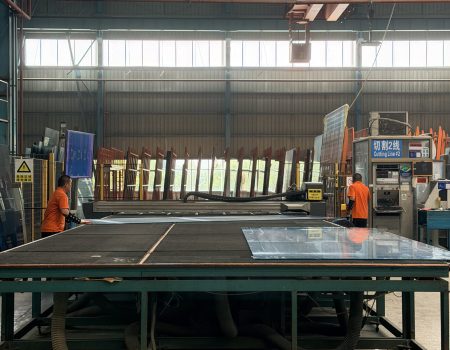
Cutting
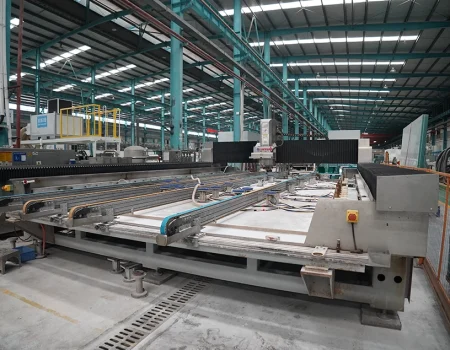
Edging
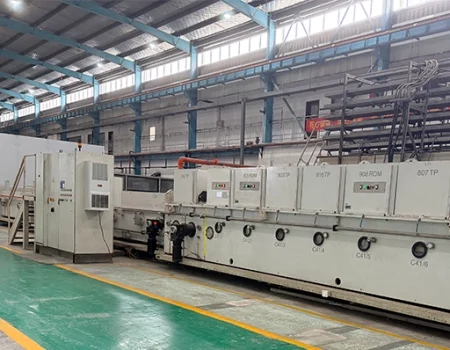
Coating(Optional)
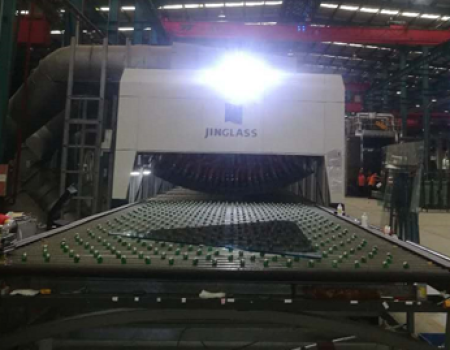
Tempering
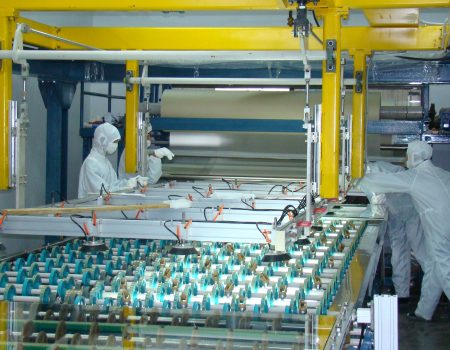
Laminating(optional)
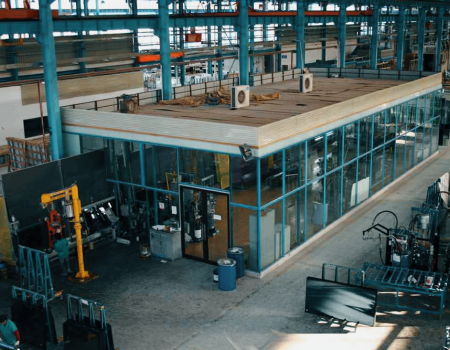
Insulating
Insulated Glass With Internal Blinds: All-in-One Glazing for Modern Architecture
What Is Insulated Glass With Internal Blinds?
Insulated glass with internal blinds —also known as built‑in blind insulating glass, integrated shading glazing, or internal blind IGU—is a ready‑to‑install glass unit that integrates a shading system directly into the sealed cavity between two or more glass panes. Unlike conventional window assemblies where blinds or curtains are attached to the building interior or exterior, this product places the blind mechanism inside a fully sealed insulating glass unit (IGU), combining thermal insulation, solar control, visual privacy and cleanliness into a single engineered component.
The cavity between the glass layers is filled with dry air or an inert gas such as argon, with the blind mechanism installed between the panes. A magnetic coupling system transfers motion from an external handle or electric motor across the sealed gap, allowing the user to raise, lower or tilt the internal blind without compromising the integrity of the sealed cavity.
This integrated design eliminates the need for external window treatments, making it particularly attractive for modern architecture where clean lines, low maintenance and energy efficiency are top priorities. The product is sometimes referred to by other names such as “double‑glazed unit with integrated blind”, “sealed unit with internal venetian blind” or “built‑in blind insulating glass”.
How It Works: Integrated Shading Without Compromising the Seal
Inside a insulated glass with internal blinds, the blind mechanism is completely enclosed. The cavity—typically 16 mm to 27 mm wide—contains a micro‑venetian blind made of lightweight yet durable aluminium alloy. Two separate magnetic control handles are mounted on the exterior surface of the glass: one magnet is used to raise and lower the blind (so‑called “up‑down control”), while the second magnet is used to rotate the slats between 0° and 180° (“tilt control”).
When the external handle is moved, the magnetic field passes through the glass without any physical penetration of the sealed cavity. The internal magnetic follower translates the motion to the blind mechanism, raising, lowering or tilting the slats precisely. In electrically operated versions, a miniature low‑voltage motor is housed inside the sealed unit, controlled by a remote, wall‑mounted switch or even a voice‑assistant integration.
Because no opening or mechanical linkage crosses the glass, the insulating cavity remains hermetically sealed for its entire service life. The inert gas fill stays inside, the internal surfaces stay free from condensation and the blind mechanism is protected from dust, dirt, moisture and airborne pollutants.
Key Benefits of Insulated Glass With Internal Blinds
1. Thermal Control and Energy Savings
The primary advantage of insulated glass with internal blinds is its ability to actively manage heat flow. A standard double‑glazed unit already provides a baseline thermal barrier (K‑value approx. 2.8 W/m²·K for a conventional unit). When the internal blind is deployed, the additional air layers and reflective surface of the aluminium slats can reduce heat transfer to as low as 1.8 W/m²·K. In triple‑glazed configurations, the K‑value can fall below 1.7 W/m²·K.
In summer, closing the slats reflects solar radiation away from the interior, reducing solar heat gain and lowering air‑conditioning loads. In winter, the blind can be fully retracted to allow direct sunlight to warm the interior space, while the IGU continues to prevent heat from escaping to the outside. For the user, this means greater year‑round comfort with lower energy consumption. The product also offers a wide range of solar control: the shading coefficient can be adjusted continuously between Sc = 0.18 (slats fully closed) and Sc = 0.90 (slats fully open or retracted).
2. Exceptional Acoustic Insulation
Because the blind mechanism occupies part of the cavity and introduces additional reflective surfaces, insulated glass with internal blinds tends to outperform standard IGUs for noise reduction. According to test data, the acoustic insulation of a standard double‑glazed unit is around 25 dB; the same unit with an internal blind can achieve 30 dB to 36 dB of noise reduction. For buildings located near traffic, railway lines or airports, this extra level of sound damping can make a significant difference to occupant comfort.
3. Permanently Clean — No Dust, No Maintenance
One of the strongest practical arguments for specifying insulated glass with internal blinds is that the blind never needs cleaning. Conventional blinds or curtains are notorious dust traps; in hospitals, laboratories and food preparation areas this is not just an aesthetic issue but a hygiene concern. By sealing the blind inside the IGU, it is completely isolated from airborne dust, cooking grease, cigarette smoke and insect activity. The exterior glass surfaces are cleaned in the same way as any other window, but the internal mechanism remains pristine for the life of the unit.
4. Fire Safety
Conventional textile curtains and blinds are a significant fire hazard in many buildings. When ignited, they can burn rapidly and release dense, toxic smoke that endangers evacuation and can cause serious injury. Insulated glass with internal blinds eliminates this risk entirely. The blind is made from non‑combustible aluminium alloy, fully enclosed within tempered glass. The assembly does not introduce any combustible material into the building envelope and will not contribute to flame spread or smoke production in the event of a fire.
5. Uncompromised Security
The absence of external cords, chains or control wires also has security implications. Conventional blinds and curtains can be manipulated from outside a window if a small gap is opened; an integrated blind is completely inaccessible to anyone on the exterior side. In addition, the structural strength of the glass unit—typically incorporating two or three layers of tempered glass—provides a significant barrier against forced entry.
6. Space‑Saving and Aesthetic
By eliminating the need for interior curtain tracks, valances, blinds or shutters, insulated glass with internal blinds maximises usable floor space and produces a much cleaner architectural appearance. The external face of the building shows only the glazing itself, with no visible hardware or external shading devices. On the interior side, there are no cords to tangle, no curtain rods to clean and no blinds to adjust manually other than the compact magnetic handles mounted flush against the glass. This clean, minimalist aesthetic suits contemporary residential, commercial and institutional architecture equally well.
Control Options: Manual, Electric, Smart
To suit different project requirements, insulated glass with internal blinds is available in several control configurations.
Manual Magnetic Control
This is the most common and cost‑effective option. Two magnetic handles are attached to the glass surface by magnetic attraction only—no drilling, no screws and no permanent fixture. One handle controls the raise/lower function; the second controls the tilt angle of the slats. The handles can be removed or repositioned by the user if needed. This system is simple, robust and requires no power supply.
Electric Motorised Control
For larger glass panels, high windows, skylights or installations where manual operation is impractical, an electric version is available. A miniature 24 V DC tubular motor is installed inside the sealed cavity alongside the blind mechanism, with no external wiring crossing the glass seal. The motor is controlled by a wired wall switch, a hand‑held radio remote or a building automation system. Because the motor operates at low voltage, it is intrinsically safe and consumes minimal power. The blind movement is quiet, smooth and can be operated from anywhere in the room. Some electric versions also include over‑load protection that automatically stops the motor if the blind encounters an obstruction.
Smart and Solar‑Powered Control
Recent advances in low‑power electronics have made it possible to offer fully self‑contained solar‑powered insulated glass with internal blinds. In this configuration, a small photovoltaic cell harvests ambient daylight to recharge an internal battery, which powers the motor and control electronics. The unit can be operated via a smartphone app, voice assistant (such as Alexa or Google Assistant) or integrated into a building automation system. Because there are no external power cables, the glass unit remains completely sealed and can be retrofitted into existing window frames without electrical work. This technology is particularly valuable for buildings seeking high green‑building certification credits, such as LEED or BREEAM.
Technical Specifications
| Parameter | Typical Values |
|---|---|
| Glass configuration | 5 + 19A + 5 up to 6 + 27A + 6 (double‑glazed); triple‑glazed options available |
| Glass type | Clear float, low‑iron, Low‑E coated, tinted, or patterned |
| Safety glass | Tempered (toughened) as standard; laminated or heat‑strengthened also available |
| Cavity width | 16 mm to 27 mm |
| Gas fill | Dry air or argon (≥90% concentration) |
| Thermal transmittance (U‑value / K‑value) | Double‑glazed with blind closed: as low as 1.8 W/m²·K; triple‑glazed: below 1.7 W/m²·K |
| Shading coefficient (Sc) | Continuously adjustable from 0.18 (fully closed) to 0.90 (fully open) |
| Acoustic insulation (Rw) | 30–36 dB (depending on glass thickness and cavity width) |
| Blind material | Aluminium alloy (lightweight, non‑corrosive, non‑combustible) |
| Slat width | Typically 12.5 mm, 15 mm or 16 mm |
| Control type | Manual magnetic (two‑handle), electric (wired or remote), smart (solar‑powered, app‑controlled) |
| Mechanical durability | ≥30,000 raise/lower cycles; ≥60,000 tilt cycles |
| Maximum single‑panel size | Width ≤2.4 m, Height ≤3.6 m (depending on glass thickness and cavity width) |
| Minimum single‑panel size | Width ≥300 mm, Height ≥300 mm |
| Colour options | White, cream, champagne, silver‑grey, wood‑grain effect and custom colours |
| Certification | 3C (China Compulsory Certification), CE, IGCC, JG/T 255‑2020 |
Applications of Insulated Glass With Internal Blinds
The combination of thermal performance, acoustic insulation, low maintenance and design flexibility makes insulated glass with internal blinds suitable for a very wide range of building types.
High‑end residential apartments and villas: The product is particularly popular in master bedrooms, living rooms, bathrooms and home offices. The ability to adjust privacy and solar gain instantly, without the clutter of curtains or blinds, is highly valued by discerning homeowners.
Commercial office buildings: Open‑plan offices, executive offices and glass‑partitioned meeting rooms benefit from the acoustic damping and glare control that internal blinds provide. In a high‑rise office, manually adjusting blinds across many windows would be impractical; electric or smart versions allow building‑wide or zone‑based control from a central automation system.
Healthcare facilities: Hospitals, clinics, dentists‘ surgeries and care homes have strict hygiene requirements. Dust‑collecting fabric curtains are problematic; sealed internal blinds eliminate this issue entirely and can be easily wiped clean on the glass surfaces without any hidden dust traps.
Hospitality: Hotels, serviced apartments, resorts and cruise ships specify insulated glass with internal blinds to achieve a high‑end aesthetic while minimising housekeeping labour. The glass unit can be cleaned quickly and the guest never has to touch a dusty or damaged blind.
Educational buildings: Schools, universities and libraries require good daylighting but also need to control glare on whiteboards and screens. Internal blinds provide an elegant solution without the maintenance burden of conventional curtains.
Transport infrastructure: Airport terminals, railway stations and bus depots can be fitted with large‑format electric insulated glass with internal blinds to manage solar heat gain and reduce air‑conditioning demand in concourses and waiting areas.
Food service and laboratories: Commercial kitchens, food preparation areas and analytical laboratories benefit from the non‑porous, easily sanitised glass surface and the complete absence of fabric or dust‑trapping components. The aluminium blind mechanism inside the sealed cavity is not exposed to cooking oils, chemical fumes or microbial growth.
High‑security and government buildings: The absence of external cords or accessible blind mechanisms, combined with the strength of tempered glass, makes this product attractive for buildings where security is a primary concern.
Limitations to Consider
As with any building product, there are practical constraints that should be understood before specification.
Cost: Insulated glass with internal blinds is more expensive than a standard IGU or a simple curtain track. The additional engineering, precision assembly and quality control required to seal a mechanical mechanism inside a gas‑filled cavity are not trivial. However, when the total cost of ownership is considered—eliminating the purchase, cleaning, repair and replacement of conventional blinds—the lifecycle economics can be very attractive, especially for larger projects.
Repairability: If the blind mechanism or magnetic control system fails inside the sealed unit, there is no field repair. The entire glass unit must be replaced, either under warranty or as a paid replacement. This is why choosing a reputable manufacturer with proven durability testing is essential. Industry standard testing typically requires the mechanism to withstand at least 30,000 raise/lower cycles and 60,000 tilt cycles without failure.
Weight: An IGU with internal blinds is heavier than a standard double‑glazed unit. The window frame, hinges and supporting structure must be designed to accommodate the additional weight. This is particularly relevant for tilt‑and‑turn windows or large opening sashes.
Frame depth: Because the cavity is wider than a standard IGU (to accommodate the blind mechanism and allow free movement of the slats), the frame must have sufficient rebate depth. In retrofit applications, this may require replacing the entire window frame, not just the glass.
Not 100% blackout: Even with the slats fully closed and the blind fully lowered, a very small amount of light can pass between the slats or around the edges of the blind mechanism. For applications that require total darkness—such as cinemas, sleep laboratories or some photographic studios—additional blackout measures may still be necessary.
Selection Criteria and Procurement Considerations
To ensure long‑term reliability and satisfactory performance, building professionals should consider the following when sourcing insulated glass with internal blinds:
Mechanical durability rating: Request certified test reports showing the number of raise/lower and tilt cycles the product has successfully completed. Look for products that meet or exceed the requirements of JG/T 255‑2020.
Seal integrity and gas retention: The long‑term performance of the IGU depends on the quality of the edge seal. Ask for evidence of gas‑fill retention testing and expected service life. A well‑made unit should retain at least 90% of its initial argon fill for 10–15 years.
Magnetic coupling strength: The external magnetic handles must be strong enough to move the internal blind smoothly across the full width and height of the glass. Weak magnets or poorly designed magnetic circuits can lead to slipping or unreliable operation.
Blind material quality: The aluminium slats should be treated with a durable, UV‑stable coating that will not discolour or degrade over time, even after years of exposure to sunlight through the glass.
Glass type and coating: For maximum thermal performance, specify Low‑E coated glass on the outdoor side of the IGU, combined with a low‑iron inner pane for optimal colour rendition when the blind is retracted.
Installation and support: Ensure the manufacturer or supplier offers clear installation instructions, warranty coverage and after‑sales support. Because the units are not field‑repairable, a robust warranty is particularly important.
Conclusion
Insulated glass with internal blinds represents a mature, well‑engineered solution to a set of common architectural challenges: controlling solar gain, preserving privacy, managing glare, maintaining acoustic comfort and keeping a building clean and safe—all without the maintenance burden of conventional window coverings.
For residential projects, it brings a level of convenience and aesthetic refinement that is hard to achieve with any other system. For commercial and institutional buildings, it reduces cleaning labour, improves fire safety and contributes directly to energy‑efficiency targets. For architects, it offers a clean, uncluttered appearance that supports contemporary design languages while solving real operational problems.
When correctly specified from a reputable manufacturer, insulated glass with internal blinds provides decades of trouble‑free service, lower energy costs, improved occupant comfort and a consistently clean appearance—making it a specification that building owners and facility managers will appreciate for many years to come.
DEEP PROCESSING GLASS
Customized, Reliable and High-Performance for Global Projects
Deep-processed glass integrates safety, energy saving, sound insulation, aesthetics and multi-functional pro-tection. Through precise technologies including tempering, laminating insulating, heat bending, ceramic friting,digital printing, bird-safe, frosted and bulletproof processing, it greatly improves glass strength, thermal perfor-mance ond safety. It mects the multiple demands of modern architecture for high-end customization, greenenergy saving, safety, reliability and artistic aesthetics, and is widely used in lancmark facades, commercialspaces, high-end residences and special security scenarios.
INDUSTRYIENGINEERING CASES
Strength, Safety and Aesthetics in Every Piece
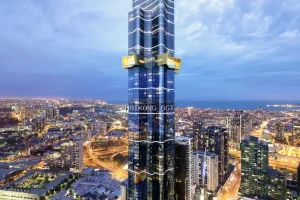

PRODUCT USED:
Heat-Bent Laminated Glass