
PRODUCT DETAILS
| Parameter | Specification |
|---|---|
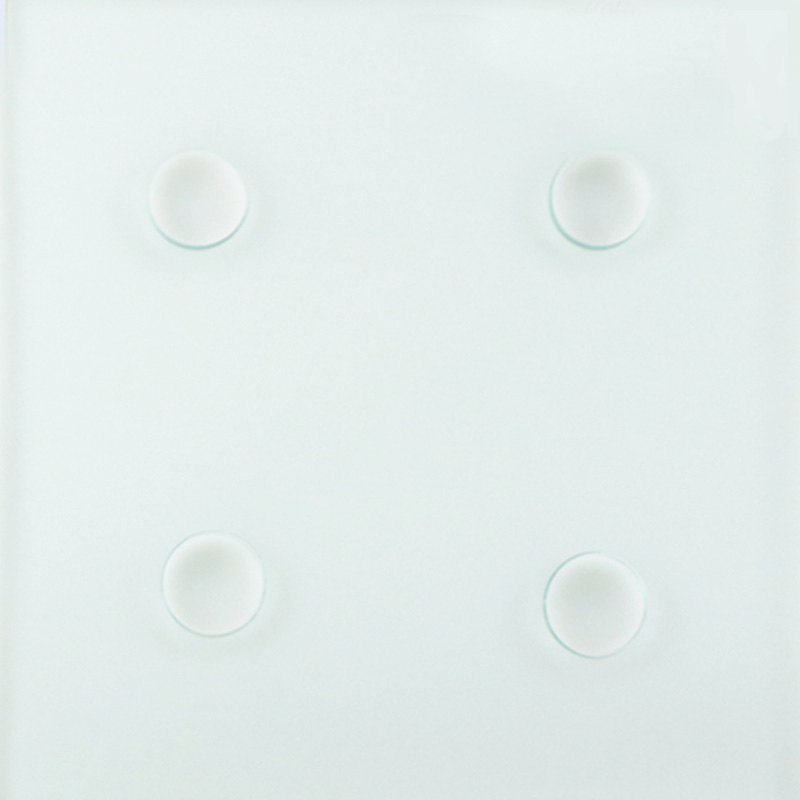
| Product | Flat Tempered Glass / Bent Tempered Glass / Heat-Strengthened Glass |
| Minimum Size | No strict limitation; customizable based on project requirements |
| Maximum Size | Up to 18000 × 3300 mm |
| Glass Thickness | 5 – 25 mm |
| Bending Strength | Tempered: 3–5 times stronger than annealed glass Heat-Strengthened: Approximately 2 times stronger than annealed glass |
| Fragmentation | Tempered: Breaks into small blunt particles, compliant with safety standards Heat-Strengthened: Breaks into large fragments (no granular state) |
| Thermal Stability | Tempered glass offers excellent thermal stability and resistance to thermal shock |
| Applications | Curtain walls, windows, doors, railings, partitions, canopies, and skylights |
PROCESSING ROUTE
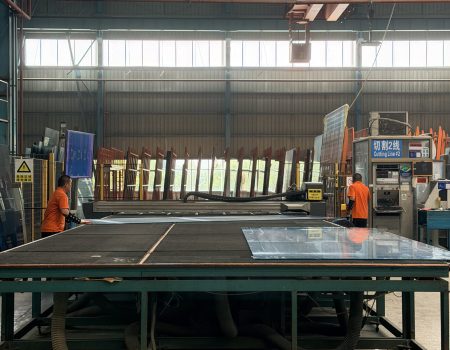
Cutting
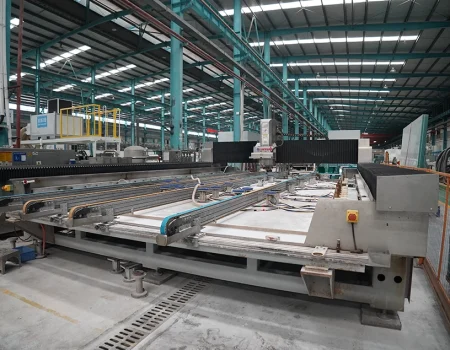
Edging
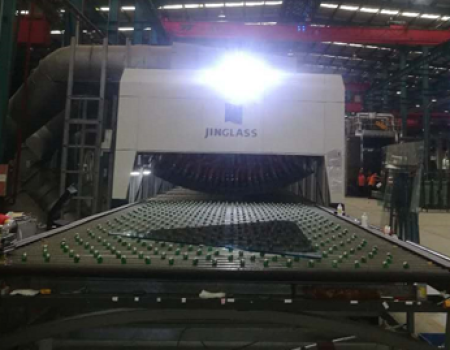
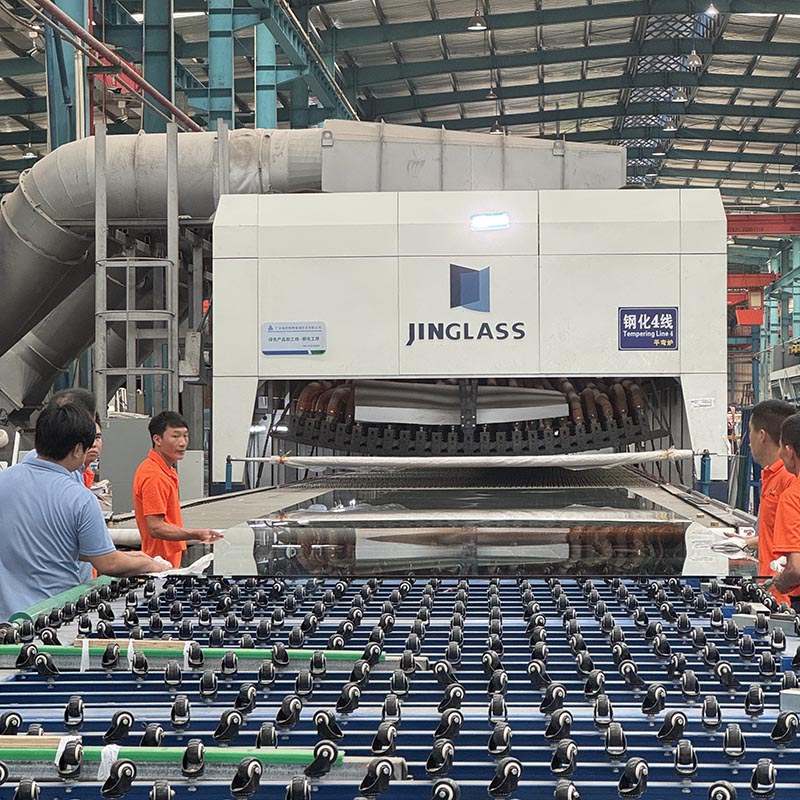
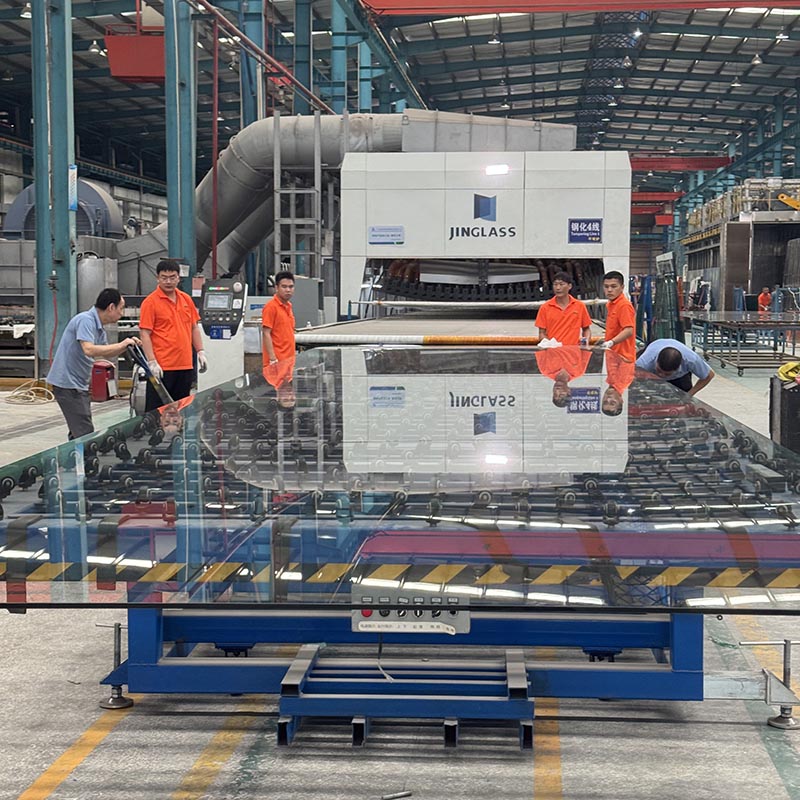
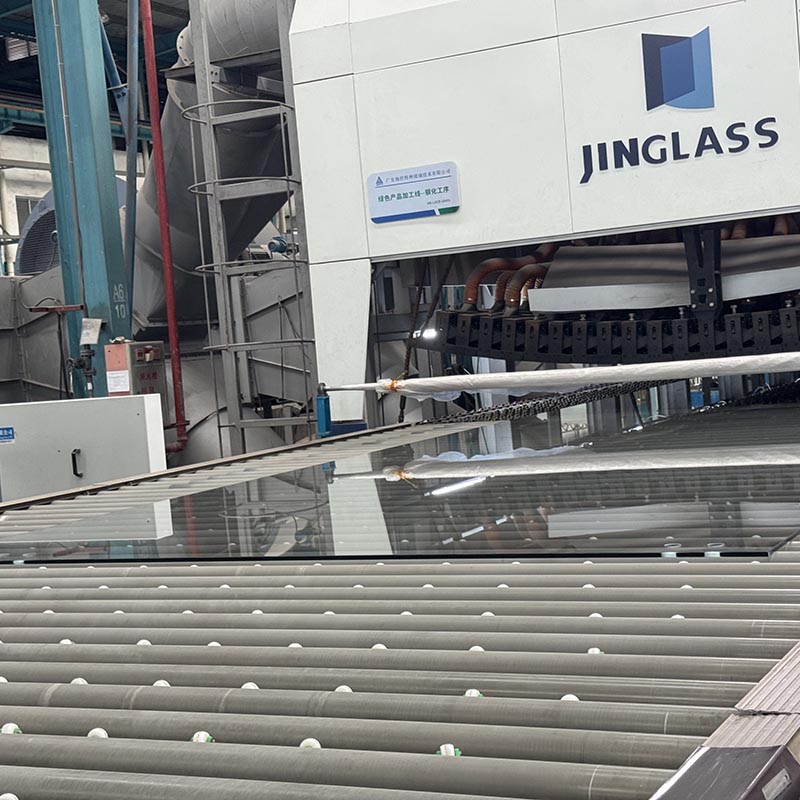
Tempering
Tempered Glass vs. Heat-Strengthened Glass: A Complete Guide for Architectural Applications
When specifying glass for architectural projects, one fundamental question arises: What type of heat-treated glass best suits your building’s needs? The answer is not always “fully tempered.” In fact, many high-performance facades worldwide rely on heat-strengthened glass instead of fully tempered glass .
Understanding the distinction between these two heat-treated glass types is essential for architects, engineers, and building owners who want to balance strength, safety, cost, and long-term performance. This guide provides a comprehensive comparison to help you make informed specifications for your next project.
What Is Tempered Glass?
Tempered glass (also called toughened glass) is a type of safety glass processed through controlled thermal treatments to increase its strength compared with normal glass. The process puts the outer surfaces into compression and the inner surfaces into tension, creating a balanced stress profile that gives the glass its remarkable properties.
To make tempered glass, the glass is first cut to the required size—including any holes, notches, or edge polishing—because once the tempering process is complete, the glass cannot be cut or modified without shattering. The prepared glass is then heated in a tempering furnace to approximately 620°C (about 1,200°F), at which point it begins to soften. Immediately after heating, the glass is rapidly cooled (quenched) with forced air drafts, which freezes the outer surfaces in their dilated state while the inner material retracts as temperature drops.
This rapid cooling creates high surface compressive stress—typically a minimum of 10,000 psi (69 MPa) —balanced by tensile stress in the interior. When broken, tempered glass shatters into small, blunt granular pieces (often described as “dice” or “small cubes”) rather than sharp, jagged shards, significantly reducing the risk of injury.
Why Temper Glass? The Purpose Behind the Process
The fundamental reason to temper glass is to transform ordinary annealed glass into a safety glass suitable for demanding architectural applications. Annealed glass—the standard float glass that comes directly from the manufacturing line—has almost no internal stress, making it fragile. It breaks into large, razor-sharp shards that can cause severe injury.
Tempering addresses three critical performance requirements:
1. Enhanced Strength: The tempering process makes glass approximately four to five times stronger than annealed glass of the same thickness in resisting impact, wind loads, and bending forces. This allows architects to design larger glazed areas with thinner glass sections, reducing structural loads while maximizing transparency.
2. Thermal Stability: Tempered glass can withstand extreme temperature variations and thermal shocks that would cause ordinary glass to crack. This makes it essential for applications exposed to direct sunlight, sudden temperature changes, or fire-rated assemblies.
3. Safety in Breakage: When tempered glass does break, its controlled fragmentation into small, relatively harmless particles dramatically reduces injury risk—a property required by building codes for “hazardous locations” such as doors, side lites, and areas where people may come into contact with glazing.
Advantages of Tempered Glass
Tempered glass offers compelling benefits that have made it the go-to choice for countless architectural applications:
Exceptional Strength: Four to five times stronger than annealed glass, enabling larger spans and thinner profiles without compromising structural integrity.
Safety Fragmentation: Breaks into small, blunt pieces rather than dangerous sharp shards, meeting safety glazing standards worldwide.
Thermal Shock Resistance: Withstands sudden temperature changes that would crack ordinary glass, making it ideal for sun-exposed facades and areas near heat sources.
Scratch Resistance: The tempering process enhances surface hardness, helping maintain optical clarity and appearance over time.
Design Versatility: Can be processed into curved glass and combined with coatings, laminates, or insulating glass units for tailored performance.
Compliance with Building Codes: Recognized as safety glass under major standards including ASTM C1048, ANSI Z97.1, CPSC 16 CFR 1201, and EN 12150.
Disadvantages of Tempered Glass
Despite its many advantages, tempered glass has inherent limitations that specifiers must consider:
Cannot Be Modified After Tempering: Once the glass has been tempered, no further cutting, drilling, edging, or other fabrication is possible. Any attempt to work the glass after tempering will cause it to shatter instantly. All holes, notches, and edge treatments must be completed before the glass enters the tempering furnace.
Spontaneous Breakage Risk (NiS): Due to microscopic nickel sulfide (NiS) inclusions that may be present in the raw glass, tempered glass carries a small but non-zero risk of self-explosion—sometimes months or years after installation. The baseline self-explosion rate for ordinary tempered glass is approximately 0.03% (3 in 10,000 panels) . While rare, the consequences can be serious, particularly in high-rise applications where falling glass poses public safety risks.
Optical Distortion: The rapid cooling process can create slight waviness or “roller wave” distortion, particularly in larger panels, which may affect visual quality in highly reflective or spandrel applications.
Higher Cost: Due to the specialized equipment and energy-intensive process, tempered glass costs more than annealed or heat-strengthened glass.
Weaker Edges: The edges of tempered glass are the most vulnerable points. Edge damage during handling or installation can compromise the entire panel and lead to breakage.
Solutions to Tempered Glass Limitations
Recognizing these limitations, the glass industry has developed several approaches to mitigate risks and enhance performance.
1. Heat Soak Testing (HST)
The most direct solution to the NiS spontaneous breakage problem is the Heat Soak Test (HST) , specified under European standard EN 14179-1:2005. In this process, fully tempered glass is placed in a specialized heat soaking furnace and held at 290°C ± 10°C (approximately 555°F) for a minimum of two hours. This controlled heating accelerates the alpha-to-beta phase transformation of any NiS inclusions present. Panels containing critical NiS inclusions will break during the test—in the factory—rather than on the building in service.
Properly conducted heat soak testing significantly reduces the risk of NiS-induced spontaneous breakage. Industry data shows that the incidence of critical NiS inclusions drops from approximately 1 inclusion per 11,000 lbs of glass for ordinary tempered glass (EN 12150) to 1 inclusion per 882,000 lbs for heat-soaked tempered glass (EN 14179).
Limitations to Understand: Heat soak testing is not a perfect process. It reduces—but does not entirely eliminate—the risk of NiS-induced fracture in service. The test adds approximately 10% to the product cost and requires additional production time. Furthermore, if a panel breaks in the furnace, adjacent panels (typically 2 to 4) may also be damaged, increasing waste.
2. Laminated Glass
Laminated glass offers a fundamentally different approach to safety. It consists of two or more layers of glass bonded together with a resilient interlayer—typically polyvinyl butyral (PVB) or similar material. When laminated glass breaks, the glass fragments adhere to the interlayer rather than falling freely, maintaining the integrity of the opening and preventing dangerous glass fallout.
Key Advantages of Lamination:
Post-breakage integrity: Glass stays in place even when broken, eliminating falling glass hazards
Enhanced security: The interlayer resists forced entry and penetration
Sound insulation: Multiple layers with PVB dampen external noise
UV filtration: Blocks up to 99% of harmful ultraviolet radiation
Tempered Laminated Glass: For demanding applications, combining both technologies—using tempered glass as the outer layers of a laminated unit—provides the strength of tempering with the retention properties of lamination. This “tempered laminated” configuration is increasingly specified for high-rise balcony railings, overhead glazing, and structural glass applications where both impact resistance and fall protection are critical.
3. Heat-Strengthened Glass
Heat-strengthened glass represents an alternative approach that addresses many of tempered glass’s limitations directly—by not fully tempering at all. This option is explored in detail in the following sections.
What Is Heat-Strengthened Glass?
Heat-strengthened glass is produced using the same basic equipment as tempered glass —heating the glass to approximately 600°C—but with a slower cooling rate during the quenching phase. This slower cooling produces moderate surface compressive stress, typically between 3,500 and 7,500 psi (24–52 MPa) , approximately half that of fully tempered glass.
Because the cooling is less intense, heat-strengthened glass is approximately twice as strong as annealed glass (compared to four to five times for fully tempered glass). Critically, heat-strengthened glass is not considered safety glass under building codes because its breakage pattern differs significantly from tempered glass.
When heat-strengthened glass breaks, it fractures into large sections similar to annealed glass, rather than small fragments. However, these large pieces typically remain in the frame opening, reducing the risk of glass fallout and providing time for replacement.
Key Properties of Heat-Strengthened Glass:
Superior flatness: Slower cooling produces less optical distortion and better flatness compared to fully tempered glass, making it ideal for large facade applications.
Lower spontaneous breakage risk: Because the internal tension is significantly lower than fully tempered glass, heat-strengthened glass has a much lower susceptibility to NiS-induced spontaneous breakage.
Post-breakage retention: Fragments stay in the opening rather than falling, providing inherent fall protection.
Excellent for lamination: The flatter surface of heat-strengthened glass allows better interlayer adhesion than fully tempered glass, making it the preferred choice for laminated safety glass assemblies.
Tempered Glass vs. Heat-Strengthened Glass: Side-by-Side Comparison
| Property | Tempered Glass | Heat-Strengthened Glass |
|---|---|---|
| Strength vs. Annealed | 4–5 times stronger | Approximately 2 times stronger |
| Surface Compression | Minimum 10,000 psi (69 MPa) | 3,500–7,500 psi (24–52 MPa) |
| Safety Glass Status | Yes – meets building code safety glazing requirements | No – not classified as safety glass under ANSI Z97.1 or CPSC 16 CFR 1201 |
| Breakage Pattern | Small, blunt granular pieces (“dice”) | Large sections similar to annealed glass |
| Fallout Risk When Broken | High – small fragments fall freely | Low – large pieces typically remain in frame |
| NiS Spontaneous Breakage Risk | Present (approx. 0.03% baseline; reduced by HST) | Much lower due to lower internal tension |
| Optical Distortion | Higher (roller wave, bowing) | Lower – better flatness |
| Thermal Shock Resistance | Excellent (4–5× annealed) | Good (1.5–2× annealed) |
| Post-Processing Allowed | No – must be completed before tempering | No – must be completed before strengthening |
| Suitability for Lamination | Acceptable; but flatter heat-strengthened preferred | Excellent – superior interlayer adhesion |
| Typical Cost | Higher | Moderate |
Which One Is Better?
The question “which is better” has no universal answer—it depends entirely on the application. The right choice balances strength requirements, safety needs, aesthetic considerations, and risk tolerance.
Choose Tempered Glass When:
Building codes require safety glazing (doors, side lites, hazardous locations)
Maximum impact resistance is required
Thermal shock resistance is critical (areas exposed to direct sun or sudden temperature changes)
Small fragment breakage pattern is acceptable or preferred for occupant safety
The glass will be used in interior applications where falling fragments pose minimal risk (shower enclosures, interior partitions, furniture)
Choose Heat-Strengthened Glass When:
The glass will be used in laminated assemblies (particularly in high-rise facades) where the interlayer provides post-breakage retention
Superior flatness and optical clarity are important for large facade panels
Minimizing NiS spontaneous breakage risk is a priority
The application requires strength beyond annealed glass but not the maximum strength of full tempering
The glass will be used in spandrel panels or other non-hazardous locations
The project involves curtain wall facades where heat-strengthened glass combined with lamination achieves both strength and safety
A Note on Industry Best Practice: In high-rise curtain wall applications, many industry experts recommend minimizing the use of fully tempered glass and instead using heat-strengthened glass—often in laminated configurations—wherever code allows. This approach reduces both the risk of NiS spontaneous breakage and the cost of heat soak testing, while maintaining safety through lamination.
Application Guide: Tempered vs. Heat-Strengthened Glass in Architecture
Applications for Tempered Glass
| Application Category | Specific Uses | Why Tempered Glass |
|---|---|---|
| Doors & Entrances | Sliding patio doors, entrance doors, side lites | Required by building codes for hazardous locations; safety fragmentation protects occupants |
| Interior Safety Glazing | Shower enclosures, glass partitions, balustrades | Impact resistance and safety fragmentation; small fragments minimize injury risk in confined spaces |
| Structural Glass | Glass stairs, floors, structural beams | Maximum strength for load-bearing applications |
| Furniture & Displays | Glass tabletops, shelves, display cases | Strength and scratch resistance combined with safety fragmentation |
| Automotive & Transportation | Vehicle side and rear windows | Impact resistance and thermal stability |
| Low-Level Glazing | Ground-floor windows, storefronts | Occupant safety where glass is within reach |
Applications for Heat-Strengthened Glass
| Application Category | Specific Uses | Why Heat-Strengthened Glass |
|---|---|---|
| High-Rise Curtain Walls | Building facades, vision glass | Superior flatness reduces distortion; lower NiS risk; often combined with lamination for safety |
| Spandrel Glass | Opaque facade panels behind mullions | Strength to resist wind loads without requiring safety glazing classification |
| Laminated Safety Assemblies | Overhead glazing, skylights, balcony railings | Better interlayer adhesion; post-breakage retention through lamination provides fall protection |
| Large-Format Facades | Airport terminals, stadiums, convention centers | Superior flatness minimizes visual distortion across large expanses |
| Windows in High-Rise Buildings | Vision glass above ground level | Thermal stress resistance combined with lower spontaneous breakage risk |
| Acoustic Glazing | Sound-insulated window assemblies | Pairs well with PVB interlayers in laminated configurations |
Best Practice: Combining Technologies
For many demanding architectural applications, the optimal solution is not choosing one glass type over another—but combining them. Common hybrid configurations include:
Heat-Strengthened + Laminated: Provides strength, excellent flatness, superior interlayer adhesion, and fall protection through lamination. Ideal for high-rise facades and overhead glazing.
Tempered + Laminated: Provides maximum strength with fall protection. Ideal for balcony railings, structural glass, and high-security applications.
Tempered + Heat Soak Tested: Provides maximum strength with minimized NiS spontaneous breakage risk. Ideal for applications where replacement is difficult or dangerous.
Conclusion
Understanding the distinction between tempered glass and heat-strengthened glass is essential for informed architectural specification. Tempered glass delivers maximum strength and safety fragmentation—qualities that make it the standard choice for doors, interior safety glazing, and code-required hazardous locations. Heat-strengthened glass offers superior flatness, lower NiS risk, and excellent compatibility with lamination—qualities that make it the preferred choice for high-rise curtain walls and large-format facades.
Neither type is universally “better.” The right choice depends on your project’s specific requirements: the level of strength needed, the safety classification required by local building codes, the acceptable risk of spontaneous breakage, the importance of optical quality, and whether the glass will be used in laminated assemblies.
By understanding the trade-offs between these two heat-treated glass types—and by applying the mitigation strategies discussed (heat soak testing, lamination, or heat-strengthened glass itself)—you can specify glass that delivers the optimal balance of strength, safety, aesthetics, and long-term reliability for your architectural project.



Reviews
There are no reviews yet.